|
January 13th is National Peach Melba Day, but why? Peaches aren’t in season until June. It was invented for a summer celebration!
But, if you must have one out-of-season, you can forge ahead in the recipe below with frozen peaches.
Below you’ll find:
> The original Peach Melba recipe.
> The year’s 8+ peach holidays are below.
Elsewhere on The Nibble:
> The history of peaches.
> The history of ice cream.
PEACH MELBA HISTORY
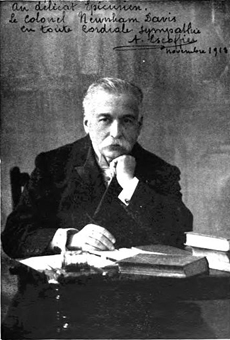
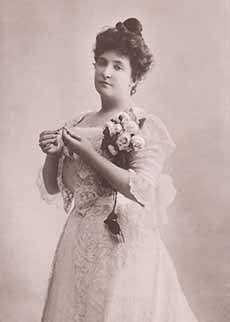
Peach Melba (its original title was in French, Pêche Melba) was created in the summer of 1892 at the Savoy Hotel, London by the the great French chef Auguste Escoffier. It honored the renowned Australian soprano, Dame Nellie Melba (Escoffier also created Melba toast for her).
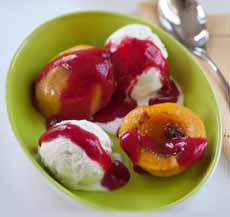
The dish combined two summer fruits, peaches and raspberries, with vanilla ice cream. Escoffier poached the peach and topped it with ice cream and raspberry purée. Essentially, it’s an ice cream sundae with poached peaches.
But the original Pêche Melba was a bit more elaborate. At the time, Dame Nellie was performing in Wagner’s opera, Lohengrin, at Covent Garden. She was the guest of honor at a dinner party hosted by the Duke of Orléans at the Savoy.
For the party, Escoffier displayed the dessert in a swan ice sculpture. In the opera, the knight Lohengrin arrives and departs in a boat pulled by swans. Here, the ice swan held a bed of vanilla ice cream topped with peaches and spun sugar.
Needless to say, the dessert was the talk of the town—or at least, that portion of town interested in opera and Escoffier.
In 1900, for the opening of the Carlton Hotel in London, Escoffier created an easier version of the dessert. He ditched the ice swan and topped the peaches with raspberry purée.
Light yet delicious, Pêche Melba became a classic dessert.
The question is, why is National Peach Melba Day in January, when fresh peaches are out of season? Fresh raspberries are almost always available and you can use canned or frozen peaches, although to do so counters the wisdom of eating seasonally. Frozen peaches, are a good substitute.
But celebrate we will, by poaching some Dole frozen peach slices. We actually prefer the slices to Escoffier’s half-peach “cap” atop the ice cream.
RECIPE: PEACH MELBA
Elegant as it sounds, Peach Melba or Pêche Melba, as the French chef Escoffier called it, is an ice cream sundae with raspberry sauce and peaches, instead of hot fudge and whipped cream or other current favorite toppings.
Ingredients For The Poached Peaches
You can substitute frozen peaches when fresh ones are out of season.
2 cups water
1-1/4 cups sugar
3/4 cup dry or sweet white wine
1/4 teaspoon salt
1 cinnamon stick snapped in half
Zest of one lemon
1/4 teaspoon peppercorns
6 peaches (makes 12 portions, but the poached peaches can be enjoyed the next day as seconds, plain, or with extra raspberry purée or the delicious poaching liquid, atop pancakes, etc.)
For The Raspberry Purée
2 cups fresh raspberries
1 tablespoon confectioners’ sugar
2 tablespoons fresh lemon juice
Plus
Vanilla ice cream
Optional garnishes: whole raspberries, fresh currants, mint sprigs, slivered toasted almonds, sugared nuts, whipped cream
Preparation
1. POACH the peaches. Wash, dry and halve the peaches and discard the pits. Combine all ingredients in a large pot. Cover, bring to a boil and reduce heat to a simmer. Simmer until the peaches are slightly softened but not mushy. Frozen peach slices may be ready quickly; whole, less ripe fresh peaches may take 7-10 minutes.
2. MAKE the purée. Wash the raspberries, pat dry and purée with the other ingredients. Set aside until ready to serve.
3. ASSEMBLE. Place a scoop of vanilla ice cream in a bowl—or better yet, make it a glass dessert bowl, a Champagne coupe, a round wine goblet, or a parfait or sundae glass. Top with a peach half or sliced peaches.
4. DRIZZLE with raspberry purée. Garnish as desired and serve.
THE YEAR’S 8+ PEACH HOLIDAYS
January 13: National Peach Melba Day
April 13: National Peach Cobbler Day
June 21:National Peaches ‘n’ Cream Day
July: National Peach Month*
July 17: National Peach Ice Cream Day
August: National Peach Month*
August 22: National Eat a Peach Day
August 24: National Peach Pie Day
Plus:
March 3: National Peach Blossom Day
|
|

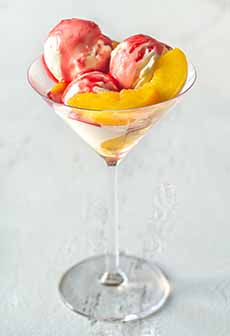
[1] Peach Melba, an ice cream sundae served in a stemmed dish (photo © Alex 9500 | Panther Media).
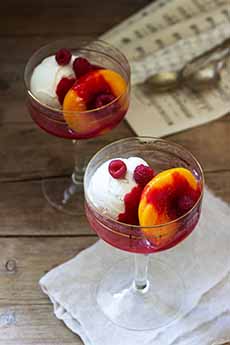
[2] You can plate it however you like. Here, the cook added some fresh raspberries (photo © Danilova Janna | Panther Media).
[3] Don’t worry if you don’t have stemmed dishes or goblets. Use a casual presentation, like this one from Food Network (photo © Food Network).
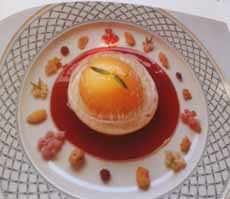
[3] The great British chef Marco Pierre White re-interpets Escoffier by placing the sauce on the bottom of a plate and the ice cream in a marzipan tulle. Chef Marco tops the peach with a spun sugar cage (photo © White Heat – The Recipes).
[4] Chef August Escoffier [1846-1945], from “The Gourmet’s Guide To London by Nathaniel Newnham-Davis, 1914 (Public Domain).
[5] Dame Nellie Melba [1861-1931] (photo National Library Of Australia).
|