|
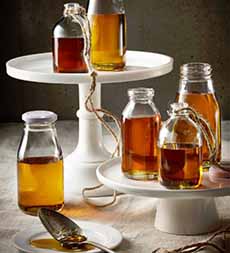
[1] The different colors represent the different grades of maple syrup (all photos © Pure Maple From Canada).
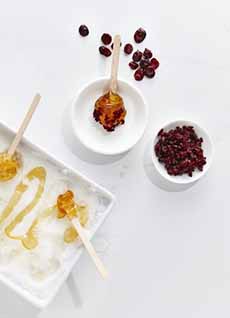
[2] Maple Syrup Taffy On A Stick. You can make it plain, or roll it in bacon, dried cranberries, nuts and more. The recipe is below.
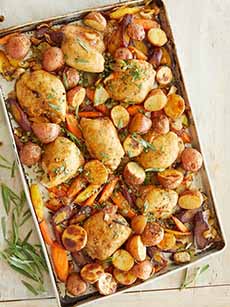
[3] Maple syrup goes way beyond breakfast, like this Sheet Pan Maple Mustard Chicken Thighs with Potatoes and Carrots. Here’s the recipe.
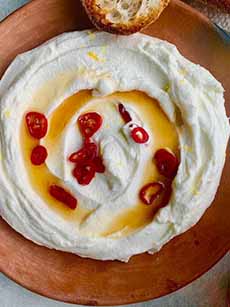
[4] To serve as a snack, for brunch, or with drinks, Whipped Ricotta with Maple Syrup, Calabrian Chiles, and Grilled Sourdough by Chef Hugh Acheson. Here’s the recipe.
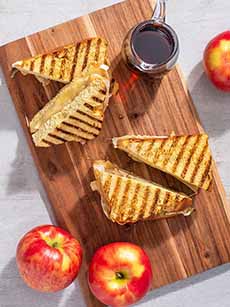
[5] For lunch, a Maple, Apple & Brie Panini. Here’s the recipe.
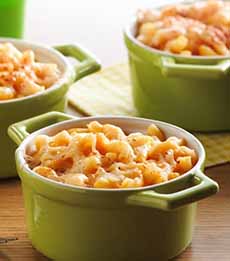
[6] A twist on mac and cheese: Steamed Macaroni and Cheese with Maple Butternut Squash. Here’s the recipe.
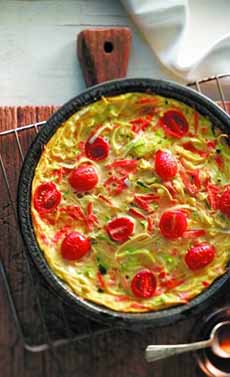
[7] Crustless Maple Vegetable Quiche. Here’s the recipe.

[8] Maple Pulled Pork. Here’s the recipe.
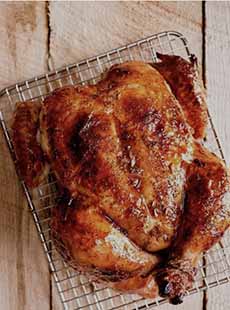
[9] Maple Bourbon Brined Roasted Chicken. Here’s the recipe.
|
|
December 17th is National Maple Syrup Day. The next time you drown your pancakes in syrup, ask yourself what you’re pouring on that stack. Do you know the difference between pure maple syrup and pancake syrup, a.k.a. imitation maple syrup?
Many bottles of what appears to be maple syrup are simply bottles of corn syrup with maple flavoring, a.k.a. pancake syrup.
The contents may be sweetly pleasing, but they’re not maple syrup. The U.S. government won’t allow it to be called maple syrup. “Pancake syrup,” “rich syrup,” and other terms have been devised by manufacturers to lead you astray.
Here’s what’s in a bottle of Mrs. Butterworth’s:
High fructose corn syrup, corn syrup, water, salt, cellulose gum, molasses, potassium sorbate (preservative), sodium hexametaphosphate, citric acid, caramel color, and natural and artificial flavors.
Ingredients are similar for Aunt Jemima, Hungry Jack, and Log Cabin syrups.
Those ingredients are a world apart from the natural maple syrup tapped from the tree, where the only ingredient is maple tree sap that’s been boiled into syrup. That’s pure maple syrup, also labeled 100% maple syrup.
This article features ways to cook with maple syrup, including delicious recipes. While there are recipes below, also check out the recipe links in the photos.
COOKING WITH MAPLE SYRUP
Sure, you use it on your pancakes, waffles, and French toast; on oatmeal, cold cereal, biscuits, and toast.
But maple syrup is a sweetener, just like sugar and honey. It can be used instead of another sweetener in any recipe see below for substitutions). Try maple syrup with:
Lunch & Dinner: Glaze chicken, duck, ham, pork, and salmon.
Vegetables: Glaze carrots, green beans, and sweet potatoes; in baked or mashed butternut squash
Sides: Add to baked beans and applesauce.
Condiments: In vinaigrettes, marinades, barbecue sauces, and chutneys, homemade ketchup, maple mustard (instead of honey mustard).
Desserts: As a syrup on ice cream or rice pudding, to sweeten baked apples (just fill the centers of cored apples and bake), in apple or pecan pie and gingerbread cookies.
Beverages: Sweeten hot and iced tea and coffee or hot chocolate, use in cocktails like thus Fig & Maple Fizz.
Here are more ways to use maple syrup.
Also check out the maple recipes below, and the one that follows the next section.
Also check out the recipe links in the photos.
PURE MAPLE SYRUP FROM CANADA
Until the 1930s, the U.S. produced most of the world’s maple syrup. But following rapid growth in the 1990s, Canada now produces more than 80% of the world’s maple syrup, the vast majority from the province of Quebec, which contributes 70% of global production.
And, even though the U.S. produces much of the remaining 20% of world production*, 64% of Canadian maple syrup exports go to the U.S. [source]!
Americans use a lot of maple syrup!
Learn more about Pure Maple Syrup From Canada on the website sponsored by the Québec Maple Syrup Producers, and check out the many recipes.
RECIPE: MAPLE TAFFY ON A STICK
This recipe takes just 5 minutes to prepare and 7 minutes to cook. You can add bacon, peanuts, and other recipes including cinnamon pecan, coconut, matcha, pretzel, and sesame seeds. Head to the recipes section of Pure Maple From Canada.
Ingredients
1 cup pure maple syrup from Canada
10 wooden sticks
Clean snow or finely crushed ice
For an optional flavor coating, choose one of the following:
5 slices bacon, cooked, cooled, and crumbled
1/2 cup dried cranberries, finely chopped
1/2 cup peanuts, salted or unsalted, crushed
1/2 lemon, zested and minced, blended with 1/4 cup poppy seeds
Preparation
This is the microwave method. For stovetop instructions, see the footnote† below.
1. GREASE lightly the top 3/8″ of the inside of a microwave-safe container. This will keep the syrup from bubbling over. Pour the maple syrup into the container.
2. FILL a large flat tray or bin with snow, packing it down. Set it outside or in the freezer while the syrup comes to temperature.
3a. HEAT the maple syrup for 7 to 10 minutes in the microwave (cooking time may vary by machine).
3b. You’ll know it’s ready when drops of taffy turn into soft little balls in a glass of cold water. You can then pour the taffy into a container and refrigerate it until ready to use, or pour it in lines on the snow or crushed ice.
4. ROLL up the taffy on sticks for instant lollipops. If you’re adding a flavor, roll the stick of taffy in the coating and place it on wax paper or parchment until you’re ready to enjoy them. You can also wrap individual lollipops in wax paper and keep the pops for a few days.
HOW TO TO SUBSTITUTE MAPLE SYRUP IN RECIPES
Use 1/2 cup of maple syrup in place of 1 cup of granulated sugar; decrease the liquid in the recipe by one-half. Add 1/4 teaspoon of baking soda for each cup of maple syrup used in substitution. Decrease oven temperature by 25°F.
To use maple sugar as a substitute in recipes: use 1/2 to 3/4 cup of maple sugar in place of 1 cup cane sugar.
STORING MAPLE SYRUP
Maple syrup packaged in glass or metal can be stored for up to one year in the refrigerator in its original container. However, some people who buy in large quantities repackage and freeze the syrup, then take it out of the freezer as needed.
Most good maple syrup is not packaged in plastic, because plastic “breathes” and allows air into the container. If you do have maple syrup in plastic and plan to store it for more than three months, pour it into clean glass jars.
If you have too much syrup, just freeze it! Pour it into glass freezer jars to one inch from the top, and freeze. You can also freeze it in ice cube trays, then remove the cubes to an airtight freezer container.
MORE MAPLE SYRUP RECIPES
Coffee Martini With Maple Syrup Rim
Easy Maple Soufflé
Maple Bacon Muffins
Maple Cheesecake
Maple Cherry Syrup
Maple Pound Cake
Maple Syrup & Porter-Poached Apples
Maple Syrup Blondies
Maple Syrup Glazed Pork
Orange Cinnamon Pancakes With Cranberry Maple Syrup
Parsnip Chips With Maple Mustard Dip
MORE TO DISCOVER
> How Maple Syrup Is Made
> Grades Of Maple Syrup
> Maple Syrup History
________________
*Vermont is the biggest U.S. producer, followed by New York and Maine. Wisconsin, Ohio, New Hampshire, Michigan, Pennsylvania, Massachusetts, and Connecticut all produced marketable quantities of maple syrup.
Maple syrup is produced on a small scale in Japan and South Korea. However, in South Korea, it is traditional to consume maple sap, called gorosoe, instead of processing it into syrup [source].
†Stovetop taffy: Follow steps 1 and 2 above. Then place a saucepan on medium-high heat with a candy thermometer on the rim or its prob in the syrup. Bring to a boil. Keep the temperature between 237° and 240°F for about 20 minutes. IMPORTANT: Never stir the syrup during and after cooking because it may cause the taffy to crystallize. Continue with step 3b above.
|