THE NIBBLE BLOG: Products, Recipes & Trends In Specialty Foods


Also visit our main website, TheNibble.com.

Anchovies On Your Pizza On National Pizza With Everything (Except Anchovies) Day

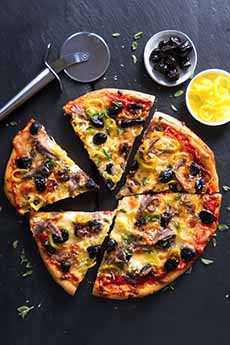
Anchovy & Black Olive Pizza
[1] An anchovy pizza with Picholine olives (photo © Gordon Ramsay Group).

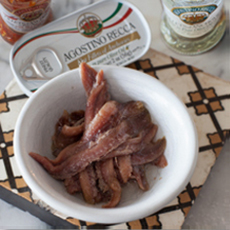
A bowl of anchovy fillets.
[2] A top-quality anchovy is plump and jarred in real olive oil (photo © Vital Choice).

Anchovy Pizza With Picholine Olives
[3] This anchovy pizza is also topped with Picholine olives and banana peppers. Here’s the recipe (photo © DeLallo).

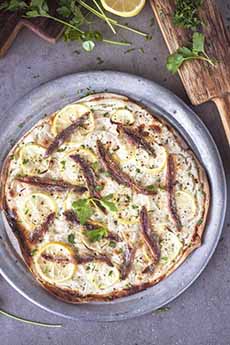
A white pizza with anchovies.
[4] A white pizza with anchovies. Here’s the recipe (photo © Craft Beering)


November 12th is National Pizza With Everything (Except Anchovies) Day. To some, it’s a reason to celebrate all of the classic pizza toppings (except anchovies): bell peppers, meatballs, mushrooms, olives, onions, pepperoni, sausage, and of course, extra cheese*.

Others, lovers of anchovies, disdain the holiday and celebrate by being contrarian: ordering a pie with anchovies.

According to Stagwell Global, a marketing firm, 50% of Americans dislike anchovies†.

  • The number is higher—56%—for those 45 and older, and lower—43%—for those ages 18 to 44.
  • Women hate anchovies the most (58%), topping men at 43%.
  •  
    But anchovies are a better-for-you food, and if one can try top-quality anchovies (as opposed to the cheap brands that we describe as cat food), the haters may cease to hate.

    Additionally, anchovies contain body-beneficial vitamins and minerals that can help our bodies: calcium, iron, selenium, and vitamin A.

    A good brand will use olive oil, not safflower oil, and keep the salt levels down (although most people would not consume enough anchovies per meal to make salt a huge deal).

    As a fatty fish‡‡, anchovies are packed with omega-3 fatty acids, very beneficial in terms of healthy joints, mental health, and maintaining good cholesterol levels.

    That’s the end of the rant, but consider starting with a jar of Ortiz anchovies, one of the better supermarket brands.

    If you find them to be OK, treat yourself to the premium Spanish Cantabrian anchovies, fished sustainably in the Bay of Biscay in the Cantabrian Sea, along the northern coast of Spain.

    Cantabrian anchovies are renowned for being the best: meaty, flavorsome, and firm textured.

    The best of the best might be Don Bocarte, but it’s very pricey.

    We’ve listed them all, below, so mark your calendars.
     
     
    IT’S PIZZA TIME!

    We started out by announcing that it’s National Pizza With Everything (Except Anchovies) Day. Continuing along the theme, we have the year in pizza holidays in the next section. But first:

    > 40 ways to top your slice.

    > 50 pizza recipes.

    > Pizza trends.

    > The history of pizza.

    > The top pizza toppings in the U.S., the top pizza-eating states, and most pizza-per-capita countries.
     
     
    THE YEAR IN PIZZA HOLIDAYS

    According to CNET, “Roughly 3 billion pizza pies are sold in the US each year, equal to about 350 slices a second.” So dig in!

    Whether you get takeout pizza or make your own, mark your calendars for:

  • January: National Pizza Week, beginning the second Sunday in January
  • February: Great American Pizza Bake, beginning the second week in February, a week where you’re encouraged not just to consume pizza but to try your hand at making it
  • February 9th: National Pizza Day (a.k.a. National Pizza Pie Day), World Pizza Day
  • April 5th: National Deep Dish Pizza Day
  • May: National Pizza Party Day, third Friday
  • June 11th: Pizza Margherita Day
  • September 5th: National Cheese Pizza Day
  • September 20th: National Pepperoni Pizza Day
  • October: National Pizza Month
  • October 9th: International Beer and Pizza Day
  • October 11th: National Sausage Pizza Day
  • October 25th: World Pizza Makers’ Day
  • November 1st: National Calzone Day‡
  • November 12th: National Pizza With Everything (Except Anchovies) Day
  •  
    __________________

    *Feel free to add your favorites to the list. Others include arugula, bacon, basil, bbq chicken, broccoli, ham, jalapeño, pesto, pineapple, spinach, tomatoes (fresh or sundried), and on and on. As for additional ingredients, one of our favorite pies is a white pizza topped with sliced potato, smoked salmon, salmon caviar, and red onion.

    †Next on the hated foods list are black licorice (45%) and oysters are at the top, according to the Stagwell Harris Poll survey with Instacart. Black licorice is most disliked by young people (48% among those 18 to 54 versus 37% for those ages 65 and older) and women (54% versus 35% for men). Rounding out the top 10: beets, blue cheese, okra, capers, Brussels sprouts, fennel, and olives.

    ‡A calzone is a pocket pizza; the toppings are used as a filling inside a hand-held crust.

    ‡‡Fatty fish include anchovies, black cod, bluefin tuna, cobia, herring, mackerel, salmon, sardines, striped bass, and whitefish.


    CHECK OUT WHAT’S HAPPENING ON OUR HOME PAGE, THENIBBLE.COM.


    Comments off

    Naturally Pink Gin: Empress 1908 Elderflower Rose Gin

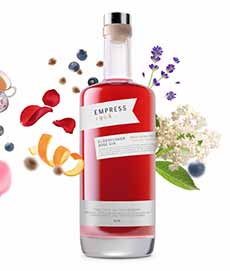
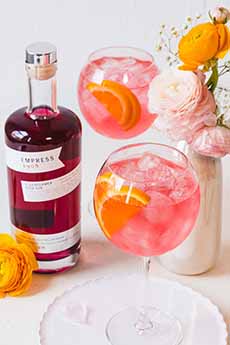
    A Bottle Of Empress 1908 Elderflower Rose Gin
    [1] Empress 1908 Elderflower Rose Gin (all photos © Empress Gin).

     Pink Cocktail Made With Empress 1908 Elderflower Rose Gin
    [2] The gin turns any gin cocktail into a prettier one. Here, a Gin & Tonic.


    Almost a year ago we wrote about Empress 1908 Indigo Gin, a bright blue-purple color achieved with the flavorless extract of the butterfly pea flower.

    We recommended it as a stunning holiday gift, and we purchased a number of bottles for that purpose.

    This year, Empress 1908 has given Indigo Gin a sibling: Empress 1908 Elderflower Rose Gin, a lovely rose color that makes a welcome gift for a gin lover and counting ahead, something special for Valentine’s Day.

    The small-batch gin is distilled in the seaside town of Sidney, British Columbia, Canada (part of metropolitan Victoria).

    The gin has a bright floral bouquet from nine all-natural ingredients including red rose petals, elderflower, and lavender. The color is derived from rose petals plus black carrots.

    The understated floral palate is complemented by citrus and spice notes and a hint of sweetness.

    You can sip the gin straight, but it makes beautifully-hued cocktails, including a stunning rose-colored Gin and Tonic. Just add tonic water and a squeeze of lime.

    There are more cocktails on the brand’s website, EmpressGin.com.

    Also check out these Empress 1908 expressisons:

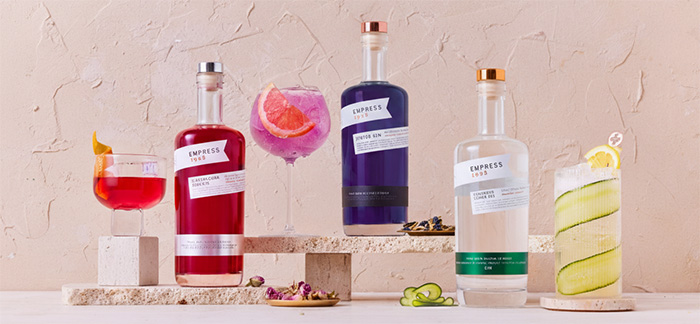
    > Empress 1908 Cucumber Lemon Gin

    > Empress Original Indigo Gin.
     
     
    > The history of gin.

    Elsewhere on The Nibble:

    > The different types of gin.

    > The different styles of gin.

    > The year’s 14 gin holidays.

     
    3 Expressions Of Empress 1908 Gin
    [3] Elderflower Rose, Original Indigo, and Cucumber Lemon: Each expression is wonderful.
     

    CHECK OUT WHAT’S HAPPENING ON OUR HOME PAGE, THENIBBLE.COM.


    Comments off

    Tips On Tempranillo Wine For International Tempranillo Day

    Chianti fans may be aware that the main grape in this classic wine is Tempranillo. But Spain has another great Tempranillo growing region, Ribera del Duero, a D.O.P. (Denominación de Origen Protegida) viticulture area in Spain’s northern plateau.

    The name translates to “riverbanks of the Duero [River].”

    The area, a plateau ranging from 2,200 to 2,800 feet in altitude, hosts as many as 30 different soil types—though mostly limestone, chalk, and sand, all of which contribute to the distinctive nature of Tempranillo, the region’s dominant grape.

    On International Tempranillo Day, the second Thursday in November, how about trying a bottle or two?
    Some connoisseurs argue that Ribera del Duero makes the world’s finest expression of Tempranillo.

    Tempranillo wines from Ribera del Duero are medium- to full-bodied reds with hints of dark fruit and spices. Here are the differences between Spain’s main Tempranillo regions:

  • Rioja wines deliver red cherry, pepper, and subtle cinnamon notes with ample structure (tannins).
  • Ribera del Duero wines are typically deeper, darker, and more brooding than Rioja, with blackberry fruit flavors and intense, gripping tannins.
  •  
    Ribera del Duero wines are known for their elegance and complexity. After you get to know Tempranillo, invest in some bottles with good aging potential. These are labeled Reserva and Gran Reserva. Ask your wine store’s staff for suggestions.

    Good basic bottles of Ribera del Duero Tempranillo can be found for $15, and here are Sir James Suckling’s recommendations in the $35-and-under range.

    Bring some bottles for Thanksgiving and as holiday gifts for your red wine-loving friends.

    > The history of Tempranillo wine is below.

    > Here’s more about the wines of Ribera del Duero.
     
     
    PAIRING TEMPRANILLO & FOOD

    A very versatile food wine, Tempranillo pairs wonderfully with:

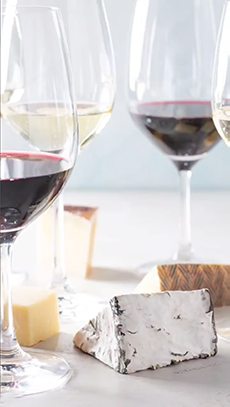
  • Aged cheeses
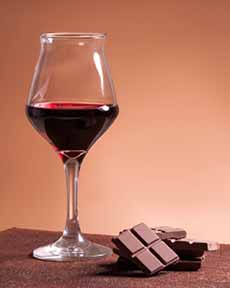
  • Dark chocolate
  • Hearty pasta dishes
  • Meats: ham, lamb, poultry (turkey, anyone?), roasted or grilled meats (including steaks), and smoked meats (ribs, tandoori chicken)
  • Paella
  • Roasted vegetables
  • Starchy foods, including Mexican food and Tex-Mex (tacos); potstickers and other dumplings
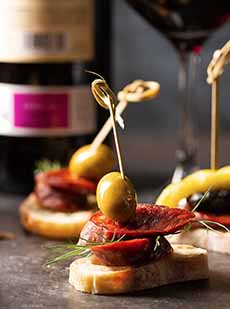
  • Traditional tapas (jamón ibérico, chorizo, and Manchego cheese, and more)
  •  
    Party Idea: Have a “curated” potluck party—perhaps on “Tempranillo Tuesday.” Everyone brings a bottle of Tempranillo and a dish of tapas. You “curate” by making sure no one brings the same food.

    Ideally, no one will bring the same producer and vintage of Tempranillo, either—but people can bring a Tempranillo made anywhere, and different years of the same producer are fine.
     
     
    TEMPRANILLO TRIVIA

  • The Spanish word temprano means early. Spain’s native Tempranillo grapes got their name because the variety is ready to be harvested early in the season. Tempranillo means “little early one.”
  • The lighter color of Tempranillo compared to say, Cabernet Sauvignon, is due to the thinner skin of the grapes. While that could mean a more medium-bodied wine, like Pinot Noir, Tempranillo can also be full-bodied depending on how old the vintage is and how long it spent aging in oak.
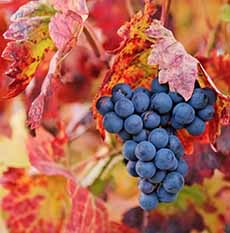
  • Tempranillo is one of the few grape varieties whose leaves turn bright red in the fall. If you can be near a vineyard in the fall, it’s a beautiful sight (photo #6).
  • Tempranillo is one of the top grape varieties* blended to make Portugal’s great fortified wine, Port. In Portuguese the grape is called Tinta Roriz. Full-bodied, single-varietal Tempranillos are now appearing in Portugal’s Dão and in the Alentejo regions, where the grape is commonly labeled as Aragonez (yes, it’s confusing).
  • The grape has made its way to the New World: in Argentina, Australia, Chile, and South Africa in the Southern Hemisphere, and in the U.S. in California, Oregon, and Texas. The terroir of the Rogue Valley of Southern Oregon is yielding wines that can be just as rich and peppery as the Ribero del Duero wines.
  • There is a small amount of Tempranillo in Rioja that’s a white mutation of the red grape. Called Tempranillo Blanco, it’s used to make White Rioja. The wines yield tropical fruit flavors.
  •  
     
    THE HISTORY OF TEMPRANILLO

    The Tempranillo grape is native to the Iberian Peninsula and is the flagship variety grown in Spain and Portugal.

    The cultivation in Spain of Vitis vinifera, the common ancestor of almost all grape vines in existence today, began with Phoenician settlements in the south of the Iberian Peninsula, as far back as 1100 B.C.E. [source].

    Based on mosaics in Ribera del Duero that show wine-making, the practice dates back 2,600 years.

    Later, according to the Roman writer Lucius Junius Moderatus Columella (40 C.E. to 70 C.E.), wines were grown all over Spain. However, there are only scattered references to the name “Tempranillo.”

    In 1982, Ribera del Duero was officially granted its D.O. status (Denominación de Origen, designation of origin), which determines where the wine was produced.

    Prior to then, most growers sold their grapes to co-ops that vinified them and sold the wine in bulk.

    But since becoming an official D.O., the region’s Tempranillo-based wines have gained international recognition, and some very fine wines are being produced by a “new wave” of Spanish growers and vintners who showed that it was possible to produce wines of great character and quality in areas outside of the Rioja region [source].

    Thanks to the acclaim, during the 1990s, Tempranillo expanded in wine production worldwide. The grape is now planted in France as well as the areas noted above, making the Tempranillo grape the third most widely planted wine grape in the world (following Cabernet and Merlot [source].

    Almost 90% of production worldwide takes place in Spain.
     
     
    __________________

    *Along with Tinta Barroca, Tinto Cao, Touriga Franca, and Touriga Nacional.


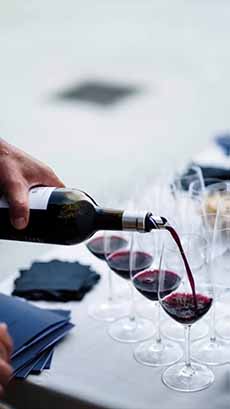
    Pouring Glasses Of  Tempranillo Wine
    [1] Invite friends for a glass or two of Tempranillo (photos #1 through #5 © Ribera y Rueda Wine).

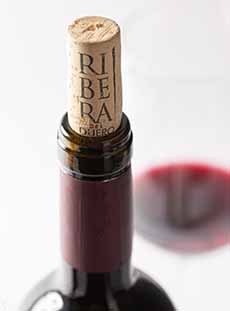
    Bottle Of Tempranillo Wine
    [2] Just pull the cork and enjoy.

    Glasses of Tempranillo wine with cheese
    [3] Pair Tempranillo with aged cheeses.

    A bottle of Tempranillo wine with sausage tapas
    [4] Have a tapas party.

    Tempranillo With Dark Chocolate
    [5] If you like a glass of wine with your chocolate, consider Tempranillo (check out pairing wine with chocolate).

    Cluster Of Tempranillo Grapes Ready To Harvest
    [6] A cluster of Tempranillo grapes on the vine at harvest time, when the leaves turn a brilliant scarlet (photo © Medium).


    CHECK OUT WHAT’S HAPPENING ON OUR HOME PAGE, THENIBBLE.COM.


    Comments off


    © Copyright 2005-2026 Lifestyle Direct, Inc. All rights reserved. All images are copyrighted to their respective owners.