RECIPE: Ravioli Lasagna For National Ravioli Day
|
|
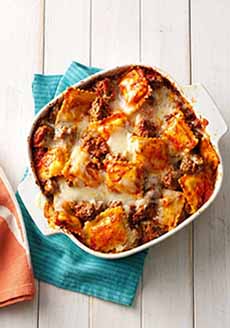
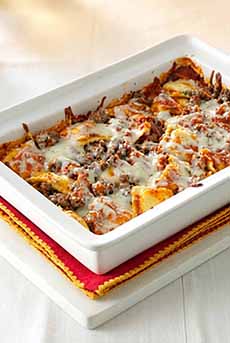
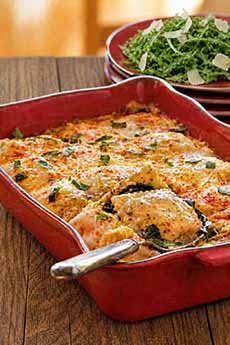
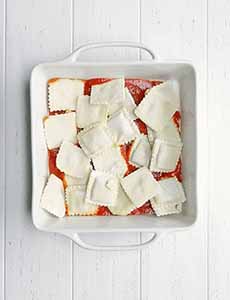
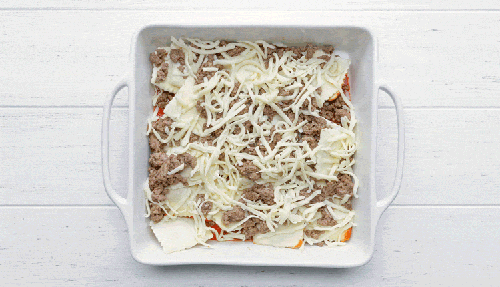
Updated July 2026 March 20th is National Ravioli Day. July 29th is National Lasagna Day. We like ravioli in any form, but have been especially delighted with ravioli lasagna. Bless the person who first thought of the trick of using cooked ravioli instead of lasagna noodles. (Alternatively, you can use penne or other tube pasta, but ravioli supplies added filling.) What looks like a complicated recipe couldn’t be easier when you use frozen ravioli (no cooking required) and store-bought pasta sauce. Below: Elsewhere On The Nibble: > The different types of pasta: a photo glossary. > The year’s 20 pasta holidays. Prep time is 25 minutes, bake time is 40 minutes. We adapted this recipe from one by Patricia Smith for Taste Of Home. The recipe uses sausage or cheese ravioli and adds ground beef. But you can make vegetable ravioli, chicken ravioli, or anything you prefer. Here’s another Taste Of Home recipe for (here’s the Pumpkin Ravioli Lasagna (scroll down). You can vary the recipe any way you like. For example: 1. PREHEAT the oven to 400°F. Cook the beef over medium heat in a large skillet, until it is no longer pink. Drain. 2. LAYER in a greased 2-1/2-quart baking dish: 1/3 of the spaghetti sauce, 1/2 of the ravioli, 1/2 of the cooked beef, and 1/2 cup cheese. Repeat the layers. Top with the remaining sauce and cheese. 3. COVER and bake for 40-45 minutes or until heated through. |
|
 [6] We love ravioli! Here, butternut squash ravioli in brown butter sauce with fried sage (photo © Yoav Aziz | Unsplash). THE HISTORY OF RAVIOLI China gets the credit for inventing not only strand pasta—thin chow mein noodles like Italian angel hair, chow fun noodles like Italian linguine, chow fun noodles like Italian pappardelle, and stuffed wontons like Italian ravioli. When it arrived Italy, stuffed pasta (another name for the category is pillow pasta) was served with Italian-style pasta sauces. Some food historians believe the name “ravioli” derives from the old Italian word riavvolgere, to wrap. Others believe that the dish was named after a 13th-century chef named Ravioli, who lived in the Republica di Genova (a.k.a. Genoa, today the Italian region of Liguria). While Chef Ravioli is credited with the invention of the stuffed pasta composed of two layers of thin pasta dough with a filling sealed between them, historians have not substantiated the story. The origin of the name “ravioli” remains uncertain. Interestingly, the Venetian Marco Polo, who brought the concept of stuffed pasta back from China, had subsequently become a soldier in Venice’s war with Genova. He was taken prisoner by Genova in 1296 and released in 1299, to return to Venice [source]. Might a Chef Ravioli living in Genova at the same time he have heard about the stuffed wontons via someone who heard it from Polo? We can say with almost-certainty that we’ll never know! Here’s much more on the history of ravioli. CHECK OUT WHAT’S HAPPENING ON OUR HOME PAGE, THENIBBLE.COM. |
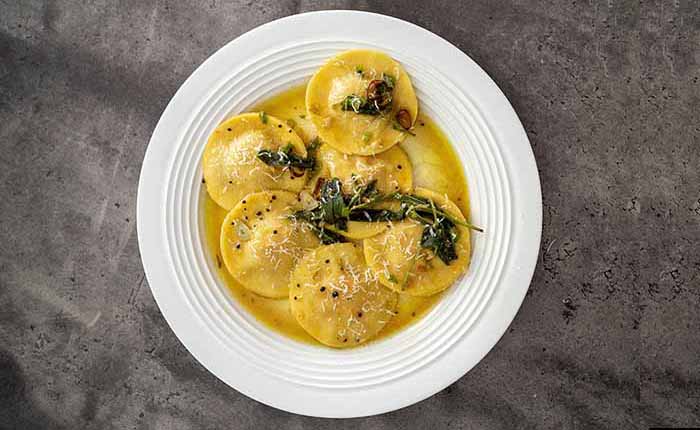
||