Rubyglow: A $395 Pineapple Worth Considering For A Special Treat
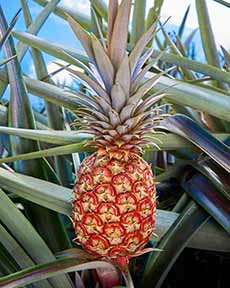
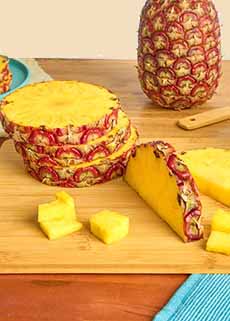
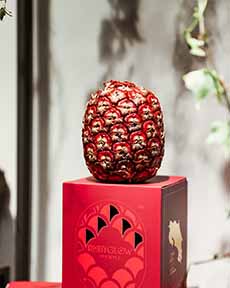 [1] The Rubyglow pineapple is the result of a 15-year selective crossbreeding process, blending a traditional pineapple with the rare Morada variety to create something both visually stunning and uniquely flavorful (all photos © Del Monte Fresh via Melissa’s Produce).
|
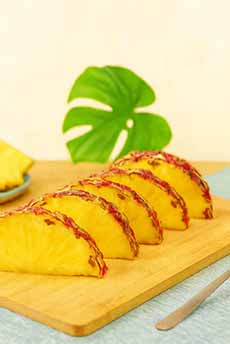
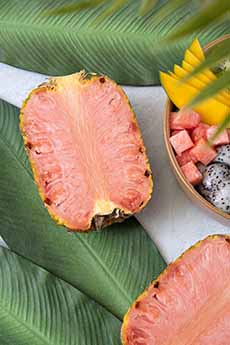
Updated June 2026 If you follow the high-end food news, you may well know how highly Asians prize beautiful fruits, and pay very high sums for the best of them. And you’ve heard of the $395 Rubyglow® pineapple, developed by Del Monte Fresh. The first crop was harvested last year in China—only 5,000 or so fruits for customers worldwide—and sold out in Asia. This year even fewer are expected, about 3,000. The highly sought-after Rubyglow® pineapple, now grown in Costa Rica, will be available in the U.S., in very limited quantities, through an exclusive arrangement with our favorite purveyor of specialty produce, Melissa’s. Under development for 15 years, meticulous cultivation and crossbreeding has produced a rare and unique fruit. Each Rubyglow takes approximately two years to grow, contributing to its rarity and hefty price, currently $395 (the first year’s harvest was $350). Its packaged in a beautiful box (photo #1) which you can keep for years, to continue to relish the memories. Rubyglow was bred from a classic yellow-fleshed pineapples with conventional shells and the rare Morada variety with a striking ruby-toned shell and rich, citrine-yellow flesh that delivers greater sweetness and minimal acidity. Note that the pineapple arrives without the crown (photo #1), which is removed and rooted to generate the next crop†. Below: > More about pink pineapples: Rubyglow, the Morada pineapple, and the Pinkglow pineapple. > The year’s 10+ pineapple holidays. Elsewhere on The Nibble: > 15 grilled pineapple recipes. Morada is a deep red–skinned pineapple variety cultivated in extremely limited quantities in Costa Rica. It is generally used for breeding rather than for commercial sale. For 15 years, Del Monte Fresh crossbred Morada with traditional yellow pineapple varieties. The result, Rubyglow, retains the striking, distinctive red burgundy-to-red shell of the Morada but with bright yellow flesh. The beautiful exterior sets it apart from conventional yellow-green pineapples. The flesh has heightened sweetness as well, due to, among other factors‡, low acidity. The Morada itself is almost never available to consumers. It’s more of a parent cultivar used in Del Monte’s breeding program. By the way, in Spanish, morada means purple or violet. We love it, and it’s still a very special experience (photo #5). > Head to Melissas.com. †Growing a pineapple from any store-bought fruit is a simple process, although it requires patience, as it can take 2 to 3 years to produce fruit. Rooting the crown can be done in water or directly in soil. If you want to try it, it’s easy to find the process online. ‡While lower acidity makes sweetness more noticeable, true sweetness comes from higher sugar levels (genetics, growing conditions (terroir and the year’s particular weather), ripening, and the aroma compounds that accentuate it. |
|
|
CHECK OUT WHAT’S HAPPENING ON OUR HOME PAGE, THENIBBLE.COM. |
||