Peach Ice Cream Recipe For National Peach Ice Cream Day
|
|
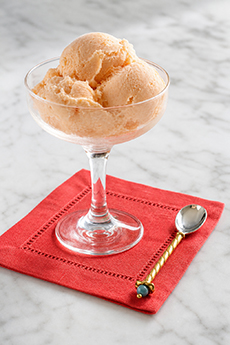
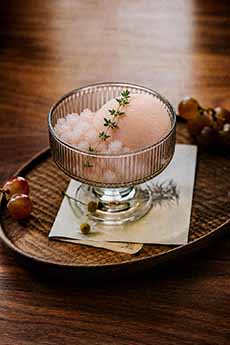
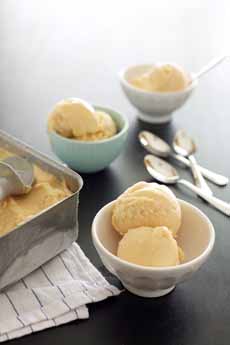
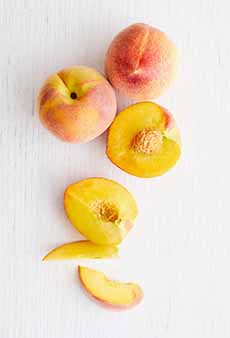
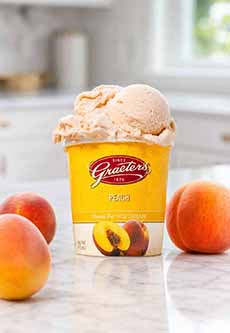
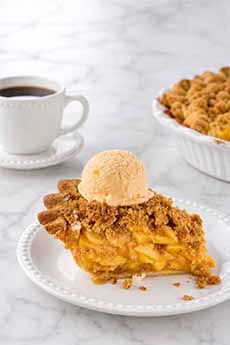
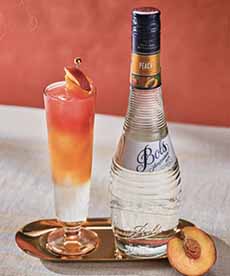
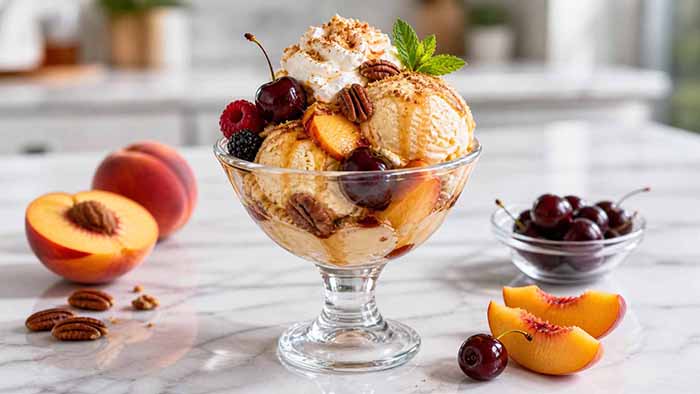
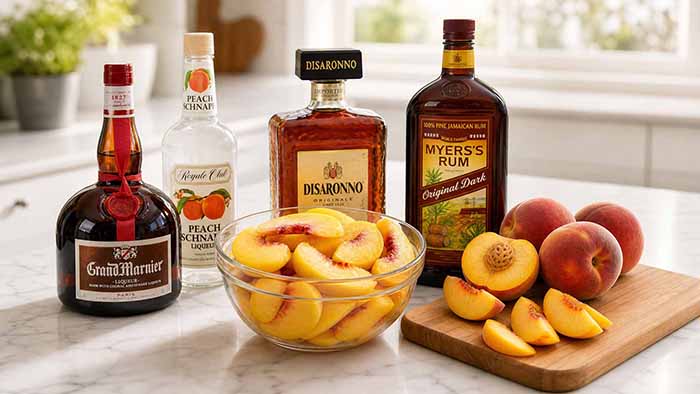
Updated July 2026 July 17th is National Peach Ice Cream Day, and in some years it falls on National Ice Cream Day, the third Sunday in July. But peach ice cream is in crisis mode! Our favorite childhood flavor (along with pistachio), peach ice cream got nudged out of the Top 10 flavor lineup before the end of the 20th century. It was replaced by flavors such as Cookie Dough and Oreo. Even Talenti, which makes 51 flavors, ditched its Peach in favor of flavors like Banana Caramel Crunch, Chocolate Pretzel and Key Lime Pie. Ditto for Häagen-Dazs, currently selling 28 flavors in 14-ounce “scant pint†.” The company discontinued its peach ice cream as well as its peach sorbetto. McConnell’s likewise: 24 flavors include Cherry Cheesecake & Graham Cracker Crumble, Cinnamon & Oatmeal Raisin Cookies and Honey & Cornbread Cookies, but no more peach (take a last look at it in photo #3). Among nationally distributed brands, only Graeter’s Summer Peach, it seems, remains. Why? Like anything else, trends. Younger customers have never had peach ice cream. And caramel, cookies, and crunch sound better to them than fruit. Plus, fresh peaches are only available for four months at best (although frozen peaches work), so only smaller artisan producers tend to make it (look for Graeter’s—photo #2). Stymied by our inability to find peach ice cream as a summer special, we made a batch with fresh peaches. The recipe was so heavenly, we’ll be trying it with frozen peaches when the summer is over. Below: > Recipe: Peaches & Cream ice cream. > Toppings for a peach ice cream sundae. > Recipe: quick macerated fruit topping, with or without alcohol. > More peach ice cream recipes. > America’s favorite ice cream flavors. Elsewhere on The Nibble: > The history of ice cream—longer version. > The history of the ice cream sundae. > The different types of frozen desserts: a photo glossary. > The year’s 50+ ice cream and frozen dessert holidays. >The year’s 8+ peach holidays. This rich and creamy recipe delivers a “peaches and cream” flavor rather than pure peach intensity. It’s an extremely rich French custard recipe (or “French-style” ice cream), in the manner of Häagen-Daz, which includes eggs. The recipe can be used with any type of fruit, as long as you have 5 cups of purée. The proportions work for a 4-quart ice cream maker. You can cut it in half. When making ice cream, use very ripe fruit. Every time we see fresh peaches on sale because they’re so ripe that it’s their “last day,” we scoop them up and make ice cream. Tips: 1. PURÉE the peaches in a food processor or blender, keeping the 3 cubed peaches aside. You need 5 cups of purée. 2. MIX together in a large bowl the eggs and sugar until smooth. Stir in the 5 cups of purée; blend well. 3. ADD the cream, milk, vanilla, and salt; blend well. Pour the mixture into your ice cream maker and freeze according to the manufacturer’s instructions (do not overfill your machine). Add the cubed peaches (the “inclusions”) according to the instructions for inclusions. 4. PLACE the ice cream in the freezer to harden. But before you do, enjoy a dish as “soft serve.” The flavors are more delicious right out of the churn, rather than after the ice cream hardens. You can add more than one, of course. Or, place the options on a tray and let all partakers customize their own sundaes. Often we simply pour a jigger of peach schnapps (liqueur) atop a dish of peach ice cream. But there are numerous options. Here’s a party dessert idea: Why not put out all the bottles and let people pour their spirit of choice? For base spirits: Bourbon, dark rum or spiced rum. |
|||||
|
For liqueurs/cordials: Beyond peach schnapps and orange liqueur (like Cointreau or Grand Marnier), consider: Why different surveys invariably return different answers, here’s the result of a 2023 survey conducted for the dairy industry. The survey asked, “What is your favorite flavor?” This is the survey where peach ice cream came in last, at 1% of responders calling it their favorite.
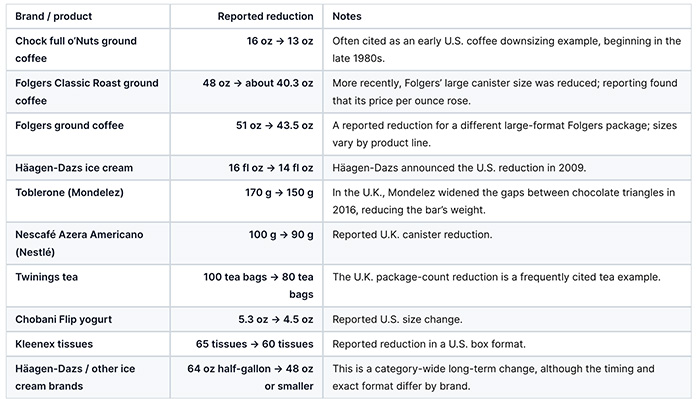
†Häagen-Dazs became infamous in 2009 when it reduced its container size from 16 to 14 ounces to offset rising ingredient costs. (We joked that within forthcoming decade of rising costs, a Häagen-Dazs “pint” would be the size of a dixie cup.) Because the packaging maintains the same height and profile as a standard pint, the term “scant” is used by industry analysts and consumer advocates to denote that it falls short of the measurement it appears to represent. While companies must list the weight or volume accurately on the label, they are not prohibited from using traditional packaging, in this case the “tapered” pint-style ice cream container. The term “retail pint is sometimes used by manufacturers to distinguish a commercial container size from the literal unit of measurement. Shrinkflation is the broader economic term for when a brand reduces the volume of a product while keeping the price and packaging footprint the same. While the term had appeared earlier in a different macroeconomic sense—referring to an economy that was shrinking while inflation rose—British economist Pippa Malmgren is generally credited with coining “shrinkflation” in its now-common consumer-products sense: reducing a package’s quantity or size while keeping its price the same. She became associated with the term around “S-Day” in 2009, a term we just coined representing D-Day for shrinkflation. Other shrinkflation examples: CHECK OUT WHAT’S HAPPENING ON OUR HOME PAGE, THENIBBLE.COM. |
||||||