Lamb Pizza With Leftover Lamb, Plus All The Lamb Holidays
|
|
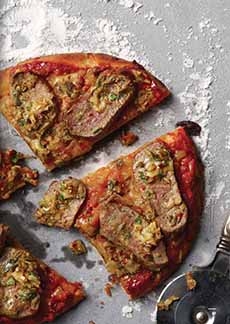
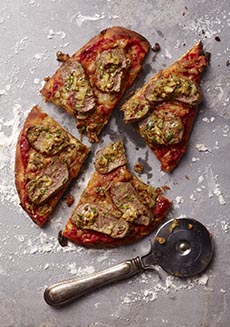
There are many things to make with leftover lamb, from panini and grilled cheese (try lamb and Brie) to Tex-Mex (burritos, quesadillas, tostadas) to stir-fries and Middle Eastern dishes (including pita sandwiches with tzatziki or minted yogurt). This year, inspired by True Aussie Beef & Lamb, we’re making a lamb pizza. Note that the more rare the cooked lamb is, the better, since it will cook more in the oven atop the pizza. We’re serving ours with an arugula salad. NOTE: If you don’t have a pizza pan and prefer to make flatbread in a regular pan (as shown in photos #1 and #2), see the instructions below. Below: > Pizza sauce vs. pasta (spaghetti) sauce. Elsewhere on The Nibble: > The different cuts of lamb: a photo glossary. How many cuts have you had? Ingredients For A 10-Inch Pie For The Pie 1. PREHEAT the oven to 450°F. Sprinkle the pizza pan with cornmeal to prevent the crust from sticking. 2. COMBINE in a large bowl the the lamb, oil, parmesan, salt, mustard, parsley, thyme, garlic, fennel and red pepper flakes. 3. ROLL out the crust (as required) and top with the pizza sauce. Sprinkle with the mozzarella on each pizza. Spread the lamb loin mixture atop the mozzarella. 4. BAKE for 15 minutes. When the cheese is bubbling and just starting to turn golden, remove the pie and place on a cutting board. Allow to cool for 3 or 4 minutes before slicing, then serve immediately. For Flatbreads Use four 8- to 10-inch pitas or naan flatbreads. Line a large baking pan(s) with parchment and divide the ingredients among the flatbreads. You will need more slices of lamb. You can substitute one for the other, but there’s a reason that “pizza sauce” is sold. 1. Thinner Vs. Thicker Consistency. Pasta sauce is thinner. Pizza sauce usually has a thicker consistency. This helps to keep the sauce from running off the dough. 2. Precooked Vs. Uncooked. The tomatoes in pasta sauce are precooked (simmered). Pizza sauce isn’t cooked. Thus, after baking in the oven, the pizza sauce should have a brighter tomato flavor than a cooked-again pasta sauce. 3. Seasoned Vs. Unseasoned. Pasta sauce is flavored with herbs (basil, garlic, oregano, e.g.), spice (e.g. chili flakes) and/or cheese. Pizza sauce is not flavored, since herbs and other toppings will be added on top of the mozzarella. Both can be created with a single box grater; or with individual grating tools like Microplane. Grated cheese (or other grated food) is rubbed against a sharp, abrasive surface, the openings sized to create tiny fragments (to the point of being powdery). The cheese needs to be dry and hard, so as not to get get stuck in the tiny holes. Parmesan is an example. Shredded cheese is produced with larger openings that are shaped to produce strips of cheese. The original meaning of “shred” meant “to cut in long strips.” Soft and semisoft cheeses work best here, such as cheddar and mozzarella, because a dry cheese will crack and crumble. However, hard foods with moisture, such as carrots, can be shredded easily. |
|
|
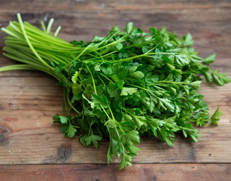
_______________ *You can use more or less lamb. An analogy: There are typically 10 slices of pepperoni spaced out on a 10-inch pie. †Flat leaf parsley is also known as Italian parsley. Curly parsley is also called French parsley. ‡Easter Sunday is the first Sunday after the full moon that occurs on or after the spring equinox. If the full Moon falls on a Sunday then Easter is the next Sunday. In the Gregorian calendar, used by most Western nations, Easter can fall on any Sunday between March 22 and April 25. Orthodox Easter, on the other hand, is calculated based on the Julian calendar, which usually results in a later Easter date—sometimes up to 5 weeks after Western Easter. Orthodox Easter is primarily celebrated in countries with large Eastern Orthodox populations across Central and Europe, Eastern Europe, the Middle East, and sub-Saharan Africa. Major observing countries include: >Europe: Russia, Ukraine, Greece, Serbia, Belarus, Bulgaria, Romania, Georgia, Albania, Cyprus, Montenegro, Kosovo, Bosnia and Herzegovina, and North Macedonia. >The Middle East: Egypt, Lebanon, Syria, and Sudan (largely Coptic and Antiochian Orthodox communities). > Africa: Ethiopia and Eritrea (celebrated as Fasika or Coptic Easter). ‡‡Eid al-Adha is celebrated on the 10th day of Dhu al-Hijjah, the twelfth month of the Islamic lunar calendar, lasting 4 days. It’s the largest lamb holiday in the world. Families traditionally slaughter an animal—most commonly a sheep or goat—to share with family, friends, and the less fortunate. CHECK OUT WHAT’S HAPPENING ON OUR HOME PAGE, THENIBBLE.COM. |
||