A Beef Stroganoff Recipe & Other Stroganoffs For National Beef Stroganoff Day
|
|
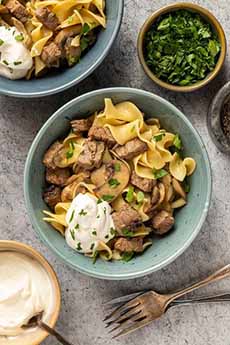
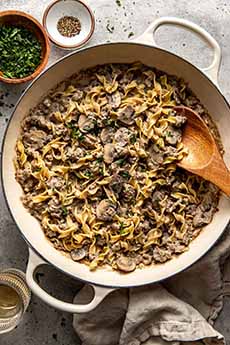
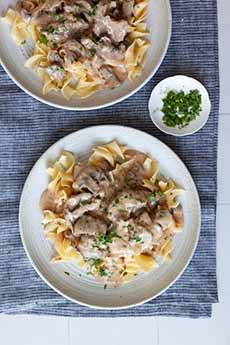
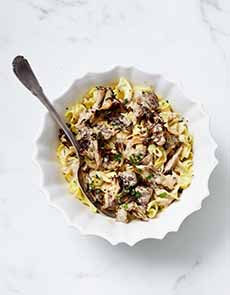
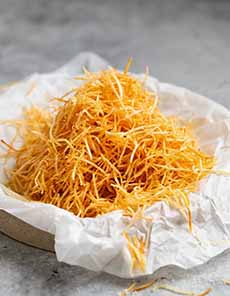
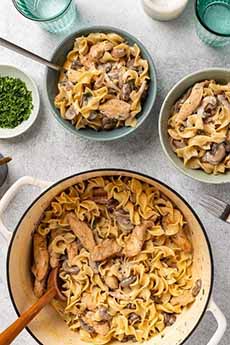
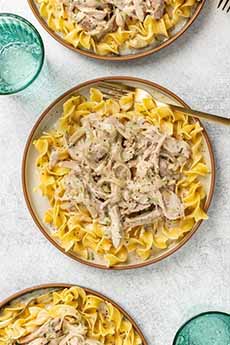
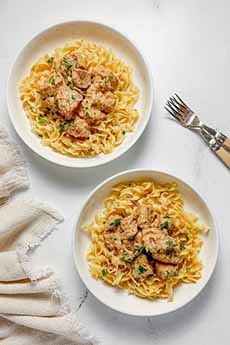
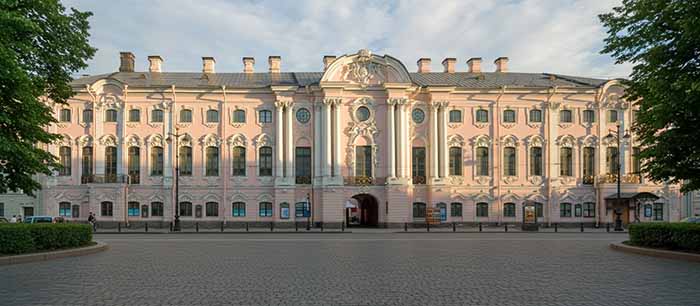
September 21st is National Beef Stroganoff Day. We can’t believe that in all the years of publishing The Nibble, we’ve never included a recipe. After all, when we graduated from the college dorm long ago, it was one of our go-to recipes for entertaining. It sounded so sophisticated and after all, it came from the kitchens of Russian aristocracy. Before we get to the recipe we’ll begin with a bit of Stroganoff history (the name is also transliterated from Cyrillic as Stroganov). But first: > The year’s 25+ beef holidays. > The different cuts of beef: a photo glossary. Below: > Wine pairings with Beef Stroganoff. > Popular Russian dishes served in the U.S. > The short list of Russian food holidays celebrated in the U.S. While the exact inventor is debated, the dish likely emerged in the 1850s-1860s from the kitchens of the Stroganoff/Stroganov family‡, influential nobles who were prominent from the 16th through 19th centuries. One account credits French chef Charles Brière, who worked for Count Pavel Aleksandrovich Stroganov (photo #6), with creating the recipe around 1861. Russian aristocrats would often hire French cooks but retain their palate for the tastes of the homeland. According to the cookbook A Taste of Russia, the original beef Stroganoff recipe derived from a basic French recipe using mustard to season beef. The chef incorporated Russian sour cream and named the creation after his employer. That original Russian Beef Stroganoff was quite different from most recipes of today. It consisted of thin strips of beef sautéed with mustard and served in a sauce made with bouillon and sour cream—but notably without the mushrooms or onions which were integrated into later recipes. Plus, the creamy beef was often served alongside fried potato straws (pommes paille—photo #5) rather than over noodles or rice, as is done today. The dish gained international recognition when it was featured in cookbooks of the late 19th century. A recipe appeared in “A Gift to Young Housewives” by Elena Molokhovets in 1871, helping to establish it in Russian culinary tradition. The spread of the recipe to other countries accelerated during the 20th century, particularly after Russian émigrés fled during the Revolution and both World Wars, bringing their culinary traditions with them. American and European cooks began to add mushrooms, onions, and various seasonings that weren’t part of the original recipe. In the U.S., the dish became especially popular in the 1950s and 1960s, served over egg noodles rather than the difficult-to-make straw potatoes. Another time-saver was a can of condensed mushroom soup, an ingredient which became a staple in American home recipes to make quick sauces†. Today, Beef Stroganoff exists in countless variations worldwide, from elegant French-influenced versions to hearty American casseroles made with yes, Campbell’s Cream Of Mushroom Soup. Personally, we prefer a fine recipe like this one, with a few tablespoons of Cognac or wine. But we took it up a notch with morels instead of button mushrooms. There’s more about the Stroganoff family in the ‡footnote. This is a super-quick recipe that takes shortcuts, yet delivers the basic flavors. Essentially, you save time cooking the beef by purchasing a chunk of cooked roast beef from the deli and cubing it yourself. (You can also use any other meat you have on hand—chicken, pork, etc.). Plus, the sour cream is not mixed into the sauce but used as a garnish, so people can stir in as much or as little as they like. There are numerous Stroganoff recipes and variations below if you prefer something more classic. Ingredients For 2 Servings If you prefer, you can substitute a pound of ground beef and cook it prior to adding it in step 3. Prep time is 10 minutes and cook time is 15 minutes. 1. COOK noodles according to package directions. 2. SAUTÉ the mushrooms, onion, and garlic in oil in a large skillet until tender. 3. ADD the broth, roast beef, herbs, soy sauce, and pepper and bring to a boil. Reduce the heat and simmer, uncovered, for 10 minutes. 4. DRAIN the noodles; stir into skillet. Top with sour cream and parsley and pass a bowl of sour cream for those who want more. The key to pairing wine with Beef Stroganoff is balancing the cream sauce’s richness with wines that have good acidity and complementary rather than competing flavors. Although Beef Stroganoff is rich, its flavors can be delicate. While Beef Stroganoff is the most popular Russian dish embraced by Americans (and vodka the main beverage), other Russian dishes have found fond fans in the U.S. > Here are more dishes popular in modern Russian cuisine. It’s a short list. We need someone to petition for more Russian food holidays—at least for blini, blintzes, borscht, and chicken Kiev (anyone can register a food holiday). |
|
|
________________ *Fried potato straws, called pommes paille (“potato straws”) in French cuisine, are extremely thin julienned potatoes that are deep-fried until crispy and golden. They’re much thinner than regular julienne French fries, cut to about 1/8 inch thick or even thinner so that they resemble blades of actual straw. They were typically served alongside the Stroganoff as a bed or on top as a garnish. The crispy texture was a perfect contrast to the creamy sauce and tender beef. †Canned soup became a common cooking ingredient, particularly for sauces and casseroles, beginning in the 1940s and 1950s. In the 1930s, companies like Campbell’s which had introduced condensed canned soups in 1897, began publishing recipe booklets and ad showing how their soups could be used in other recipes. By the 1950s, casseroles had become a staple of American home cooking, often using cream of mushroom, cream of chicken, tomato soup, or other condensed soups as a base for sauces. In 1955, Dorcas Reilly, a Campbell’s test kitchen employee, created the now-classic green bean casserole using cream of mushroom soup. By the 1960s, canned soup was firmly established as a go-to ingredient for home cooks seeking quick and reliable ways to add flavor to their meals. ‡The Stroganoff/Stroganov clan’s fortune was the result of salt mining, trade, and land acquisition. The family’s origin is not known with absolute certainty, but the leading theory, based on genealogical research by historian Andrey Vvedensky, is that they likely descended from affluent Pomor peasants—Russian settlers inhabiting the subarctic White Sea region of Russia. Other sources say they were well-do-do merchants in the Novgorod region of medieval Russia in the late 14th and early 15th centuries [source]. What we know reliably is that the documented Stroganovf dynasty began with Anikey Fyodorovich Stroganov (1488-1570), who is considered the true founder of the family’s wealth and prominence. He established their salt-mining empire in the Perm region, on the western slopes of the Ural Mountains [source]. The strategic move to salt mining transformed them from regional merchants into one of Russia’s wealthiest and most influential families. In addition to salt production, wealth came from fur trading, iron mining, and later cultural patronage. By the 16th century, the Stroganovs had become so powerful that they were granted extensive privileges by the Russian tsars, including the right to maintain private armies and govern vast territories in Siberia. By the 17th century, the family was part of the Europe-hopping Russian aristocracy—which is why Count Pavel Stroganoff (1774–1817) was born in Paris. The count (1774–1817) was a Lieutenant General and Adjutant General to Alexander I, and a key figure in the Government reforms of Alexander I. He took part in the Napoleonic Wars, commanding an infantry division. Alas, he died of consumption at just 42 years of age. Were it not for Beef Strognoff, he would be a footnote in history. They were one of the most prominent noble families in Russian history, their influence lasting until the Russian Revolution. Their grand estate, the Stroganoff Palace in St. Petersburg, and a vast art collection part of the State Russian Museum, which is the world’s largest depository of Russian fine art, is open to visitors.
CHECK OUT WHAT’S HAPPENING ON OUR HOME PAGE, THENIBBLE.COM. |
||