Chicken Poke Bowls: A Recipe & Poke Bowl History
|
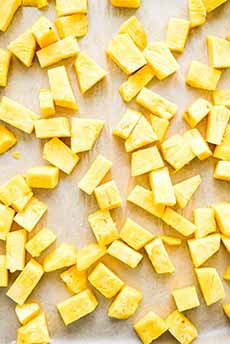
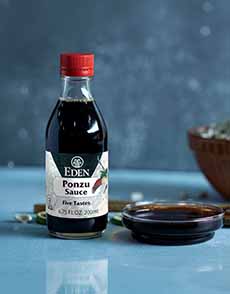
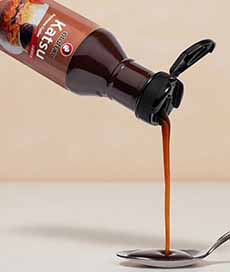
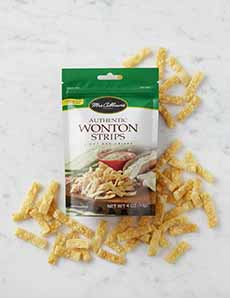
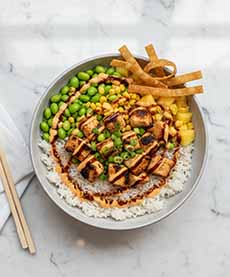
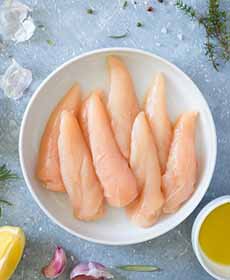
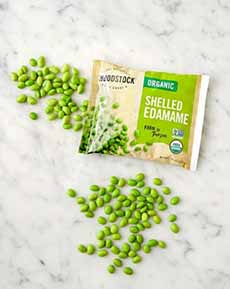
National Poke Day, which celebrates the traditional Hawaiian dish, takes place on September 28th*. And, September is both National Chicken Month and National Rice Month. So how about something different: chicken poke bowls! If you don’t already know poke, it’s a dish of diced, marinated raw fish that’s considered a local comfort food in Hawaii. Customizable at fast-casual restaurants and available as grab-and-go from food stores, poke is well-connected to the Aloha spirit**. For National Poke Day, spread the Aloha spirit. Head to a poke restaurant or make poke bowls at home. And yes, you can include chicken poke bowel recipe below for your celebration (with our thanks to Island Fin Poke for inspiring us to create it). Below you’ll find: > The Chicken Poke Bowl recipe. > The year’s 15+ rice holidays. > More ways to use wonton strips. Elsewhere on The Nibble: > The history of rice and the different types of rice: a photo glossary. > The 56 fish and seafood holidays. > The year’s 48 poultry holidays: chicken, turkey, and duck. > The year’s 40+ salad holidays. Island Fin poke offers two Chicken Pokes Bowl: Recipe Overview: From Island Fin’s stated ingredients, we crafted our own recipe. If you want the Korean BBQ version, you can get the kimchi, pickled vegetables, and togarashi sauce at an Asian market or online. However, unless you can find take-out Korean BBQ chicken, it’s a time-consuming process to make at home (see the ‡footnote). About The Dressings: Island Fin uses heavier sauces that follow the preference of many Americans for creamy or otherwise thick dressings. We’ve listed their Wicked Wahini† sauce and Ono Ono†† sauce in the ingredients. We personally prefer lighter dressings (e.g., vinaigrette on green salads). When testing our chicken bowl recipe, we’ve used plain ponzu sauce (photo #6), katsu sauce††† (photo #7) a Japanese BBQ sauce used on tonkasu, breaded pork cutlet) thinned/diluted with ponzu, spicy mayo thinned with rice vinegar or vegetable/canola, a lemon vinaigrette, and even Russian dressing. Every option tasted good! Prep time is 20 minutes plus cook time for the rice and the chicken. For The Chicken & Marinade 1. COOK the edamame according to package directions. If using frozen corn, thaw and pat dry. 2. MARINATE the chicken cubes for 15-30 minutes in the marinade: soy sauce, sesame oil, garlic powder, and ginger. 3. COOK the chicken in a heated skillet or grill pan over medium-high heat for 6-8 minutes. Turn occasionally, until the chicken is golden brown and cooked through (internal temperature 165°F). 4. ASSEMBLE: Divide the rice into two bowls. Arrange the cooked chicken, edamame, corn, and diced pineapple in sections over the rice (like a Cobb salad). Garnish with the scallions and wonton strips. 5. SERVE with sauces for drizzling. Note: We like to toss our ingredients together for eating, and use bowls deep enough to enable tossing. Poke, pronounced POE-kay (note that there is no accent mark over the “e”), is a traditional Hawaiian dish that consists of cubed raw fish, typically ahi tuna, that’s been seasoned and marinated. The word comes from the Hawaiian verb meaning to slice or to cut. In a poke bowl, the seasoned raw fish is served over rice and topped with various ingredients like seaweed, avocado, cucumber, edamame, pickled vegetables, and different sauces. Today, the fish is usually marinated in ingredients like soy sauce, sesame oil, sea salt, onions, and sometimes spicy mayo or other flavorings. The original, traditional Hawaiian poke was much simpler: just fresh fish seasoned with sea salt, seaweed, and onions. The modern poke bowl trend has expanded to include many more toppings and variations, making it popular as a healthy, customizable meal option worldwide. The Beginning While traditional poke had been available in Hawaiian grocery stores since the 1990s, the poke bowl as we know it today began to gain popularity in the mainland U.S. in the 2010s. But the growth was dramatic during the mid-2010s. Poke moved to mainland in the early to mid-2010s, with poke becoming increasingly popular in North America starting in 2012 [source: Wikipedia]. The trend first took off, not surprisingly, in California. By the summer of 2015, the dish had become so trendy that dozens of places with names like Pokinometry and Wiki Wiki Poke (wiki means quick in Hawaiian), could be found from Santa Monica and throughout Los Angeles. They inspired the following recipe, after we learned that the chain had switched up their protein options by offering chicken alongside traditional seafood options. And next…beef? Lamb? Pork? Tofu? We can’t wait to experiment with these. (Some information provided by Chat GPT.) This crunchy snack and salad garnish have quite a few additional uses. |
|
|
|
________________ *There is also a National Fresh Ahi Poke Day on August 15th, emphasizing fresh-to-order poke with freshly-sliced fish, a superior preparation to all of the grab-and-go poke bowls. **The Aloha Spirit is a not only a philosophy but a part of Hawaii’s state law, representing a Hawaiian way of life that embodies love, kindness, compassion, and respect for people and nature. It is defined as a coordination of mind and heart within each person, expressed through the Hawaiian words akahai (kindness), lōkahi (unity), ʻoluʻolu (agreeable), haʻahaʻa (humility), and ahonui (patience). ***Togarashi is a spicy sauce based on shichimi togarashi, a traditional seven-spice blend called Japanese Seven Spice in the U.S. The seven spices are blak sesame seeds, ginger, nori (or poppyseed) orange peel, red chile peppers, sansho (Japanese pepper), and white sesame seeds. The spice blend is mixed with one or more of these liquids to form a sauce: mirin (sweet rice wine), rice vinegar, sesame oil, and soy sauce or tamari. Garlic or ginger paste can be added. The result is a sauce that’s citrusy from the orange peel, nutty from the sesame seeds, with a bit of tingle from the sansho pepper. It has less heat but more complex flavors than sriracha. You can buy it bottled in Asian grocery stores. It can be used as a dipping sauce for dumplings or tempura, on noodles (ramen, noodles, even pasta) or rice/other grains, with grilled meats or vegetables. You can add it to mayonnaise, sour cream, or yogurt for a spicy dip or spread. †Wicked Wahini sauce is a proprietary recipe used by Island Fin Poke. You can create a similar sauce by mixing sriracha or chili garlic sauce, lime juice, a touch of honey or brown sugar for sweetness, and an optional splash of soy sauce. ††Ono Ono sauce was named after the Hawaiian word for delicious, ono. It refers to a variety of sauces used in Hawaiian cuisine. The specific ingredients can vary widely depending on the type of sauce and whether it is used for meat, fish, etc. An easily acquired version is katsu sauce. If you want to make your own: †††Katsu sauce recipe: 1/2 cup ketchup, 2 tablespoons soy sauce, 1 tablespoons mirin, 1 tablespoons brown sugar, 1-1/2 teaspoons Worcestershire sauce, 1/2 teaspoon powdered ginger, and 1 clove minced garlic. Whisk all ingredients in a bowl and until thoroughly combined. ‡Korean BBQ chicken is a complex dish: a sticky, caramelized exterior with slightly charred edges and meat that’s sweet, spicy, and garlicky. It starts with marinating for several hours or overnight, then is grilled or cooked on high heat. The marinade includes rice wine, sesame oil and soy sauce plus brown sugar/honey, garlic, and ginger. Grated Korean pear or apple is added for additional sweetness and is considered important for its tenderizing enzymes. Heat comes by way of gochujang (Korean chili paste), gochugaru (Korean chili flakes), and black pepper. Additional flavor enhancers include grated or minced onion, scallions, and toasted sesame seeds. Sometimes, cola is added for extra sweetness and caramelization! It’s delicious, but requires time and lots of ingredients. ‡‡Duck sauce, plum sauce, sweet and sour sauce: the differences. Duck sauce is typically a translucent, amber-colored sauce that’s sweet and mild. It’s often made with apricots, peaches, or a mix of fruits (or fruit flavorings). It’s commonly served with Chinese-American dishes like egg rolls and has a fruity base (often apricot or plum). Sweet and sour sauce is usually more vibrant—a red/orange color—and tangier due to a stronger vinegar component, which also gives it a bit of a sour bite to balance the sweetness. It’s also thicker than duck sauce. A quality version may have visible chunks of pineapple or peppers. Plum sauce is a traditional Chinese condiment made primarily from plums, sugar, vinegar, and spices. It has a more complex flavor with a stronger fruit taste and slight tartness. Duck sauce is the American-Chinese restaurant version. It’s typically sweeter, milder, the Americanized, simplified cousin of traditional plum sauce.. ‡‡‡Sake is a fermented rice drink, as wine is fermented grape juice. ‡‡‡‡Panagyaman is an Ilocano term (people inhabiting northwestern Luzon in the Philippines) meaning thanksgiving or gratitude, often used to describe a celebration of a successful harvest. The festival aims to express gratitude for the successful rice harvest and recognize the vital contribution of small farmers to national food security. CHECK OUT WHAT’S HAPPENING ON OUR HOME PAGE, THENIBBLE.COM. |
||
 Edamame[/caption]