Easy, Yummy Pecan-Crusted Chicken Fingers – Tenders – Strips - The Nibble Webzine Of Food Adventures Easy, Yummy Pecan-Crusted Chicken Fingers - Tenders - Strips - The Nibble Webzine Of Food Adventures


THE NIBBLE BLOG: Products, Recipes & Trends In Specialty Foods


Also visit our main website, TheNibble.com.

Easy, Yummy Pecan-Crusted Chicken Fingers – Tenders – Strips

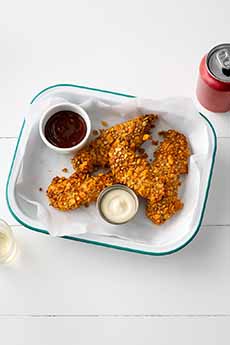
Chicken tenders with 2 sauces
[1] No boring flour here: These fingers have a terrific breading of corn flakes and chopped pecans (photo © Taste Of Home).

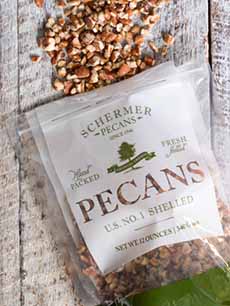
Bag Of Chopped Pecans
[2] Pecans are a great crust for chicken, but if you prefer, you can use your nut of choice. Macadamias? Pistachios? (photo © Schermer Pecans).

Box of Corn Flakes
[3] Corn Flakes are our favorite coating for fried chicken. Check out this recipe (photo © Kellogg).

Buffalo Wings With Cinnamon Honey
[4] Buffalo wings cinnamon honey. You can make your own by mixing cinnamon into plain honey. Or, Drizzle Honey makes a great one (photo © Drizzle Honey).

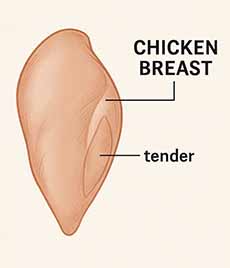
Raw Chicken Tender Diagram
[5] The tenderloin, shown on top of the breast here, is actually underneath the breast (image by A.I.).


Chicken finger lovers: the cluckin’ good piece of poultry that’s also known as chicken tenders and chicken strips, has its own holiday on July 27th.

A delicious chicken fingers recipe and dipping sauce options follow. But first:

> The year’s 40 chicken holidays.

> The history of chicken.

> The different cuts of chicken. How many can you name?

> Gettin’ geeky: chicken terminology.

> The history of chicken fingers is below.
 
 
RECIPE: CHICKEN FINGERS WITH A PECAN CRUST

A treat for the whole family, this recipe adds even more flavor and protein with a crunchy pecan coating. You can use sauces for dipping or creating your own.

The recipe is from Beba Cates of Pearland, Texas, and sent to us by the Taste Of Home Editorial Team5x.

Prep time is 15 minutes and cook time is 15 minutes.

You can also find pre-cut raw chicken tenders in many markets. Yes, you can also find ready-to-heat-and-eat chicken tenders/fingers in the frozen food aisle, but trust us: This recipe is so much better!
 
Ingredients For 2 Servings

  • 1/2 cup finely chopped pecans
  • 1/3 cup crushed cornflakes
  • 1 tablespoon dried parsley flakes
  • 1/8 teaspoon garlic powder
  • 1/8 teaspoon salt
  • 2 tablespoons 2% milk
  • 3/4 pound boneless skinless chicken breasts, cut into 1-inch strips
  • Condiments (see below)
  •  
    Preparation

    1. PREHEAT the oven to 400°F. In a shallow bowl, combine the first 5 ingredients (pecans through salt).

    2. PLACE the milk in another shallow bowl. Dip the chicken in milk, then roll in pecan mixture.

    3. PLACE the strips in a single layer in an ungreased 15 x 10 x 1-inch baking pan. Bake, uncovered, until juices run clear, 12-15 minutes.
     
     
    SAUCES FOR CHICKEN FINGERS

    Chicken fingers welcome just about any condiment. We always serve a “flight of sauces,” three or more options.

    The basics condiments include usual round up of barbecue sauce, honey (including hot honey), honey mustard, ketchup, marinara, ranch, and sweet and sour sauce.

    Sophisticated palates will appreciate:

  • Alabama White Sauce: A tangy southern blend of mayonnaise, vinegar and pepper.
  • Buffalo Dip: Give chicken fingers the classic wing treatment with a blue cheese dip and a side of celery stalks (photo #4).
  • Comeback Sauce: A Southern blend of mayonnaise, ketchup, chili sauce, and spices (a variation of Thousand Island Dressing).
  • Dijon Mustard: Straight or mixed with honey to taste for a true honey mustard*.
  • Flavored Honey: Cinnamon honey is more sophisticated than regular hot honey. You can mix it yourself (photo #4).
  • Harissa Mayonnaise: North African chili paste mixed with mayo. In fact, you can mix any of your favorite flavors—aïoli (garlic), chipotle, pickle relish, sriracha, wasabi, into regular mayo.
  • Rémoulade: A Louisiana/Creole sauce of mayonnaise with capers and herbs, that often has a pink color from ketchup or chili sauce, and more aggressive spicing than the original French rémoulade. The latter is mayonnaise-based with layers of flavor from capers, pickles, herbs, anchovies, and Dijon mustard.
  • Sweet & Spicy: Mix jam into mayonnaise, sour cream, or yogurt, along with chili flakes.
  • Tzatziki: Greek yogurt dip with cucumber and dill is light and refreshing against the fried food. Here’s a recipe.
  •  
     
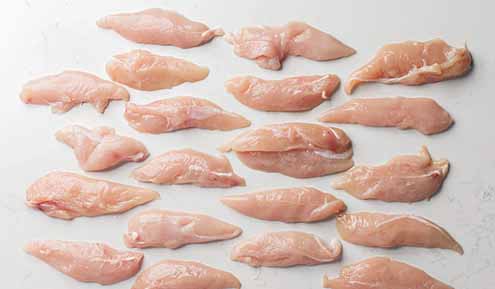
    Raw chicken fingers or tenders
    [6] Chicken tenders at the market (photo © Butcher Shoppe Direct) .


    THE HISTORY OF CHICKEN FINGERS

    For something relatively new on the scene, the origin of chicken fingers (also called chicken tenders or chicken strips) is lacking in detail. Who first served them? When? Where?

    Fried chicken fingers-tenders-strips as we know them today emerged in the 1960s-1970s in the American South.

    While several restaurants claim to have invented them, they likely developed simultaneously in multiple locations, given the burgeoning fast-food industry’s need for convenient, handheld chicken options.

    The concept was partly inspired by the popular British meal, fish and chips†, substituting breaded, fried chicken for the breaded, fried fish.

    Chicken fingers exploded in the 1980s and 1990s as chain restaurants like Raising Cane’s (founded 1996) and Zaxby’s (founded 1990) built entire concepts around them. In fact, the Chicken Fingers holiday was created by Raising Cane’s founder, Todd Graves (with concurrent promotional opportunities, of course)..
     
     
    What Part Of The Chicken Do The Fingers Come From?

    Chicken fingers are typically cut from the chicken breast, specifically the pectoralis major, the large pectoral muscle. They’re cut into long, finger-like strips along the grain of the muscle.

    However, another part of the chicken, the tenderloin (pectoralis minor), is also used. It’s a smaller, separate muscle that lies underneath the main breast meat (photos #5 and #6).

    This tender morsel is literally the most tender part of the chicken, and is where the name comes from. Note that fast food chains use the less expensive breast meat.

    History provided by Claude A.I. 2025-07-27.
     
     
    ________________
     
    *Real vs. faux honey mustard: Store-bought honey mustard often contains real honey, but the amount can be small. Less expensive sweeteners like high-fructose corn syrup, sugar, or glucose syrup are commonly added, sometimes as the main sweetener. The packets you get from foodservice may contain little or no real honey. Read the ingredients label.

    Fish and chips—fried fish with a side of thick-cut fried potatoes (the chips), first appeared in London around 1860. Their popularity exploded: a cheap, filling, portable food for working-class families. By 1910, there were more than 25,000 fish and chip shops across Britain.

    The dish became so culturally important that during both World Wars, the British government ensured that fish and chips remained one of the few foods not rationed!


    CHECK OUT WHAT’S HAPPENING ON OUR HOME PAGE, THENIBBLE.COM.


    Please follow and like us:
    Pin Share


    Comments are closed.

    The Nibble Webzine Of Food Adventures
    RSS
    Follow by Email


    © Copyright 2005-2025 Lifestyle Direct, Inc. All rights reserved. All images are copyrighted to their respective owners.