|
Updated August 2026
Apples’ durability is a marvel of nature. Harvested in from July through October, most apples are then put into a controlled climate, awaiting release through the year.
That’s why you can purchase numerous types of apples year-round. During the off seasons, you’re actually buying apples that are up to a year old, and you barely notice (and that’s why in the spring and early summer, they may taste a bit less than prime [source]).
That’s why you can purchase numerous types of apples year-round. During the off seasons, you’re actually buying apples that are up to a year old, and you barely notice (and that’s why in the spring and early summer, they may taste a bit less than prime [source]).
National Apple Week begins the second Sunday of the first full week in August*.
Our tip: Try a different type of apple than your regular two or three favorites.
You might have to look beyond your supermarket to farmers markets, but it’s well worth your time.
Below:
> The year’s apple holidays.
> New apple varieties.
> A brief history of apples.
> Apple recipes “beyond the pie.”
> Apple trivia.
Elsewhere on The Nibble:
> The top 10 apple varieties.
> The history of apples.
THE YEAR’S APPLE HOLIDAYS
> National Johnny Appleseed Day is March 11th and also September 26th.
> National Apple Pie Day is May 13th.
> National Sugarbee Apple Day is May 20th.
> National Applesauce Day is June 6th.
> National Apples Strudel Day is June 17th.
> National Apple Turnover Day is July 5th.
> National Apple Week: Second Sunday in August.*
> National Apple Dumpling Day is September 17th.
> National Eat An Apple Day is the third Saturday in September.
> National Apple Month is October.
> National Applejack Month is October.
> National Apple Betty Day is October 5th.
> National Apple Day is October 21st.
> National Caramel Apple Day is October 31st.
> National Eat A Red Apple Day is December 1st.
NEW APPLE VARIETIES
Breeders are always seeking the next great thing: an apple that will capture the hearts and palates of consumers.
New apples arrive are created regularly, but only a small number become widely available, recognizable supermarket varieties. A major, nationally marketed variety tends to emerge every few years.
“Club apples”, the name for cultivars grown and sold under controlled licenses and branding—have accelerated the number of new apples consumers see, though many remain regional and/or seasonal.
It Takes A Long Time To Develop A New Apple
Developing a new apple is a slow process: A breeder makes a cross, evaluates seedlings, tests the most promising selections in orchards and different climates, then growers plant enough trees for commercial volume.
That commonly takes 15–25 years, sometimes longer, between when a new cultivar is bred and when it is released to consumers. For example, Cosmic Crisp was first cultivated by Washington State University in 1997 but didn’t appear in the national marketplace until the end of 2019. Honeycrisp, a parent of Cosmic Crisp, was created in 1960 at the University of Minnesota but not released until 1991.
|
|
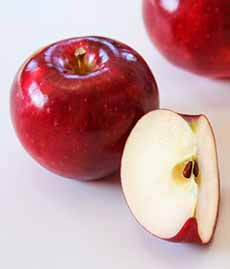
[1] Cosmic Crisp is our new favorite apple. Its name comes from the yellow dots (lenticels) on the skin, which hint at stars in the night sky (photo © Proprietary Variety Management).

[2] Opal apples, a cross between Golden Delicious and Topaz, were bred in the Czech Republic (photo © Golden Sun Marketing).
[3] RubyFrost: sweet and tart, crisp and crunchy. Eat it or bake it (photo © Crunch Time Apple Growers | Matt Wittmeyer).
[4] America’s top-selling apples (chart © U.S. Apple).
|
Why does apple breeding take so long? It’s a lot of trial and error: planting trees, waiting for fruit to grow, and repeating until the ideal result is achieved.
New apples arrive every year, but only a small number become widely available, recognizable supermarket varieties. A major, nationally marketed variety tends to emerge every few years.
Beyond the familiar Delicious, Gala, Granny Smith, and Honeycrisp of our youth, recent years have introduced newer varieties of America’s favorite fruit.
These branded and trademarked varieties were bred to be eating apples, also known as dessert apples and table apples. Growers pay to license the seeds each year.
“Club apples” is the industry name for cultivars grown and sold under controlled licenses and branding.
Jazz, a New Zealand-bred cultivar named Scifresh, a cross of Braeburn × Royal Gala, sold under the Jazz brand. On the market since the mid-2000s, it’s now an established international “club apple.” It was bred for a dense, very crisp texture and a lively sweet-tart, rather than merely sweet, flavor—a firm, crisp apple intended for snacking.
Juici is a Honeycrisp × Braeburn cross, developed in Washington State. It combines Honeycrisp’s juicy crunch with Braeburn’s firmer, more balanced sweet-tart character. Its flavor is more complex than Honeycrisp, with great crunch. It can also be baked.
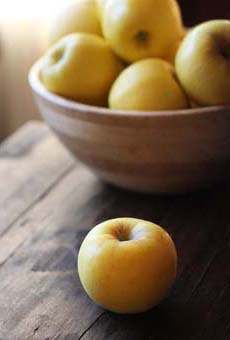
Opal, a yellow apple developed in the Czech Republic, is a cross between Golden Delicious and Topaz. More flavorful than the Golden Delicious, is also naturally slow to brown.
Piñata is the North American brand name for the German-bred cultivar Pinova, a cross between Cox’s Orange Pippin, Duchess of Oldenburg and Golden Delicious. It’s targeted to people who like Fuji and Gala varieties: a firm, juicy, tangy apple with an unusually fruity, sometimes pineapple-like finish. A sweet-tart profile with tropical notes it’s a late-season apple. For a bit of consumer confusion, it’s also marketed as Corail, Pinova, and Sonata. Excellent for pies, crisps, cakes, and tarts, it has firm flesh and enough tartness to retain its character under heat. It is one of the strongest all-purpose baking choices among the newer apples.
RubyFrost is newer than Jazz and Piñata, but it has been established for more than a decade. It was developed by Cornell University and is a Braeburn × Autumn Crisp cross. A late-season/winter apple commonly available from roughly January into spring, its principal market is New York and the Northeast.
Cosmic Crisp is the most recent to achieve large-scale success. It was bred at Washington State University, a Honeycrisp × Enterprise cross. An easier-to-grow alternative to Honeycrisp, it’s a cross between Honeycrisp and Enterprise apples. It’s super crunchy, sweet-tart in flavor, and—a big “plus”—it’s slow to brown. It entered commercial sales in 2019 and expanded extremely quickly to an established, broadly distributed variety.
Other New Varieties To Look For
Availability varies enormously by region and food chain, but these are among the more distributed modern varieties:
EverCrisp, a Honeycrisp × Fuji cross; very crisp, sweet, and juicy, with a longer season than Honeycrisp in many markets.
Kissabel, a family of red- or pink-fleshed apples that is still an emerging category entering broader commercial distribution.
Koru, a New Zealand-bred apple, typically sweet, crunchy, and low in acidity.
Lucy Glo and Lucy Rose are modern red-fleshed apples, respectively tart-bright and sweeter, developed partly for their beguiling pink-to-red interior color as well as eating quality.
SnapDragon, a Cornell-developed New York apple, notable for its crisp texture and sweet, spicy flavor..
SugarBee is a branded variety with a very sweet, honeyed profile and firm crunch. It was a chance mutation discovered in a Minnesota orchard as a chance seedling in the 1990s, with the distinctive, grown tree noticed later in the orchard. One parent is the Honeycrisp, the other variety, whose pollen was carried by a honeybee, remains unknown.
SweeTango is a Honeycrisp × Zestar! cross bred in Minnesota, known for a very crisp bite and bright sweet-tart flavor. Yes, the exclamation point is part of its trademark! Its marketing season is often relatively short.
APPLE HISTORY
Apples, seemingly the all-American fruit, actually originated in Central Asia: in southern Kazakhstan, Kyrgyzstan, Tajikistan and Xinjiang, in northwest China.
Apples were introduced to North America by colonists in the 17th century. The first apple orchard on the continent was planted in Boston in 1625, by Reverend William Blaxton.
> Here’s more comprehensive history of apples.
APPLE RECIPES “BEYOND THE PIE”
Apples require no cooking to be enjoyed as hand fruit, with cheese, sliced into green salads and fruit salads, diced into a yogurt parfait, apple slaw, apple salsa, and yesterday’s pickled apples recipe.
But when you’re ready to head to the stove or oven, check out:
Apple Balsamic Salmon
Apple Dumplings
Apple Ginger Cole Slaw
Apple Pie Oatmeal
Apple Sangria
Applesauce Cake
Apple Streusel Bundt Cake
Apple Turnovers
Apple Walnut Chutney
Caramelized Onion & Apple Galette
Classic Apple Crisp
Homemade Applesauce
Pork Fajitas With Apple Cilantro Salsa
Roasted Beet, Avocado and Granny Smith Apple Towers
Salted Apple Caramel Cheesecake
Sour Cream Walnut Apple Pie
Sweet & Spicy Pickled Apples
Turkey Salad With Celery Root & Apples
APPLE TRIVIA
Apples are a member of the rose family, Rosaceae, which, in addition to flowering plants, also includes almonds, apricots, cherries, loquats, peaches, pears, plums, quinces, raspberries, and strawberries.
More than 2,500 varieties of apples are grown in the United States, 200 commercially (see photo #4 for the Top 10 apples). Only the crabapple is native to North America. Some 7,000 varieties exist worldwide.
The top apple producers around the world are China, the United States, Turkey, Poland, and Italy.
Apples account for 50% of international deciduous fruit tree production.
Seventy percent of American apples are grown in Washington State.
________________
*According to A Healthier Michigan, the first full week in August is National Apple Week. We can’t find other references for this holiday; it may be a Michigan “thing.” Nevertheless, we’re more than happy to celebrate National Apple Week now. National Apple Month is October and National Apple Day is October 21st.
†Some popular varieties that do not store well are imported from the Southern Hemisphere, where the seasons are reversed.
CHECK OUT WHAT’S HAPPENING ON OUR HOME PAGE, THENIBBLE.COM.
|