THE NIBBLE BLOG: Products, Recipes & Trends In Specialty Foods


Also visit our main website, TheNibble.com.

Pimlet, A Pimm’s Cup-Gimlet Combo Cocktail For World Gin Day

World Gin Day is second Saturday in June, a global celebration of all things gin. Sure, you could have a French 75, G&T, Martini, Negroni, or a Tom Collins, but how about something new?

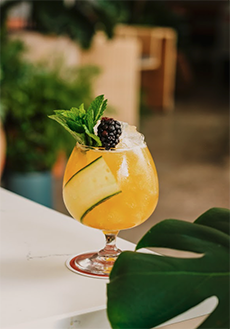
That new recipe, the Pimlet (photo #1) follows; but first, some background:

> The history of gin.

> The history of cocktails.

> More gin cocktail recipes.

> The different styles of gin.

> Pimm’s Cup recipe, the classic British summer drink.

> The 14 gin holidays.

> The 49 cocktail holidays.
 
 
WHAT’S A PIMLET?

A Pimlet is a variation of a Gimlet, adding some Pimm’s No.1, a gin-based liqueur†, to the gin based Gimlet.

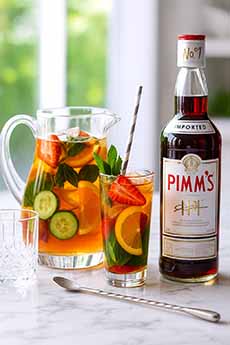
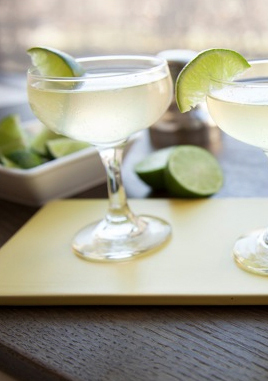
It combines two summer favorites—the Pimm’s Cup (photo #2) and the Gimlet (photo #3)—in one glass.

Like the Gimlet, the Pimlet is a clean, citrus-forward cocktail that adds the herbal complexity of Pimm’s in a more concentrated form.

Pimm’s No. 1 is most commonly used to make the Pimm’s Cup, a tall, effervescent drink made with ginger beer or lemonade (or sometimes Champagne).

It’s served over ice in a tall glass and garnished with fresh fruit like cucumber, orange, strawberries, and mint. (photo #2).

It’s one of the classic British summer drinks. See the other classics in the footnote*.
 
 
RECIPE: THE PIMLET

The Pimlet was created by mixologist Amber Carregal at Willa’s restaurant and bar in Tampa, Florida.

She was looking to capture the flavors of two of her favorite cocktails (Pimm’s Cup and Gimlet) when she developed it.

Willa’s is known for its innovative cocktails…and more.

Specializing in simple classic dishes, the restaurant has been named “The South’s Best New Restaurant” by Southern Living, one of the nation’s “Coolest Restaurants to Dine at Right Now” by Architectural Digest, and “Best New Restaurant” by Tampa Magazine.

By the way, Amber specifically selected Waterloo Gin for the cocktail. While you can use the brand you have on hand, if you’re a gin lover, see why you should get a bottlle of Waterloo (below).
 
Ingredients Per Drink

  • 1.25 ounces Waterloo #9 Gin (photo #4 or substitute)
  • 1 ounce Pimm’s No. 1 Liqueur† (photo #2)
  • .75 ounce fresh-squeezed lime juice
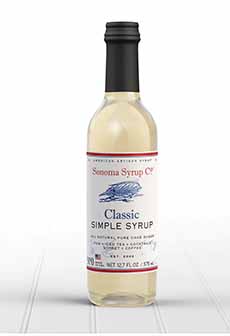
  • .75 ounce simple syrup (recipe)
  • Garnishes: cucumber ribbon (photo #6), mint sprig, optional blackberry††
  • Ice
  •  
    Preparation
     
    1. POSITION a cucumber ribbon in the glass and fill with crushed ice.

    2. SHAKE the ingredients together with ice cubes.

    3. POUR over the crushed ice and garnish with a mint sprig and blackberry.
     
     
    ABOUT WATERLOO GIN

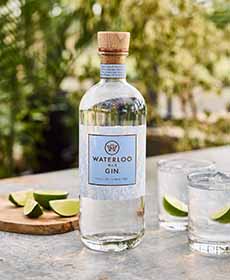
    Waterloo No. 9 Gin (photo #4), an artisan gin distilled in Texas Hill Country, is distinctive not just because it’s made in the U.S.A.

    Rather, it’s made to closely reflect the terroir‡ of Texas—or more precisely, the flavors of Texas.

  • Unique Botanical Profile: It includes Texas pecans among its botanicals—unusual in a gin. The additional botanicals also largely represent Texas.
  • The nine botanicals for which the gin is named No. 9 are anise, coriander, ginger, grapefruit, juniper, lavender, licorice root, orris root, and pecan.
  • High Proof: Bottled at 94 proof, Waterloo is more robust than most gins.
  •  
    The result: an aroma of citrus and lavender. A palate with anise flavor from the licorice root, along with the classic pine-and-cit5rus flavor of juniper berries, and hints of pecan and lavender.

    Waterloo is quite different, and a nice gift for a gin enthusiast. Check it out at WaterlooGin.com.
     
    ________________
     
    *Classic British summer drinks reflect the country’s fondness for gin. They include The Bramble (with blackberry liqueur), Gimlet, Gin & Tonic, Pimm’s Cup, Pink Gin (simply gin with Angostura bitters), Sloe Gin Fizz, and Tom Collins.

    †Pimm’s No. 1 is a gin-based liqueur created in 1859 by James Pimm. It’s made with a base of dry gin, along with other liqueurs, fruit juices, and spices (the exact recipe is a closely guarded secret).

    ††Blackberry substitute: a pick of fresh blueberries.

    ‡Terroir, pronounced tur-WAH, is a French agricultural term referring to the unique set of environmental factors in a specific habitat that affects a crop’s qualities. It includes climate, elevation, proximity to a body of water, slant of the land, soil type, and amount of sun. These environmental characteristics give a fruit or vegetable its unique character.

    In the broader sense, “terroir” references the complete sensory expression of a place through its flavors and aromas, particularly as they manifest in food and drink.

    > Goût de terroir, meaning “taste of the place,” emphasizes the flavor aspect specifically.

    > Sense of place is the English equivalent.

    > Other terms for the concept are regional character and local expression.


    Pimlet Gin Cocktail Recipe Pimm's Cup Variation
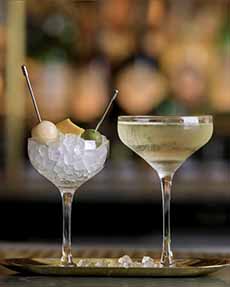
    [1] The Pimlet, a gin cocktail fusion of a Pimm’s Cup and a Gimlet (photo © Sarah Maingot | Willa’s | Tampa).

    Pimm's Cup Cocktail
    [2] A Pimm’s Cup is festooned with fruit (photo generated by A.I.).

    Gimlet Cocktail
    [3] The Gimlet was named after a small hand drill. Why? Supposedly, both the drink and the tool have a “piercing” effect. The recipe is gin, lime juice, and simple syrup (photo © Gallo Winery).

    Bottle Of Waterloo Gin On A Patio Table
    [4] Waterloo Gin #9, made in Texas Hill Country, is so-named for its nine botanicals. It is distilled to 94 proof (photo © Waterloo Gin Company).

    Bottle Of Classic Simple Syrup From Sonoma Syrup
    [5] You can purchase simple syrup or make it. The recipe couldn’t be simpler: Boil equal amounts of sugar and water until the sugar dissolves. You can also make flavored simple syrup. Here’s the recipe and more ways to use simple syrup (photo © Sonoma Syrup Co.).

    Cucumber Ribbons
    [6] It’s easy to make cucumber ribbos (photo © Taste | Australia).


    CHECK OUT WHAT’S HAPPENING ON OUR HOME PAGE, THENIBBLE.COM.


    Comments off

    A Delightful Salt & Vinegar Martini Recipe For Father’s Day

    Salt & Vinegar Martini
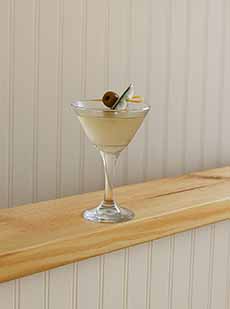
    [1] Salt & Vinegar Martini at Cheeky’s | St. Petersburg (photo © Sarah Maingot).

    Raw Seafood Platter
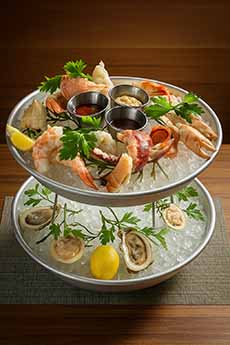
    [2] Not everything on a plateau de mer (plate of the sea, also called plateau de fruits de mer, fruits of the sea) is raw, but it’s all delicious with our featured Martini. See more about the plateau de mer in the footnote* (photo © Upper Story By Charlie Palmer).

    Bottle Of Ford's Gin
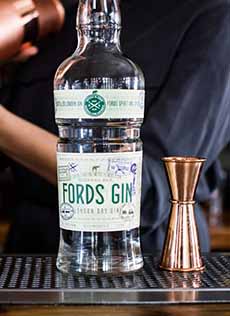
    [3] The mixologists’ favorite gin (photo © Ford’s Gin).

    Dirty Martini
    [4] A Dirty Martini with a beautiful presentation (photo © Coquette Boston).

    Dirty Martini With Blue Cheese Stuffed Olives
    [5] Ruth’s Chris‡ Steak House embellishes its Dirty Martini with blue cheese-stuffed olives (photo © Ruth’s Chris).

    Margarita With Salt Rim
    [6] A half-salted rim (photo © Manhattan Cricket Club NY)

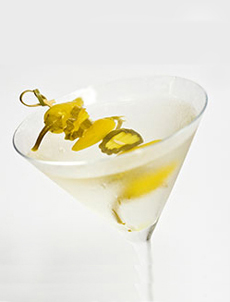
    Pickle Martini
    [7] This Martini doesn’t use brine, but it does have a garnish of sweet gherkin slices (photo AI 2025-06-07).

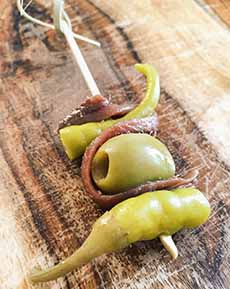
    Pinxto With Olive, Anchovy & Chile Pepper
    [8] This classic pintxo from San Sebastián, Spain simply skewers an anchovy, olive, and guindilla chile pepper on a toothpick. Said to be invented in 1946 at Bar Casa Vallés in San Sebastián, it was named for Rita Hayworth’s character in the film Gilda that opened the same year. Here’s the recipe (photo © Donostia Foods).


    We were delighted to receive this recipe from Cheeky’s, a new neighborhood seafood restaurant and raw bar on Central Avenue in St. Petersburg’s Grand Central District.

    It’s a Salt & Vinegar Martini, garnished with an olive-wrapped anchovy—although you can get fancy and make a Gilda (photo #8).

    It’s the biggest hit on Cheeky’s cocktail menu.

    So as a Martini maven, we got out the ingredients, mixed one up, and liked it.

    Next, we mixed up a pitcher and called friends for TGIF cocktails and put together a quickie plateau de fruits de mer* (photo #2 and footnote**) from our fishmonger.

    We tweaked the recipe a bit. In this version, vinegar-laden pickling liquid replaces pickle brine of a Dirty Martini (the difference between the two).

    > The history of olives.

    > The history of the Dirty Martini.

    > The history of the Martini.

    > The history of the cocktail.

    > The different types of vinegar: a photo glossary.

    > The different types of salt: a photo glossary.

    > The different types of olives.

    > 50 more Martini recipes.

    > All the Martini holidays.
     
     
    RECIPE #1: CHEEKY’S SALT & VINEGAR MARTINI

    At Cheeky’s, the Salt & Vinegar Martini utilizes celery pickling liquid from the kitchen for the vinegar component and an 80/20 saline solution for the salt element. We created our own easy brine (recipe below).

    We also substituted store-bought anchovy-stuffed olives anchovy-wrapped olives.

    If you want the latter—which is a classic pinxto* from the Basque region of Spain—we’ve found them ready-made at high-end Spanish grocers (they are also known as anchovy banderillas [skewers] with olives). It’s a simple wrap—use a pimento- or other stuffed olive. Here’s a recipe to make your own.

    Or better yet, make the Gilda. It may well become your favorite Martini snack.

    The mixologists at Cheeky’s use their favorite London dry gin, Ford’s Gin (photo #3), “as it’s well balanced with citrus notes and silky smoothness.” Grey Goose (photo #5) is the second choice. You can use whatever you have on hand.

    Mix the Martinis in advance. The restaurant serves them ice cold in frozen Martini glasses. Freezing also gives the glass a frosted appearance, which keeps your drink colder and adds visual appeal.

    The salt rim is our own addition. We’ve been adding a salt rim to Bloody Marys, and have plenty of kosher salt and coarse sea salt on hand. You can salt the whole rim or just half (or not at all).
     
    Ingredients Per Drink

  • 1.25 ounces pickling liquid (recipe below, along with the difference between pickling liquid and brine)
  • 2 ounces gin
  • Salt for rim
  • Garnish: anchovy-wrapped olive on a cocktail sword
  • Rim: coarse salt (kosher salt, Margarita salt [unflavored], sea salt)
     
    Preparation

    1. PREPARE the salt rim. The salt stays on: The salt adheres and freezes in place if applied properly (with lime juice or water). Run a lime wedge around the rim or dip the glass in a saucer of water about 1/4″ deep. Then twist in a saucer of salt until it adheres.

    Let the salt rim air-dry briefly before freezing. Place the glasses upright in the freezer. Freezing won’t dissolve the salt if it’s dry when it goes in.

    2a. COMBINE the ingredients in a cocktail shaker with ice. Shake and strain into a frozen Martini glass and garnish with the olive/anchovy pick. OR…

    2b. To prepare a pitcher of drinks in advance, don’t add ice. Just stir the ingredients in the pitcher, cover the top with plastic wrap, and refrigerate.
     
     
    RECIPE #2: PICKLING LIQUID

    Ingredients For 1½ Cups

    This is enough liquid to fill a pint jar of vegetables. So as long as you’re making pickling liquid, why not pickle some celery stalks or green beans? Grapes also work!

    We also made 1/2-inch slices of celery to pickle in the brine and subsequently toss into salads.

    We happened to have Champagne vinegar, which we substituted for the white wine vinegar.

  • 1 cup white wine vinegar
  • ½ cup water
  • Optional: 1 tablespoon sugar (it balances the acidity)
  • 2 teaspoons kosher salt
  • 1 garlic clove, smashed
  • ½ teaspoon whole black peppercorns
  • ¼ teaspoon coriander seeds
  • 1 small bay leaf
  • Celery or green beans
  • Optional kick: 1 small dried chili or a few mustard seeds
  •  
    Preparation

    1. MAKE the brine. Combine the ingredients in a small saucepan. Bring to a boil, reduce the heat, and simmer for 2 minutes to dissolve the sugar and salt. Remove from heat and let cool to room temperature.

    2. ADD the sliced celery or other vegetable or fruit to be pickled (e.g. grapes) and pour the brine into a sterilized jar (instructions follow).

    3. REFRIGERATE for at least 24 hours before using. The flavor intensifies over several days.
     
     
    HOW TO STERILIZE A JAR FOR SHORT-TERM PICKLING

    This is a much simpler process than sterilizing canning jars. There are three methods. We use Method 1.

    With any technique, don’t touch the inside of the jar or lid after washing.

    1. Boiling Water Method. Wash the jar and lid in hot, soapy water; rinse well. Place the jar and lid (separately, not screwed on) in a pot of boiling water. And boil for 5 minutes. Remove with tongs and place upside down on a clean towel to air dry.

    2: Dishwasher Method. Run the jar and lid through a hot cycle with no detergent. (You can run other items along with them, just no detergent!) You can use the jar while it’s still hot, or let it cool on a clean towel, then fill.

    3: Oven Method. The lid must be all metal, no rubber seal. Preheat oven to 225°F. Wash the jar and lid thoroughly with hot, soapy water; rinse well. Place the jar and metal lid (separately, not screwed together) on a baking sheet, open side up. Bake for 20 minutes. Remove carefully using tongs or oven mitts and place on a clean towel to cool slightly. Let cool completely, then fill.
     
     
    THE DIFFERENCE BETWEEN PICKLING LIQUID & BRINE

  • Brine is a simple saltwater solution, often just water and salt. It’s used for brining meats (e.g., chicken/turkey, pork chops/loin); fermenting pickles, sauerkraut, and kimchi; curing olives; preserving cheeses (e.g. feta, halloumi); and preserving garnishes from capers to green almonds.
  • Some seafood is brined before drying or smoking, (e.g. anchovies, bacalao/salt cod, gravlax/lox, and smoked salmon.
  • Note that while olive brine is simply water and salt, commercial brands include acidifiers (like vinegar or lactic acid) and seasonings for preservation, safety, and flavor.
  • Pickling liquid is a seasoned solution used specifically for pickling. It typically combines the water and salt of brine with a a vinegar base, spices (which can be anything, but in the West is commonly coriander, mustard seeds, and peppercorns),herbs (basil, bay leaf, dill, oregano, rosemary, tarragon, thyme), and garlic (which, as a member of the allium/onion family, is a root vegetable).
  • Any vinegar can be used. White distilled is most common (and least expensive), but apple cider, herb, rice, and other vinegar can be used (the different types of vinegar).
  • Sugar is sometimes added. White, brown, or raw are equally fine (the different types of sugar). One of these days we’ve got to try Splenda. We think it should be fine, and who needs more added sugar in their food?
  •  

     
    ________________
     
    *Plateau de fruits de mer, or seafood platter (literally “platter of fruits of the sea”) is a large plate, or often two-tiered platter of chilled raw and cooked shellfish: clams, crab, mussels, oysters, lobster, shrimp, etc. (These days, some chefs add sushi!) The seafood is served on crushed ice, with wedges of lemon and sauces like mignonette” and cocktail sauce.

    **From the fishmonger we grabbed oysters, clams, mussles, and sea scallops, all served raw, plus cooked shrimp, a couple of lemons and limes. He also gave us a big back of crushed ice for the platter. We made our own cocktail sauce in three minutes, just by combining chili sauce (substitute ketchup) and horseradish. Here’s the recipe.

    †Pintxos, pronounced PINCH-os (also spelled pincho or pinchu are bite-sized Basque appetizers, often served on a skewer or toothpick. They are a popular bar snack in northern Spain, particularly in San Sebastian. Pintxos are similar to tapas but generally more elaborately presented and often served on bread.

    ‡Who created the name, Ruth’s Chris Steak House? The name is the result of a legal red tape. The original Chris Steak House was founded in 1927 in New Orleans. In 1965, Ruth Fertel purchased the struggling restaurant and successfully ran it for years under the original name.

    In 1976, the Chris Steak House building burned down. Ruth relocated the restaurant, but due to a legal stipulation in the sales contract, she couldn’t use the name “Chris Steak House” at any other address!

    So to maintain brand recognition but comply with the legal constraint, she prepended her own name and the restaurant became Ruth’s Chris Steak House.

    Ruth disliked the awkward name, but by the time the business grew into a national chain, the brand was well-known. Changing it again would have meant risking consumer confusion.


    CHECK OUT WHAT’S HAPPENING ON OUR HOME PAGE, THENIBBLE.COM.


    Comments off

    How You Can Help The Oceans For World Oceans Day

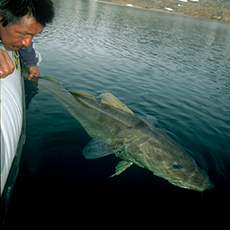
    Atlantic Cod In Lake
    [1] Atlantic cod (photo via Public Library of Science journal [PLOS] CC License 4.0).

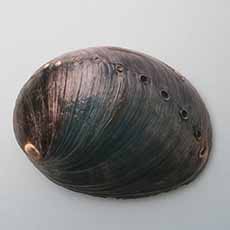
    Black Abalone
    [2] Black abalone (photo by Jan Delsing | Public Domain).

    European Eel In Ocean
    [3] European eel (photo by Gerard M license CC-BY-SA 3.0).

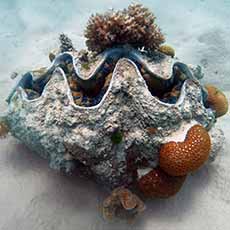
    Giant Clam In Ocean
    [4] Giant clam (photo CC License CC-BY-SA 4.0).

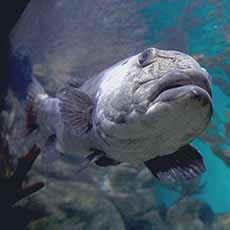
    Giant Sea Bass In Ocean
    [5] Giant sea bass (photo by Caitlin Charles License CC-BY-SA 2.0).

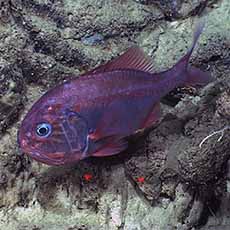
    Black Abalone In Ocean
    [6] Orange roughy (photo NOAA Photo Library License CC-BY 2.0).

    Farming Sturgeon
    [7] VOA correspondent Steve Herman at a sturgeon farm in South Korea (photo Voice Of America | Public Domain).

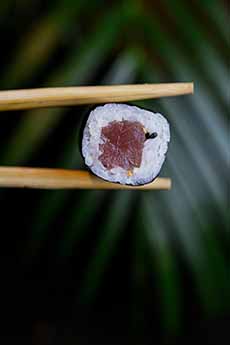
    Tekka Maki
    [8] If you eat bluefin tuna, choose another variety. See the footnote‡ (photo © Ahtziri Lagarde | Unsplash).

       
    June 8th, World Oceans Day, is a day for humankind to honor the ocean. The first thing you can do, on any day, is to buy only sustainable seafood. Avoid eating endangered species—which are endangered, of course, because they are so popular.

    Whatever fish you want, there’s a thriving species that’s just as satisfying.

    For years, the Monterey Bay Acquarium Seafood Watch has been guiding consumers and food service to make better choices.

    > Head here to download a guide, or download the app.
     
     
    POPULAR & ENDANGERED SPECIES

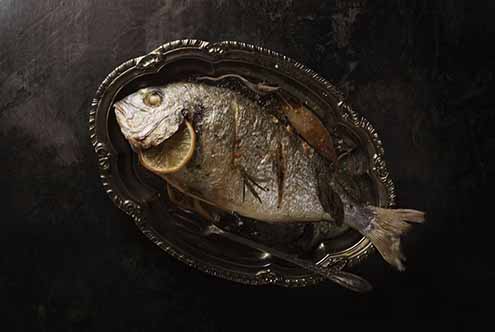
    Grilled Whole Fish On A Silver Platter
    [9] It may be delicious, but if it’s on the endangered or vulnerable species list, choose something else that’s just as tasty—and tell the store or restaurant to offer sustainable seafood (photo © David Food Photo Tasty | Unspash).
     
    Many seafood species are currently classified as endangered or vulnerable due to overfishing, habitat destruction, climate change, and pollution†. Here are some examples.

    Endangered Fish

  • Atlantic Cod (Gadus morhua) stocks are everely depleted in the Northwest Atlantic (photo #1).
  • Bluefin Tuna (Thunnus thynnus) are over fished for sushi‡ (photo #8).
  • European Eel (Anguilla anguilla) is critically endangered, threatened by barriers to migration† and illegal trade (photo #3).
  • Giant Sea Bass (Stereolepis gigas) is vritically endangered due to overfishing off California and Mexico (photo #5).
  • Orange Roughy (Hoplostethus atlanticus) are very slow-growing and vulnerable to deep-sea trawling (photo #6).
  • Sturgeon (Acipenser, most species): Many species are endangered; targeted for their roe (caviar). Farmed caviar is a viable option (photo #7).
  •  
    Endangered Shellfish and Mollusks

  • Abalone (especially white [Haliotis sorenseni] and black [Haliotis cracherodii] abalone): Critically endangered due to overharvesting and disease (photo #2).
  • Giant Clam (Tridacna.spp*): Threatened by harvesting and reef destruction (photo #4).
  • Queen Conch (Aliger gigas): Overfished in the Caribbean.
  •  
     
    HOW ABOUT TRYING ONE OF THESE, TOO?

    In addition to making ocean-friendly food choices, you can:

    At The Seashore

  • Participate in a shore cleanup.
  • Reduce plastic and waste by bringing food in reusable containers or recycle what you purchase there.
  • Choose reef-safe sunscreen to avoid harming coral reefs.
  •  
    Anywhere

  • Support marine conservation. Donate to or volunteer with nonprofits like Oceana, Coral Restoration Foundation, and Surfrider Foundation.
  • One of our favorite ways follows.
  •  
     
    “ADOPT” A SEA TURTLE OR A CORAL REEF

    We like to give animal “adoption” gifts to friends who don’t need or want more “stuff.” Check out these organizations:

    Adopt a Sea Turtle

  • Sea Turtle Conservancy enables you to adopt a specific turtle with GPS tracking.
  • World Wildlife Fund is kid-appropriate, with a plush turtle toy and photo with the adoption certificate (photo #10).
  • Your local aquarium may also have a program.
  •  
    Adopt a Coral Reef

  • Coral Restoration Foundation will plant plant your on a reef in the Florida Keys.
  • The Ocean Foundation/Ocean Agency focuses on global coral restoration.
  •  
     
    CHECK OUT THESE PHOTO GLOSSARIES

    > The different types of fish and seafood: a photo glossary.

    > The different types of crab.

    > The differrent types of smoked salmon.

    > The different types of sushi and sashimi.

    > The different types of tuna.
     
     
    ________________
     
    Tridacna.spp: spp is the abbreviation for species pluralis, Latin for multiple species. This means that all species in giant clam genus, Tricchadna, are endangered.

    †Barriers to migration and propagation include dams, culverts and Road crossings; weirs, locks, and floodgates; water extraction infrastructure; levees and channelization; urban development; climate change–induced barriers (droughts, warming waters, altered flow regimes); and pollution.

    The European eel is just one example where there are thousands of barriers across its migratory route from European rivers to the Sargasso Sea.

    ‡Tuna issues: As of this writing, The Monterey Seafood Watch lists all tuna as “avoid.” However, per the International Union for Conservation of Nature (IUCN), Atlantic bluefin tuna have made a remarkable comeback and moved off of the endangered species list entirely, although southern bluefin remain endangered and Pacific bluefin is vulnerable.

    Bluefin is the costliest and served at higher-end restaurants. Most regular sushi establishments use other tuna species like yellowfin (ahi) or bigeye tuna instead. Both are more affordable and sustainable.

    Here are the different species of tuna.

     
    Sea Turtle In The Ocean
    [10] Adopt a sea turtle from the World Wildlife Fund (photo © WWF).
     

    CHECK OUT WHAT’S HAPPENING ON OUR HOME PAGE, THENIBBLE.COM.


    Comments off


    © Copyright 2005-2026 Lifestyle Direct, Inc. All rights reserved. All images are copyrighted to their respective owners.