THE NIBBLE BLOG: Products, Recipes & Trends In Specialty Foods


Also visit our main website, TheNibble.com.

Halfsies Cookies: Great Baker, Great Reason To Have 2 Flavors

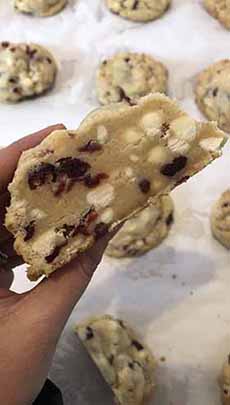
Cranberry White Chocolate Halfsies
[1] Cranberry White Chocolate Halfsies With Orange Zest (all photos © Halfsies).

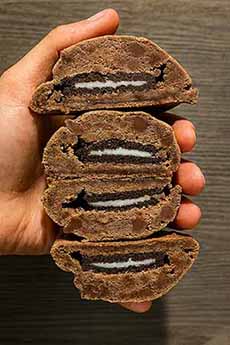
Nutella Knockout Halfsies Cookies
[2] Nutella Halfsies.

Reeses Pieces Halfsies
[3] Reese’s Pieces Halfsies.

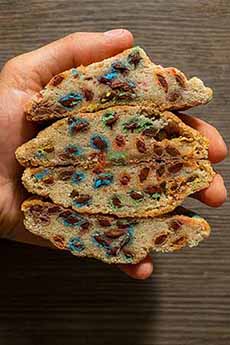
M&M Halfsies Cookies
[4] M&M Halfsies Cookies.

Double Chocolate Chip Halfsies
[5] For the chocoholics, Double Chocolate Chip.


Halfsies Cookies are a must-try member of the artisan food scene in New York State’s Hudson Valley.

They give a nod to the best homemade cookies of our youth while integrating the jumbo-tall yumminess of cookis like Levain, with an added sprinkle of fun.

The Halfsies Cookie Company, founded by Dave and Heather Maffei, has mastered the integration of culinary nostalgia with its own unique style in the world of small-batch gourmet cookies.

We find them to be irresistible, and they’re our Top Pick Of The Week.
 
 
WHAT MAKES HALFSIES UNIQUE?

  • First is their signature “crisp on the outside, soft on the inside texture” texture that Dave perfected over 10 months of experimentation.
  • Next is their creative flavor combinations (the playful names are a fun bonus).
  • Then comes the jumbo cookie halves, not only providing mouth-watering appreciation of the insides, but the beckoning to enjoy two different flavors at the same time.
  • Finally is their rotation of seasonal flavors in addition to a roster of classics.
  •  
    Who could ask for anything more? Not us!

    There’s lots more to relate, including cookie flavors below. But first:

    > The history of cookies.

    > The 10 basic types of cookies.

    > Cookie favorites: a photo glossary of hundreds of cookie varieties.

    > The year’s 44 cookie holidays.
     
     
    ORIGIN STORY: THE COOKIES DIDN’T START OUT AS “HALFSIES”

    There was no deliberate business decision to sell cookies halves, rather, the name came from a family moment.

    To begin at the beginning, in 2018, Dave Maffei traded store credit from returned Gucci loafers for a KitchenAid mixer, embarking on a ten-month journey to perfect the ultimate cookie recipe.

    His goal was ambitious yet simple: create cookies that were crispy on the outside while maintaining a soft, chewy interior.

    The “Halfsies” name itself emerged from a moment of maternal practicality. When Dave first brought his cookies (then full-sized) to Heather’s parents’ house one Easter, her mother thought they were “way too big” and cut them all in half before serving them on a fancy tray.

    Dave was initially mortified by this, but everyone loved the cookies. What could have been a deflating critique instead became the perfect branding opportunity, and the name stuck.

    Thanks, Mom, for saving us [i.e., Dave and Heather] time in pondering how to differentiate the cookies from other artisan offerings.

    For consumers, the benefit over other artisan cookies include:

  • Portion: Appeals to customers who want to indulge but not overindulge.
  • Sampling: Allows customers to enjoy more flavors.
  • Psychology: A “half,” even a big one, makes people feel better about eating two or three halves.
  •  
    Their half-cookie format seems to be unique in the artisanal cookie space. Which is not to say that the “half” concept hasn’t existed for a while, exemplified by:

  • Half sandwiches, a deli and café option to pair one’s sandwich with soup or salad.
  • Half portions at restaurants, especially half-portions of pasta dishes as a first course.
  • Half pizzas, i.e., whole pizzas with different toppings on each half.
  • Half pints of ice cream, often found half-pint containers as a standard size.
  • Half bottles of wine, enabling parties of two to pair a different wine with each course.
  •  
     
    A Tray Of Halfsies Cookies
    [6] Halfsies cookies as they were first conceived by a mother-in-law: large cookies cut in half.
     
     
    AND NOW, THE FLAVORS

    From the creative mind of Maffei have come more than 350 flavors, with a dozen or so available in any particular week.

    Recent months’ flavors are shown in the chart. Before you devour them, note that:

  • Vacuum-sealed by the half dozen, to ensure they stay fresh and intact, no matter how far away they’re shipped.
  • New flavors always. Maffei is constantly innovating. “Even though we already have so many favorites I’m always thinking of new ones our customers will love.”
  • Small-batch excellence. Flavors often sell out, emphasizing customer satisfaction.
  • With a 4.8 out of 5-star rating based on over 2,500 reviews, Halfsies has clearly built a loyal customer base.
  •  
    Are you next?


    July 2025 Some Prior Months’ Flavors
  • Banana Cream Pie
  • Birthday Cake Sugar Cookie with Vanilla Chips
  • Chocolate Peanut Butter Chip
  • Crush On You (Crushed Reese’s Peanut Butter Cups
  • Fluffernutter
  • I Hate Raisins Oatmeal Dark Chocolate Chip
  • Kitchen Sink
  • PB Dream
  • Pineapple Upside Down
  • S’more Money, S’more Problems
  • Snickerdoodle With Caramel Chip
  • Strawberry Peanut Butter Jelly Time
  • Tiramisu
  • You Want A Reese’s Piece Of me?
  • Berried Treasure
  • Chocolate Covered Cherry
  • Chocolate PB Chip
  • Chocolate Peanut Butter Smiles
  • Cowboy Cookies
  • Gingerbread Cookies
  • Halfsies Black & White
  • Hot Honey
  • Oreo Stuffed PB Milk Chocolate
  • Piña Colada
  • Rest in Reese’s
  • Samoa Stuffed Chocolate Chip
  • S’More Money S’More Problems
  • Worth Every Crumbs
  •  
     

    CHECK OUT WHAT’S HAPPENING ON OUR HOME PAGE, THENIBBLE.COM.


    Comments off

    America’s Top 10 Sandwiches & Grilled Cheese History

    We’re celebrating National BLT Day today, July 22nd, with the Cheddar, bacon, and tomato for lunch and a luxury version, a lobster BLT with Gruyère, for dinner.

    Which got us to thinking: Is the BLT our favorite sandwich? Actually, its big brother, the club sandwich, topped with turkey or chicken—has an edge. So we decided to see what the rest of the country prefers.

    The Top 10 sandwiches in America follow. But first:

    > The different types of sandwiches: a photo glossary.

    > The year’s 25+ sandwich holidays.

    > The history of the sandwich.

    > The history of the BLT.

    > The history of the grilled cheese sandwich is below.
     
     
    AMERICA’S FAVORITE SANDWICHES

    We looked at several surveys, which, as is common varied somewhat. Here’s one compiled by 24/7 Wall St. Note that the BLT, Club, and Bacon sandwiches have close kinship:

    While we may have our own definitions, by the textbook a BLT is a simple sandwich, usually consisting of just bacon, lettuce, and tomato with mayo between two slices of bread. The club sandwich adds a layer of turkey or chicken on toasted bread. It can be a single or “triple decker.”

    The Top 10 Sandwiches

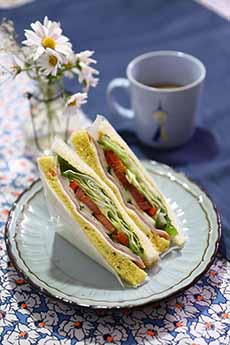
    1. Grilled Cheese (photo #1)

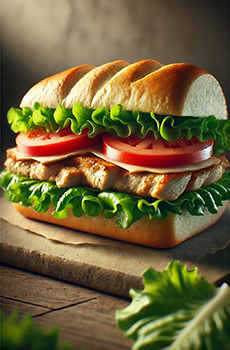
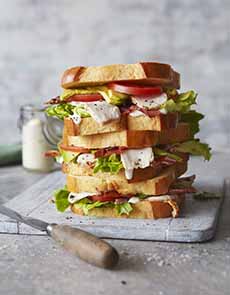
    2. Grilled Chicken (photo #2)

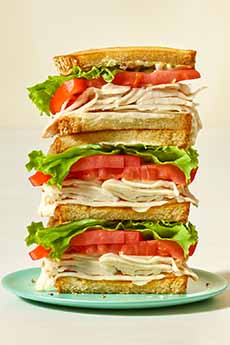
    3. Turkey (photo #3)

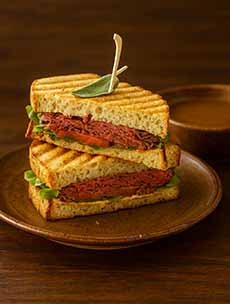
    4. Roast Beef

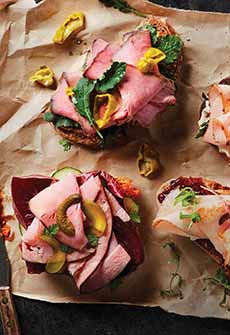
    5. Ham

    6. BLT

    7. Club

    8. Bacon Sandwich

    9. Peanut Butter & Jelly

    10. Pulled Pork
     
     
    THE HISTORY OF THE GRILLED CHEESE SANDWICH

    The bread. The earliest form of bread was flatbread made from wild grains and tubers ground into flour, mixed with water, and baked on hot stones. The eastern evidence is ca. 12,400 B.C.E. (predating agriculture!) in what is now Jordan.

    There was widespread flatbread use from 7000 to 6000 B.C.E. By 2000 B.C.E., flatbread became common across Near East as well.

    The first leavened (risen) bread likely emerged around 3,000 B.C.E. in ancient Egypt, via contact between the flatbread dough and wild yeast.

    By the Roman era, 100 B.C.E.–400 C.E., wheat bread was a staple.

    > The history of bread to modern times.
     
     
    Now that we have the bread, what about the cheese?

    Cheese appears, ca. 7000–6000 B.C.E. The earliest evidence has been found in Neolithic pottery in Poland.

    The process of cheese making, involving fermenting milk to separate curds and whey, was possibly discovered accidentally when milk was stored in animal stomachs (animal stomachs and bladders were employed as containers in ancient times). Stomachs contain the rennet enzymes necessary to create the curds that are pressed into cheese.

    While archaeologists have yet to find the smoking gun (or smoking pottery, as it were), around 6000–5000 B.C.E., in Mesopotamia or the Fertile Crescent, people could plausibly have eaten cheese with flatbreads or early forms of grain cakes.

    Sumerians (ca. 3000 B.C.E) and Egyptians (ca. 2000 B.C.E.) both produced cheese. By the time of the Greeks and Romans, cheese was widely made and even aged for texture and flavor. In ancient Rome, bread and cheese were a common soldier’s ration.

    > The history of cheese.
     
     
    Putting Them Together

    The concept of combining bread and cheese dates back thousands of years. Ancient Romans reportedly enjoyed bread grilled with cheese, though not in sandwich form.

    Welsh rarebit (rabbit) originated in Britain, possibly as far back as the 14th century (the earliest printed record dates to 1725). Melted cheese was poured over a slice of toasted (presumably stale) bread.

    The sandwich was invented on the fly in 1762, to make it convenient to eat while at the gambling table (the history of the sandwich).

    Sometime in 18th-century Switzerland, the practice of dipping bread in melted cheese—fondue—appeared. It is believed to have been created as a way to use stale bread.

    The Swiss also created raclette, melted cheese served with boiled potatoes, crusty bread, cornichons, and usually a variety of proteins and vegetables.

    Needless to say, where ever there was bread and cheese, they were eaten together in some form or other. Take a look at:

  • Argentina: Provaleta, Provolone cheese grilled in a skillet, served with bread for scooping.
  • France: Croque Monsieur & Croque Madame: grilled ham (fried egg for Madame) and Gruyère sandwich topped with béchamel sauce.
  • Georgia: Khachapuri, boat-shaped bread filled with melted cheese and egg.
  • Greece: Saganaki, fried kefalotyri or other cheese, served with crusty bread.
  • India: Paneer Pakora, cubes of paneer cheese sandwiched between bread slices, battered and deep-fried.
  • Italy: Mozzarella in Carrozza, mozzarella between bread slices, breaded and fried.
  • Mexico: Quesadilla, a tortilla filled with cheese (and sometimes meat or vegetables), folded and griddled.
  • U.K: Cheese Toastie, the British version of a grilled cheese, often with extra fillings.
  • Venezuela/Colombia: Arepa de Queso, Cornmeal flatbread stuffed with asadero, mozzarella, or other melty cheese, griddled.
  •  
     
    So Where’s The Grilled Cheese Sandwich?

    You have to cross the ocean for modern grilled cheese—melted cheese between two slices of bread—which was created in the U.S. in the 1920s.

    1920s: It was made possible thanks to two key inventions, beginning in the 1920s:

  • Processed American cheese, perfected by James L. Kraft in 1916 to melt easily, and made widely available by the 1920s.
  • Sliced bread, introduced by Wonder Bread in 1928.
  •  
    1930s: During the Great Depression (1929-1939), “toasted cheese sandwiches” were a low-cost, satisfying meal, often served open-faced (on one slice of bread) topped with melted cheese.

    1940s: During World War II, mess halls served “American cheese filling sandwiches,” usually toasted, to U.S. soldiers. The name “cheese dream” was sometimes used, especially when the sandwich was topped with extras like bacon or tomato and served hot and open-faced.


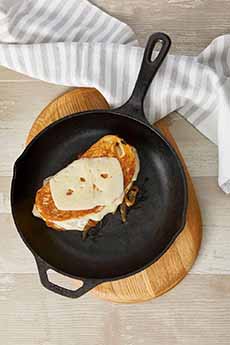
    Grilled Cheese Sandwich
    [1] Number one in the U.S.A.: grilled cheese (photo © U.S. Dairy).

    Chicken Sandwich
    [2] Grilled chicken takes second place (A.I. photo).

    Turkey Sandwich With Lettuce & Tomato
    [3] Turkey takes #3. Here’s the recipe (photo © The Kitchn | Photo: Alex Lepe, Food Stylist: Rachel Perlmutter).

    French Dip Sandwich: Roast Beef & Gravy On Grilled Bread
    [4] Roast beef is #4. Here, grilled bread and gravy for dipping turn it into a French Dip sandwich (photo © McCormick).

    Ham Sandwich
    [5] The good old ham sandwich takes the 5th spot. In this upgraded variation, the bread is pumpernickel, radicchio replaces lettuce, and gherkins substitute for pickle chips (photo © Columbus Craft Meats).

    BLT Sandwich
    [6] The BLT (photo © Tapis Rouge | Pixabay Content License).

    California Club Sandwich On Brioche
    [7] Our personal favorite, the Club Sandwich, adds chicken or turkey to the BLT. Here, it’s served on brioche (photo © St. Pierre Bakery).

     
    1950s: The now-familiar two-slice grilled cheese, made with with buttered bread and American cheese toasted in a skillet, was common in American households. Schools added it to lunch fare as an inexpensive, child-/teen-friendly meal, often paired with tomato soup (which counted as a serving of vegetables). Cookbooks and advertisements promoted the grilled cheese sandwich as quick, wholesome, and ideal for busy mothers and picky eaters.

    1960s: By the 1960s, the term “grilled cheese sandwich” became more common, replacing older terms like “toasted cheese.” The switch to grilling in a pan with butter (rather than baking or broiling) helped define the form we recognize today: two slices of bread, buttered on the outside, filled with cheese, and griddled until golden and melty. Grilled cheese sandwiches became a staple in American households and school lunchrooms. Paired with tomato soup, grilled cheese became a nostalgic comfort food—partly due to school cafeterias, partly due to marketing campaigns by soup companies like Campbell’s.

    2000s: Today grilled cheese has evolved from American cheese on white or whole wheat, into a gourmet item, including add-ons beyond the traditional toppings of bacon, tomato, and deli-style pickles.

  • Bread upgrades: brioche, ciabatta, olive bread, seed bread, sourdough, etc. Use a panini press if you can.
  • Cheese upgrades: Brie/Camembert, Cheddar/flavored Cheddar, goat or sheep cheese, Gruyère, mozzarella, Roquefort, smoked cheese, etc. Don’t be shy about using more than one cheese on the sandwich.
  • Condiments upgrades: aioli (garlic butter), balsamic glaze, gourmet mustard, hot honey, pesto, sriracha or chipotle mayonnaise (or other flavored mayo), truffle butter or truffle oil.
  • Pickle upgrades: dilly beans, giardiniera, gherkins, pickled or smoked jalapeño, pickled onions, pickled red peppers, etc.
  • Protein upgrades: crab or lobster, pancetta, prosciutto, pulled pork, grilled or shredded chicken, roast beef.
  • Vegetable upgrades: arugula or baby spinach, caramelized or sautéed onions, guacamaole, roasted red peppers (pimiento), sundried tomatoes.
  • Plus: apple or pear slices, chutney, fig jam, you-name-it!
  •  
    Who’s hungry?!


    CHECK OUT WHAT’S HAPPENING ON OUR HOME PAGE, THENIBBLE.COM.


    Comments off

    America’s Favorite Junk Food For National Junk Food Day

    Pepperoni Pizza
    [1] Pizza tops the list (photo © Jordan Nix | Unsplash).

    Quart Of Oreo Ice Cream
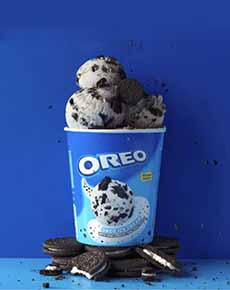
    [2] Runner-up: ice cream (photo © Carrefour).

    M&Ms in a bowl
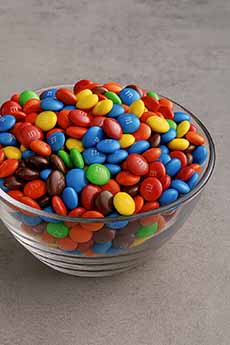
    [3] In third place: chocolate/candy bars (photo © Webstaurant Store).

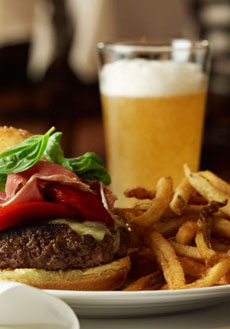
    Burger, fries, beer
    [4] Hamburgers are #4. Beer is #6. French fries are #8 (photo © The Palm | NYC).

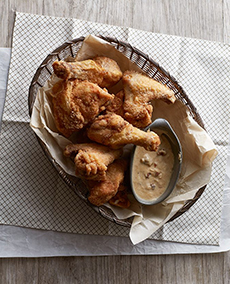
    Fried chicken in a basket
    [5] Fried chicken is #6 (photo © Volpi Foods).

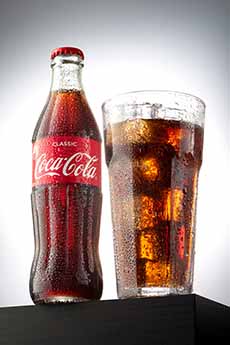
    Coca-Cola glass bottle and filled tall glass
    [6] Sodas are #9 (photo © Andrey Ilkevich | Unsplash).

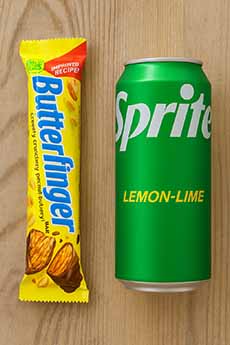
    Butterfinger & Sprite
    [7] “Other candy” is #10, shown here with a can of #9 (photo A.I.).


    July 21st is National Junk Food Day. What are America’s favorite junk foods? The answers follow, but first:
     
     
    WHAT IS JUNK FOOD?

    The term “junk food” is part of our everyday parlance, but it’s not formally defined by most U.S. government or healthcare agencies. However, both government entities and public health organizations use functional definitions to identify foods high in certain unhealthy components and low in nutritional value.
     
     
    “Junk food” typically refers to processed or ultra-processed foods that are:

  • High in added sugars, salt, and/or saturated or trans fats.
  • Low in dietary fiber, vitamins, and minerals.
  • Calorie-dense but nutrient-poor.
  •  
     
    Per The USDA (U.S. Department of Agriculture)

    The USDA does not officially define “junk food,” but it cautions against “discretionary calories” or “empty calories” (see the difference in the *footnote below).

    These are foods and beverages high in solid fats and added sugars with minimal essential nutrients, such as candy, soda, fried snacks, and pastries.
     
     
    Per The CDC (Centers for Disease Control and Prevention)

    Similarly, the CDC has no “junk food” definition, but uses terms like “unhealthy foods,” “low-nutrient foods,” or “foods high in sodium, added sugar, and unhealthy fats.”

    It warns that consumption of these foods contributes to obesity, heart disease, type 2 diabetes, and other chronic illnesses.
     
     
    Per The FDA (Food and Drug Administration)

    The FDA doesn’t label foods as “junk,” but it regulates the Nutrition Facts labels and definitions for terms like “healthy” and “low fat.”

    It also sets limits for daily values of sugar, sodium, fat, and calories, which help guide what is considered excessive.
     
     
    Per The World Health Organization (WHO)

    WHO often refers to “energy-dense, nutrient-poor foods” and highlights the risk of non-communicable diseases (NCDs) from high intake of candy and confectionery, fast food, processed snacks, and sugar-sweetened beverages.
     
     
    Per The Academy of Nutrition and Dietetics

    The AND defines “junk food” as “foods high in sugar, salt, and fat that provide little nutritional benefit.”

    That’s easy to understand!
     
     
    AMERICA’S FAVORITE JUNK FOODS

    Here are the Top 10 Most Popular “Junk Foods” according to the 2025 Hims Survey†.

    We don’t know the methodology, because some of the items on this list provide legitimate protein (fried chicken, hamburgers).

    But, it seems to have nailed the main culprits: chips, chocolate candy, and soda. (We would have added baked sweets—cake, cookies, donuts, pie, etc.)

  • 1-Pizza: 11%
  • 2-Ice Cream: 8%
  • 3-Chocolate/Candy Bars: 8%
  • 4-Hamburgers: 6%
  • 5-Fried Chicken – 6%
  • 6-Chips: 5%
  • 7-Beer: 5%
  • 8-French Fries: 5%
  • 9-Soda: 5%
  • 10-Candy (Other): 4%
  •  
     
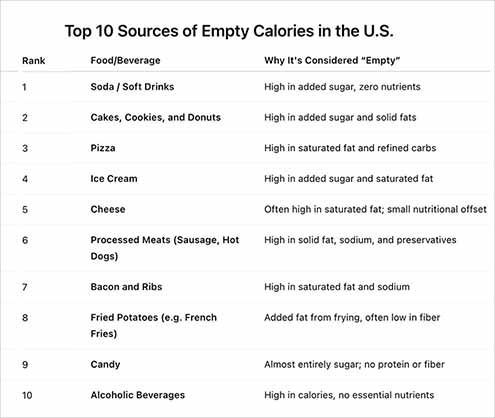
    EMPTY CALORIES: ANOTHER WAY TO KEEP TRACK
     
    While they don’t provide definitions for “junk food,” here are the top 10 sources of empty calories in the typical American diet, based on research from the U.S. Department of Agriculture (USDA) and Centers for Disease Control and Prevention (CDC).
     
     
    Empty Calories Chart
    [8] Chart created by ChatGPT, 2025-07-21.
     
    The key offenders in these foods are:

  • Added sugars, especially in drinks, desserts, and candy.
  • Solid fats, which are found in full-fat dairy, meats, and fried foods.
  • Refined grains, which are stripped of fiber and nutrients.
  • Alcohol, which has 7 calories/gram, no vitamins or minerals (what are whole grains).
  •  
    Some foods on this list do contain some nutrients (like cheese or pizza, and the burgers and fried chicken on the Top 10 list).

    But they contribute a disproportionately high number of calories from fat or sugar without enough nutritional benefit to offset them—especially when consumed in large quantities.
     
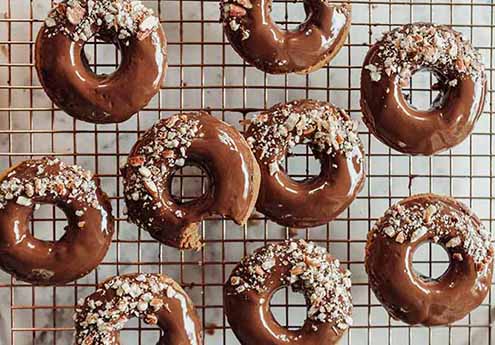
    Chocolate Dipped Donuts
    [9] So delicious, but a minefield of empty calories (photo © Brooke Lark | Wesual | Unsplash).
     

    ________________

    *Empty calories are bad calories (from sugar and fat, no nutrients). Discretionary calories are extra (unused) calories from your daily food intake which you may use on small indulgences, including empty-calorie foods. All empty calories are discretionary calories, but not all discretionary calories are empty calories.

    †This was an online consumer study conducted by Hims & Hers Health, Inc., a U.S.-based telehealth company. While their core business is in healthcare, the company also conducts lifestyle and health-related surveys to gauge public attitudes and behaviors.

    The survey was conducted in recognition of National Junk Food Day (July 21) and asked participants to name their favorite indulgent or “junk” food. The exact methodology was not made available, i.e., we don’t know exactly how the question is asked—open-ended or choose from a provided list.


    CHECK OUT WHAT’S HAPPENING ON OUR HOME PAGE, THENIBBLE.COM.


    Comments off


    © Copyright 2005-2026 Lifestyle Direct, Inc. All rights reserved. All images are copyrighted to their respective owners.