THE NIBBLE BLOG: Products, Recipes & Trends In Specialty Foods


Also visit our main website, TheNibble.com.

Gift Of The Day: Minnie Beasley’s Almond Lace Tuiles

Minnie Beasley Golden Gift Box
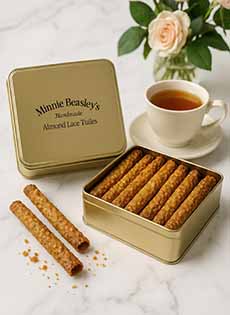
[1] Minnie Beasley’s gift tin, filled to the brim with simply delectable almond tuiles (photos #1, #2, #3, and #__ © Minnie Beasley’s).

Minnie Beasley Bag Of Tuiles
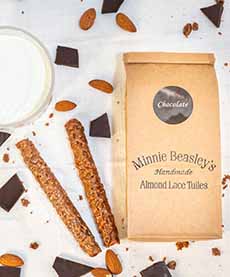
[2] If you’re ordering for yourself and don’t need the gift tin, your tuiles come in a brown bag. The chocolate flavor, shown here, mixes cocoa powder with the standard almonds, butter, sugar, and flour. This makes the cookie a darker, bronzed color and gives it a chocolate flavor profile.

Bag Of Minnie Beasley Maple Pecan Tuiles
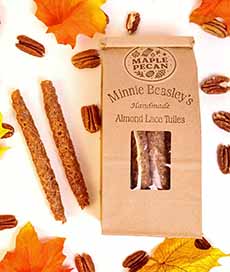
[3] Seasonal Maple Pecan is a must-try.

Tuile Cookies
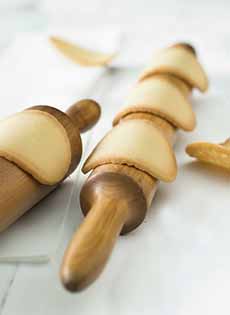
[4] The wider tuiles are formed over a rolling pin. The rolled versions are formed over a dowel (photo © King Arthur Baking).

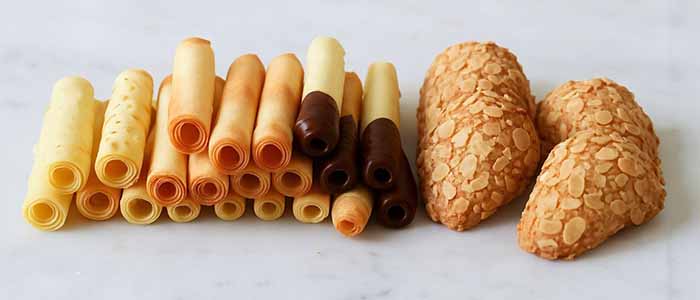
Tuiles Shaped On A Rolling Pin
[5] While warm, the cookies can be rolled into a variety of shapes (Abacus Photo).

A Plate Of Tuiles & A Cup Of Coffee
[6] Classic almond tuiles, shaped like the roof tiles of Provence (Abacus Photo).

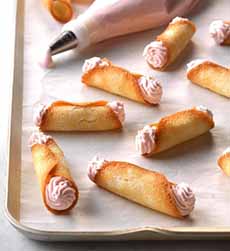
Berry Mini Cannol
[7] What’s the difference between a cream-filled tuile and a cannoli? See the †footnote below (photo © Taste Of Home).


Way back in 2007, THE NIBBLE wrote enthusiastically about Minnie Beasley’s cookies: buttery, lacy almond toffee cookies. They won a gold medal as “best cookie” at the Fancy Food Show the following year and we have been pleased to watch them grow over the years—still a small, artisan brand making each cookie by hand.

This means that you, too, can know the joy of Minnie Beasley’s Almond Lace Cookies*, thanks to her great-nephew Harmon Beasley Canon and his son Jackson, who has taken over the business.

And keeping up with the times, Aunt Minnie’s original recipe is also available in:

  • Chocolate
  • Gluten-free
  • Maple Pecan
  •  
    The cookies have an almost toffee-like consistency: crunchy and buttery with a pronounced almond flavor. They strike that perfect balance between delicate and substantial, sweet and sophisticated.

    Lace cookies are a Southern specialty, named for the French tuile baked to create a lacy pattern.

    Lady Bird Johnson was known for her recipe. Different bakers made them in different ways, and the warm cookies can be molded into different shapes. But whatever the style, the cookies are a delicate gourmet confection, a special treat.
     
     
    How Aunt Minnie’s Cookies, A Family Treat, Went Commercial

    Great Aunt Minnie, a Southern lady herself, lived with Harmon Canon’s family during his boyhood in Memphis and he grew up watching her make the cookies for family and friends.

    After she passed, Harmon took on the mantle, and was encouraged by friends and family to make them available to the public. A 6-person artisanal bakery was born, the cookies selling out as fast as the team could make them.

    They are now being produced by the fourth generation, Harmon’s son Jackson.

    Each individually handmade cookie requires a labor-intensive baking process, a commitment to craft that you can taste in every bite.

    When Minnie Beasley’s pliable cookies come out of the oven, they’re wrapped around dowel rods, creating crispy cylinders when cooled.

    And then, they’re packaged and sent to you.
     
     
    GET YOUR COOKIES!

    We’re as enthusiastic about these wonderful cookies as we were back in 2007.

    Each handmade batch sells out quickly, so head to the website and stake a claim to yours:

    > MinnieBeasleys.com.

    Don’t forget yourself! Whether you’re enjoying one with a cup of coffee or serving them at an elegant gathering, these cookies elevate any moment into something special.

    We’ve got more to say below about the history of tuiles, but first, for your consideration:

    > The history of cookies.

    > The 10 basic types of cookies.

    > Cookie favorites: a photo glossary of hundreds of cookie varieties.

    > The year’s 44 cookie holidays.

    > The history of tuiles is below.

    > Up next: How do the cookies get “lacy?”
     
    Minnie Beasley's Gift Tin
    [8] Yes, please!
     
     
    HOW DO THE COOKIES GET “LACY?”

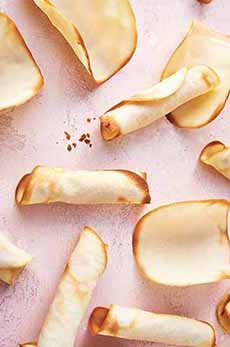
    Not all tuiles are lacy (see photos #4 and #5). The delicate “lace” effect is created through “baking chemistry.”

    Lace cookies get their name from their delicate and lace-like appearance when the sugar bubbles and creates tiny little gaps in the cookies.

    The magic is in the proportions: Lace cookies require a high ratio of butter to flour, with just a small amount of flour (or sometimes ground oats).

    The low flour content means there’s minimal structure to hold the dough together, so it spreads extremely thin during baking. The sugar caramelizes and bubbles vigorously in the oven, and as those bubbles form and pop, they create the characteristic openwork pattern.

    The result is an ultra-thin, crispy cookie with an intricate pattern of gaps throughout.
     
     
    THE HISTORY OF TUILE COOKIES

    The French word tuile (pronounced tweel) refers to the curved, terracotta roof tiles that are ubiquitous atop homes in Provence and the Mediterranean basin.

    The tuile cookie got its name from its curved shape, mimicking the curved roof tiles.

    It’s baked as a flat disc and then, while still hot and malleable, draped over a curved surface (traditionally a rolling pin or wine bottle) to set into an arch. When arranged in rows on a platter, these delicate cookies line up like a the tiled rooftop.

    While someone first draped warm dough over a rolling pin, there is no single known “inventor” of the cookie. It evolved in the 17th century or later, once refined sugar became more accessible to the French middle and upper classes.
     
     
    The Tuiles Of Southern France

    Because its shape is modeled after Provençal roof tiles (photo above), the tuile cookie is linked to the southn of France. These tuiles are typically the tuiles aux amandes (tweels-ohs-ah-mand), almond tuiles.

    Crisp, lacy, and golden, they’re made with slivered almonds to simulate the rough texture of the clay tiles.

    Because the hot-from-the-oven cookies can be molded into different shapes—cups, spirals, cones, etc.—the roof tile shape began to take on different forms in other regions.

     
    Tuile Rooftop
    [9] The famed roof tiles of Provence (Abacus Photo).
     
    The Tuiles Of Northern France

    Just as well-known are the tuiles of Northern France, particularly in the styles of the towns of Beauvais and Amiens in the Picardy* region.

  • Tuiles de Beauvais: This town has a famous history of ceramic and tile manufacturing. In a clever bit of culinary marketing, local chocolatiers and pastry chefs created a sweet version to honor the town’s industry. Unlike the lacy almond versions of the South, Northern tuiles, like Tuiles d’Amiens) are often richer and slightly thicker, sometimes incorporating chocolate and orange.
  • The Normandy region, famous for its butter, is credited with perfecting the rich batter used in the classic almond tuile.
  •  
     
    The Evolution of “Petits Fours Secs”

    In French baking, the tuile falls under the category of petits fours secs, small dry oven cakes. Their evolution:

  • 17th-18th Centuries: Sugar becomes more available; egg-white based biscuits like macarons and meringues gain popularity. The tuile likely began as a way to use up egg whites left over from making rich custards or ice creams, which use only the yolks.
  • 19th Century: The rise of haute cuisine, heralded by the great chefs Marie-Antoine Carême and Auguste Escoffier, formalized the role of the tuile. It moved from a simple country snack to a refined garnish served alongside desserts like mousse, panna cotta, and sorbet to provide a textural crunch.
  • Tuile Dentelle (Crêpe Dentelle): In 1886, Marie-Catherine Cornic of Quimper, Brittany, France, got distracted and left one crêpe on the heat for too long. Instead of throwing it away, she decided to roll it up tightly to see if it was still edible. The rolling process, combined with the crispiness, created a light, flaky biscuit that became the Crêpe Dentelle (lace crêpe, as it was made from crêpe batter).
  • 20th Century: In 1920, a large commercial brand, Gavottes, was launched and remains the major supermarket brand today.
  • Cigarettes Russes: In the 1920s, Pierre Delacre of the Delacre company in Brussels, Belgium, launched the “Cigarette Russe” as a refined biscuit (cookie) to serve with both tea and Champagne. He named them after papirosy, a specific type of Russian cigarette popular at the time. Unlike modern cigarettes, these had a very long, hollow cardboard mouthpiece to hold the tobacco away from the mouth. The hollow, tubular cookie perfectly resembled this shape. Note that they not a Russian recipe, as believed by some people because of the name.
  • Pepperidge Farm Pirouette: In 1955 Margaret Rudkin, founder of Pepperidge Farm, launched the Pirouette. It was a rolled hollow cookie, inspired by the Belgian Cigarette Russe and intended as a light, crispy garnish for ice cream or mousse, or to be served with coffee. One variety was lined with chocolate.
  • Caprice Crispy Wafer Rolls: In 1978, Caprice, a shelf-stable, cream-filled wafer roll, was introduced by the Greek company Papadopoulos. The initial variety was filled with cocoa and hazelnut cream. It took another 15 years or more for major U.S. brands to introduce filled versions.
  • Filled Rolls In The U.S.: These began to appear on American grocery shelves in the 1990s. Pirouline (not related to Pepperidge Farm’s Pirouette), a brand known for a cocoa stripe in its dough, introduced their Crème de Pirouline, filled with chocolate hazelnut, in 1993 (and subsequently, additional flavors). Pepperidge Farm followed, discontinuing their hollow and lined varieties and replacing them with the crème-filled versions (French Vanilla, Chocolate Hazelnut, etc.) that remain on the sheves today.
  •  
     
    What’s Next?

    Savory tuilles have long been made by fine chefs, filled with whipped goat cheese, truffle cream, and the like.

    Might they become commercialized as “wine wafers,” e.g. Parmesan/herb or a pesto cream? Perhaps some artisan brand will launch them to the broader public.

    Fusion flavors are already part of our everyday cuisine. We nominate Asian variants of the filled rolled wafer—not only popular flavors (black sesame, green tea, red bean…) but those that use coconut milk and rice flour, creating a harder, snappier roll than the buttery French version.

    Stay tuned.
     
    ________________
     
    *Picardy is a historical region of northern France, stretching north from the suburbs of Paris and vineyards of Champagne to the beaches of the Bay of Somme on the English Channel. The regional capital, Amiens, is a university city known for its Gothic cathedral, the floating gardens on its canals and Maison de Jules Verne, the famous adventure novelist’s 19th-century home, which is now a museum.

    †A tuile is a cookie, made of batter and baked. A cannoli is a pastry, made of dough and fried in oil.
     
    Assorted Tuile Cookies
    [10] An assortment of tuiles, just for starters (Abacus Photo).


    CHECK OUT WHAT’S HAPPENING ON OUR HOME PAGE, THENIBBLE.COM.


    Comments off

    Yelp’s 2026 Food Trends & The Recipe For One, A Sarti Spritz

    Yelp has unveiled its 2026 Food & Drink Trend Report revealing the bold global flavors, nostalgic comforts, and creative culinary twists that will define the year ahead.

    Based on millions of Yelp searches and reviews nationwide, this year’s forecast highlights how diners are embracing curiosity, comfort, and cultural exploration—from black sesame lattes to Swedish sweets and the next must-try Italian spritz, the Sarti Spritz (recipe below).
     
     
    WHAT’S UP FOR 2026?

    The standout trends and experiences based on rise in searches:

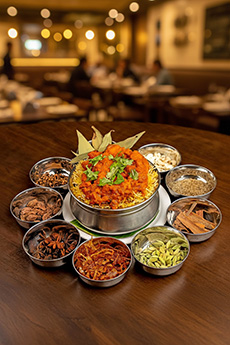
  • Indian cuisine: regional Indian cooking, flavors, and dining concepts (photo #1). Searches for Indian tiffin service are up 153%, while “Indian food buffet near me” jumped 459%. Interest in acclaimed restaurants like NYC’s Semma (up 89%) and Gymkhana (up 128%) continues to rise.
  • Matcha reinvention: From matchatinis (+1,036%—photo #3) to banana pudding matcha lattes (+36,900%), this classic ingredient is having a creative comeback.
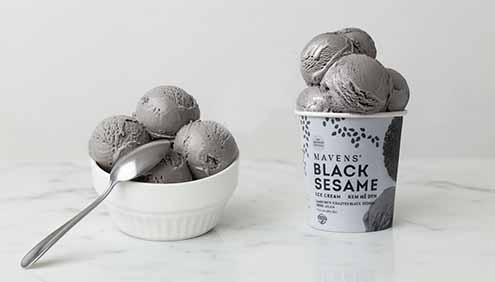
  • Black sesame everything: The nutty, complex flavor is trending in drinks and desserts (photo #7) including black sesame matcha (+147%).
  • All-you-can-eat revival: Buffet searches are up 252%, led by AYCE Korean BBQ and hot pot (+591%—photo #2) as diners seek social, interactive dining.
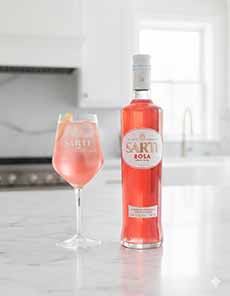
  • Sarti Spritz: The next Italian aperitivo moment, up 8,500%, bringing a bright pink color and tropical notes of blood orange, mango, and passion fruit (photo #5—the recipe is below).
  • Nostalgia: Sourdough pizza (+511%), matcha cinnamon rolls (+1,357%), and Mexican panaderías* (+1,184%) continue the rise of comfort-meets-craft baking.
  •  
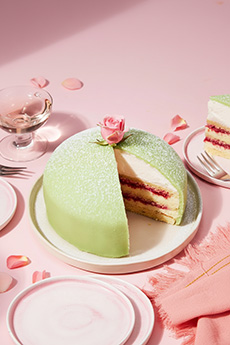
    < Here’s the full report, which highlights Swedish sweets like the Princess Cake (photo #4).
     
    Below:
     
    > The Sarti Spritz recipe.

    > About Sarti Rosa apéritif liqueur.

    > How Yelp got its name.
     
    A Bowl Of Black Sesame Ice Cream
    [7] We’ll take black sesame ice cream. It’s heavenly (photo of Mavens Creamery | Abacus).
     
     
    RECIPE: SARTI SPRITZ

    The Sarti Spritz uses Campari’s Sarti apéritif liqueur (photo #5), which blends the flavors of blood orange, mango, and passionfruit. It’s meant as a summer sipper, but if you want to pick up a bottle, you may be challenged: Campari has not yet launched it in the U.S.

    Still, you can find it online for about $20.

    This recipe is courtesy of Campari Group, producer of Sarti Rosa.

    NIBBLE HINT: Use rosé Prosecco for more pink color.

    > What is Prosecco?
     
    Ingredients Per Drink

  • 2.54 fl oz/75 ml Prosecco/Rosé Prosecco (about 2-1/2 shots)
  • 1.7 fl oz /50 ml Sarti Rosa (about 1 3/4 shots)
  • .85 fl oz/25 ml soda water (just under 1 shot)
  •  
    Preparation

    1. FILL a large wine glass with ice and gently add the Prosecco (you don’t want to break the bubbles).

    2. ADD Sartia Rosa to the glass; next add a splash of Soda Stir gently to combine. Garnish with a lime wedge.
     
     
    ABOUT SARTI ROSA

    Sarti Rosa has become a popular part of European cocktail culture: an Italian apéritif liqueur with a bright pink color produced by the Campari Group (photo #5).

    It has a sweet, fruity, and slightly tart taste, with key notes of Sicilian blood oranges, and tropical accents like mango and passion fruit.

    It’s marketed as a fruitier and less bitter than the classic Aperol Spritz. While the latter has an orange hue from the Aperol, Sarti Rosa has a vibrant pink (rosa) hue.

    Its lower alcohol volume—around 14% A.B.V.—makes it ideal for a light, refreshing spritz category of cocktails.

    The brand name Sarti is a heritage name of a distillery acquired by Campari Group in 1995, Sarti Distillery, established in Bologna in 1885. This gives the new liqueur a stamp of authenticity.
     
     
    The Liqueur Was Created In Order To Make The Spritz

    That’s right: Sarti Rosa was designed to create the Sarti Spritz. Mixed with Prosecco and soda water (that’s the same recipe as the Aperol Spritz, but with a lime wedge garnish instead of Aperol Spritz’s orange slice garnish).

    Campari, which also owns the Aperol brand, felt sure that they’d have another hit.

    Sarti Rosa began its market rollout in Europe around early 2025, with a focus on the U.K. and other major markets (but not the U.S., yet).

    It quickly gained viral popularity on social media (particularly with the pink Sarti Spritz) as a trendy new summer drink. Exactly as planned.

    The creation of Sarti Rosa was a strategic move by the Campari Group to capitalize on and expand the massive global success of the Spritz cocktail category. It:

  • Provides a fruitier alternative to Aperol: The Aperol Spritz is dominant in the category but can be polarizing due to its slightly bitter flavor. Sarti Rosa appeals to consumers who prefer a sweeter, fruit-forward taste.
  • Rides The Wave Of The Pink Trend: The vibrant pink color is a key part of the marketing. It provides an eye-catching aesthetic perfectly suited for social media. Its pinkness is fun, and makes the drink visually distinct from the orange of Aperol.
  •  

    Biryani
    [1] Indian cuisine is hot—no pun intended (photo Yelp | Biryani Ka Adda | Chicago).

    Seapot Korean BBQ
    [2] All-you-can-eat is als on the rise. Here, a Sichuan hot pot—quite a feast (photo Yelp | Seapot Hot Pot and Korean BBQ | Plano, Texas).

    Matchatini: a matcha "Martini"
    [3] How about a Matchatini? Here’s the recipe (photo © Dash Of Jazz).

    A Princess Cake
    [4] The Princess Cake has been around since the 1930s. It’s a complex cake to make—best left to the professionals. But if you want to try it, here’s a recipe (photo by Rick Holbrook | Styling by Kaitlin Wayne | © King Arthur Baking).

    Sarti Spritz Made With Sarti Rosa Aperitif Liqueur
    [5] A bottle of Sarti Rosa makes a rosy Sarti Spritz. If you can’t find it locally, look online (Gemini Photo).

    Guinigi Prosecco Rose Bottle & Flute
    [g] You’ll get a deeper pink color if you use rose Prosecco (PHOTO © Guinigi Wines).

     
    We knew of the “Think Pink” fashion trend of the 1950s, but what’s the pink drink trend?

    Per Gemini:

    The pink trend, often tied to “Millennial Pink” or “Barbiecore,” has evolved from a short-lived fad into a major marketing force in the spirits and non-alcoholic sectors.

    Not surprisingly, the most significant driver of the pink trend is its “Instagrammability” (or “TikTok-ability”). Brightly colored, photogenic drinks encourage sharing online, which turns into free, viral advertising.

    The entire “drink pink” movement arguably started with the runaway popularity of rosé wines in the mid-2010s. Rosé turned pink from a niche, seasonal wine into a symbol of easy day-drinking, summer sipping, and beyond the summer season (“Rosé All Day”).

    Seeing the success of rosé, spirits brands started coloring everything pink: pink gin, pink tequila (rosado), pink vodka.

    And of course, pink liqueur: Sarti Rosa.
     
     
    HOW YELP CHOSE ITS NAME

    Since this article was inspired by Yelp, we must give yelp a shout-out, starting with something we’ve long pondered:

    When we hear the word “yelp,” our first thought is of a dog in distress.

    Yes, the traditional definition of yelp is: To give a quick, sharp, shrill cry or bark, often indicating pain or excitement.

    The origin of the word is the Old English gielpan, which meant to boast or cry out loudly. In modern use, it’s often associated with a sudden, noticeable sound. So…Yelp, the website?
     
     
    Why the Website Chose the Name

    The company’s founders, Jeremy Stoppelman and Russel Simmons, were looking for a short, memorable name for what was originally conceived as an email-based referral network.

    The final name was suggested by an early employee, David Galbraith, and it was chosen for these strategic reasons:

  • A Cry for Help: When Stoppelman first heard the name, he immediately thought it sounded like a cry for help. This was a perfect metaphor for the service, which was designed to help people find solutions (a doctor, a plumber, a restaurant) when they were in need.
  • Short and Memorable: Only four letters, easy to spell, and catchy.
  • A Portmanteau: It happens to be a fusion of “Yellow Pages,” which were once the key way to look something up, and “help.”
     
    The end.

    ________________
     
    *A panadería is a bakery that specializes in traditional Hispanic breads and sweets.


    CHECK OUT WHAT’S HAPPENING ON OUR HOME PAGE, THENIBBLE.COM.


  • Comments off

    Gift Of The Day: Dar Baklava & Other Middle Eastern Treats

    Dar Baklava Gift Box
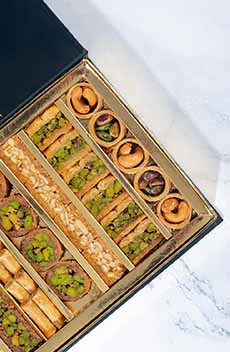
    [1] Who wouldn’t want a 40-piece box of miniature Middle Eastern pastries (photos #1, #5, #6, and #7 © Dar Baklava).

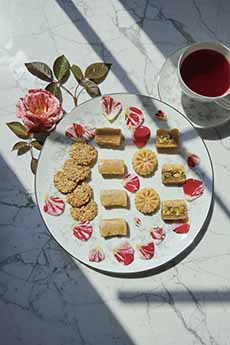
    Middle Eastern Pastry Plate
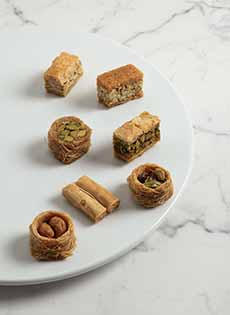
    [2] A beautiful plate of miniature Middle Eastern pastries, ready to serve with coffee (Abacus Photo).

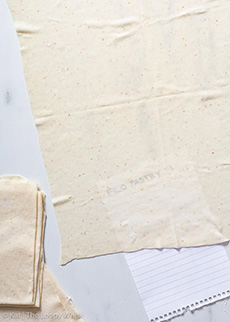
    A Sheet Of Phyllo Dough
    [3] Phyllo dough is as thin as a sheet of paper! This photo shows a gluten-free sheet that is part of a GF baklava recipe (photo © The Loopy Whisk).

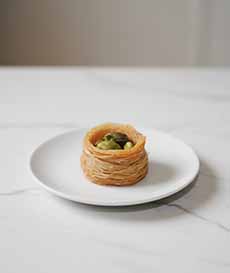
    Bird's Nest Pastry
    [4] A bite-sized Bird’s nest pastry: a phyllo nest with honey and pistachio “bird’s eggs” inside (Abacus Photo).

    Middle Eastern Pastry Tray
    [5] Another miniature pastry plate, ready for tea, hot or iced.

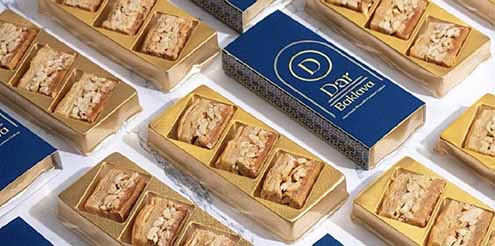
    Dar Baklava Gift Boxes
    [6] Handsome gift boxes.


    November 17th is National Baklava Day, the perfect day to present our Gift Of The Day: Dar Baklava.

    This Middle Eastern dessert is made of layers of phyllo pastry filled with a mixture of ground nuts and sugar. The pastry is brushed with a honey syrup flavored with lemon or rosewater, baked, and sliced.

    The earliest form of baklava was made in the 8th century B.C.E. in northern Mesopotamia. The Assyrians layered very thin pieces of dough with nuts and honey, then baked them in wood-burning ovens.

    It recipe through the Levant*, and Greek seamen brought the concept back to Hellas.

    Fast forward eight centuries or so.

    Dar Baklava has created mini versions of baklava and other favorite treats. These miniature pastries are great for snacking, for a small dessert with coffee, or on a pastry tray presentation (photos #2 and #5).

    We’ll take a big bite out of Dar Baklava in a minute, but first, for your consideration:

    > The history of baklava.

    > The different types of pastry: a photo glossary.

    > The year’s 15+ pastry holidays.
     
    > The year’s 16 Greek food holidays.
     
     
    INTRODUCING DAR BAKLAVA & OTHER PHYLLO CONFECTIONS

    Dar Baklava is a Chicago-based business founded by a local pediatrician, Sherif Badawy. Why would a physician start a pastry business?

    A fitness enthusiast as well as a doctor, Dr. Badawy noticed that the U.S. market lacked a snackable, healthier version of his favorite treat.

  • He spent years of research perfecting a recipe that preserved baklava’s flavors and textures while reducing the sugar (plus, there are up to four times more nuts than dough).
  • He wanted them to be a snack, as well as kid-friendly, so he engineered convenience and portability.
  •  
    The result: bite-sized baklava, formulated with 80% nuts, 20% phyllo dough (photo #3—some spell it filo), and less sugar than a traditional recipe. It’s finger food, but there are no sticky fingers!

    The baklava is made in in three varieties featuring different nuts*: cashew, pistachio, and walnut.

    Dr. Badawy went on to recreate other Middle Eastern favorites in miniature, so that you can have everything from:

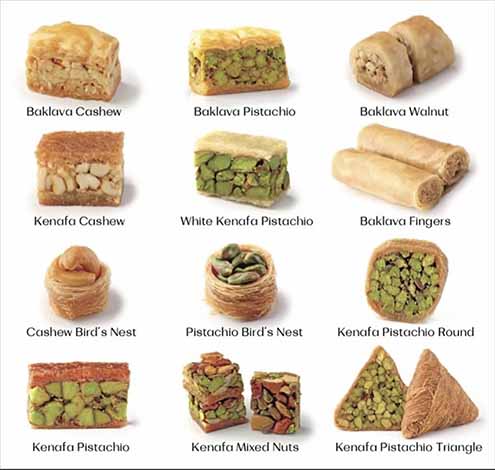
  • Set of 40 handcrafted baklava pieces with 8 different varieties (photos #1, #6, and #8), including pistachio baklava, pistachio kunafa, pistachio kunafa round, pistachio bird’s nest, cashew baklava, cashew kunafa, cashew baklava fingers, and cashew bird’s nest.
  • Individual packages of three pieces, good for grab-and-go, lunch boxes, and stocking stuffers.
  •  
    The pastries are handmade in Jordan.
     
     
    Packages Of Cashew Baklava
    [7] Three-piece grab and go packages are great stocking stuffers.
     
    GET YOUR PASTRIES HERE

    > Head to DarBaklava.com.

    > You can also find them on Amazon.
     
     
    ARE THESE PASTRIES…OR ARE THEY COOKIES?

    The culinarian in us raises the question: Dar Baklava may be miniature pastries, but they’re also finger food and shelf-stable, like cookies.

    We pondered this and decided: Dar’s pastry bites are still pastries.

    Why not a cookie?

  • Baklava’s fundamental structure defines it as a pastry: layers of phyllo dough with nuts and syrup/honey. Its laminated, flaky phyllo construction is the hallmark of pastry work, not cookie baking.
  • Cookies are typically made from a dough (often with flour, butter, sugar, eggs) that’s scooped, rolled, or cut, then baked into a single cohesive texture (see the 10 basic types of cookies).
  • The preparation differentiates them as well. Baklava is assembled in layers and baked, then soaked with syrup: a distinct pastry technique. Cookies go into the oven as dough and come out finished.
  •  
    Size doesn’t change category: Miniature éclairs and cream puffs are still pastries. Just because they’re finger-food-sized doesn’t change anything.
     
    A Chart Of MIddle Eastern Pastry Types
    [8] The different miniature pastries from Dar Baklava.

     
    ________________

    *The Levant is an English term that first appeared in 1497. It originally referred to the “Mediterranean lands east of Italy.” The historical area comprises modern-day Iraq, Israel, Jordan, Lebanon, Palestine and Syria. Among other popular foods, Levantine cuisine gave birth to baklava, falafel, kebabs, mezze (including tabbouleh, hummus and baba ghanoush), pita and za’atar, among other dishes that are enjoyed in the U.S. and around the world.

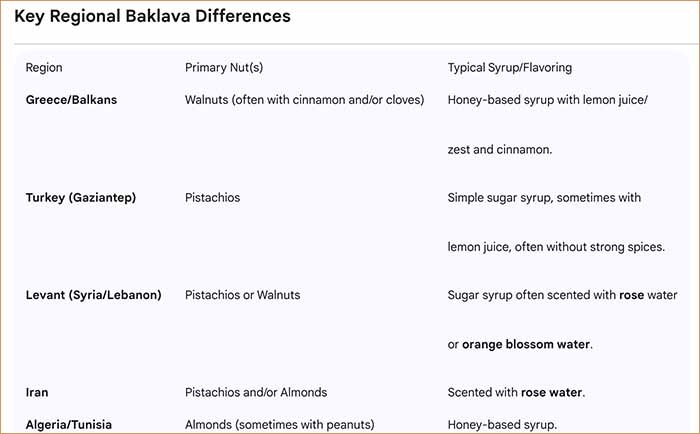
    †There isn’t a single, “traditional” nut used in baklava, as the pastry is made in multiple countries and regions, each with its own abundant supply and palate preference. Walnut is the classic choice in many regional recipes, including Greek, Balkan, and some Levantine (like Lebanese and Syrian) recipes. They tend to offer a more robust, slightly earthy flavor that balances the sweetness of the syrup.

    Pistachio is the nut used in Turkish and Iranian baklava, and is also very popular in Syrian baklava. Pistachios provide a brighter green color and a richer, slightly sweeter, buttery flavor. In Turkey the famous Azep variety Gaziantep variety from south-central Turkey, has been granted Protected Geographical Indication (PGI) status by the EU, recognizing their unique regional characteristics and quality standards. Here’s more about them.

    Check out the chart for regional preferences.

    Comparison Chart Of Different Nuts Used In Baklava
    Gemini Chart.


    CHECK OUT WHAT’S HAPPENING ON OUR HOME PAGE, THENIBBLE.COM.


    Comments off


    © Copyright 2005-2026 Lifestyle Direct, Inc. All rights reserved. All images are copyrighted to their respective owners.