Welsh Rarebit…Or Is It Welsh Rabbit…For Welsh Rarebit Day
|
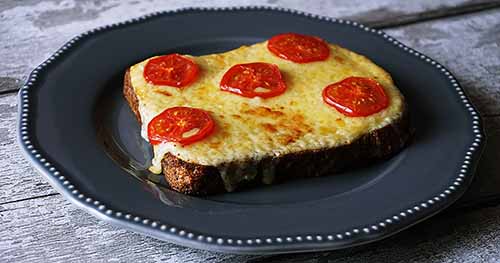
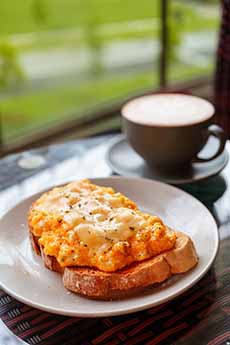
September 3rd is National Welsh Rarebit Day, a dish that should be called Welsh rabbit. A beloved comfort food in Wales, which originated as supper, it’s also delicious as a lunch or brunch dish. Take a bite: Consider rarebit vs. rabbit, enjoy the recipe, and discover why someone changed the name because he felt that a dish could not be called “rabbit” if it contained no rabbit. > The history of Welsh rarebit. Elsewhere on The Nibble: > The different types of cheese: a photo glossary. > Sourdough bread, an ideal base for Welsh rarebit. > The year’s 30 cheese holidays. > The year’s 28+ sandwich holidays. Welsh rarebit is far more than melted cheese on toast. It even has its own food holiday: September 3rd. The beloved Welsh dish consists of a slice of hearty toast topped with a rich cheese sauce, usually made with sharp Cheddar. Into the sauce goes ale or beer, mustard, and seasonings such as Worcestershire sauce or cayenne. The cheese sauce is poured over toasted bread, then goes under the broil to get bubbling and golden (photo #2). The result is a comfort-food supper: crisp at the edges, molten in the middle, and substantial enough to turn a few basic ingredients into something memorable. Welsh rarebit began life in print as Welsh rabbit. The folklore is that when a husband went out hunting and failed to catch a rabbit for dinner, the wife had to use cheese and bread to put food on the table. Welsh rabbit is close to fondue, but rather than dipping bread in a communal pot, the molten cheese is poured over the bread. You can also think of it as an open-face grilled cheese sandwich, elevated enough to be dinner. There is no evidence that “rarebit” was the original name of the dish. In 1785, cookbook author Francis Grose described a “Welch rabbit” as “a Welch rare bit,” apparently offering “rare bit” as an explanation of the name. But that wording may itself be an attempt to rationalize an already puzzling expression. It’s a humble dish, not exactly a rare bit (i.e., a choice morsel). The dish was first recorded as Welsh rabbit in 1725 and it appears in Hannah Glasse’s 1747 cookbook; the altered form Welsh rarebit appears later, around 1781. No one knows exactly why the name changed. It may have been an effort to clarify that the dish contained no meat, or simply to fix a name that seemed too absurd to take literally. Whatever the reason, rarebit never became a general culinary term; its only usage is in the name Welsh rarebit. Later commentators often reversed the direction and claimed that rabbit was the corruption of rarebit, not vice versa. However, the earlier printed evidence points to rabbit. As Henry Watson Fowler (1858—1933), an English lexicographer and commentator on the usage of the English language, famously put it in 1926: “Welsh Rabbit is amusing and right. Welsh Rarebit is stupid and wrong.” It captures the central point: The absurdity of “Welsh rabbit” was probably deliberate, while “Welsh rarebit” looks like a later attempt to make the name sound logical. While the classic recipe is made with sharp Cheddar, you can use any semi-hard cheese, or a blend. Like fondue, Welsh rabbit is a great way to use up scraps of cheese. Beer adds richness and flavor. If you don’t want to use alcohol, use a good non-alcoholic beer; or substitute chicken or vegetable broth. Some older recipes include an egg yolk; this one doesn’t.
|
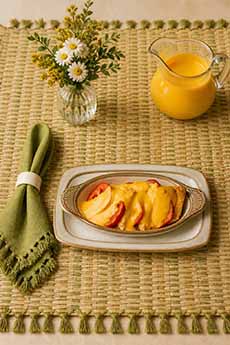 [1] The humble Welsh rarebit—cheese sauce on toast—makes a tasty lunch or dinner (photo © The Nibble).
|
|
|
________________ *You can use a different bread, but a thick, sturdy, crusty artisanal loaf works best here. You need bread that won’t get soggy. Preparation 1. MELT the butter in a saucepan over medium heat. When the butter is sizzling, whisk in the flour and cook for a minute, stirring until smooth (you have just created a roux: equal parts flour and fat used as a base and thickening agent). 2. STIR in the ale. Bring the mixture to a boil and stir for two minutes, or until it thickens. 3. REDUCE the heat and slowly whisk in the ale; there should be no lumps. Stir in the Worcestershire sauce, mustard, paprika, cayenne, and salt. 4. STIR in the cheese with a spatula, continuing to stir until it is completely melted and the sauce is smooth. Remove from the heat and transfer to a bowl to slightly cool and thicken (if you have a pitcher, use that: It makes pouring the cheese sauce over the toast easy). 5. PREHEAT the broiler. Separately, toast the bread. 6. PLACE the toast on a heatproof pan. If you’re using the optional tomato and/or bacon, place them on top of the toast. Pour the cheese sauce over each slice of toast. Broil until bubbly and browned. Garnish with the optional herbs and serve immediately. Variations The first-known printed recipe appears in 1747, in The Art of Cookery made Plain and Easy by Hannah Glasse. She offers four variations:
The first requirement when melting cheese is to prevent it from becoming greasy (from separating) or clumpy. The key is low heat.
Welsh rarebit began life in print as Welsh rabbit, a name first recorded in 1725—although the dish has never contained rabbit. The later term “rarebit,” which appears in the late 18th century, seems to have been an attempt to make sense of a deliberately absurd old name. One enduring (and endearing) piece of folklore says the meal was what a Welsh household ate when the hunter came home without a rabbit. Having no meat, the wife pulled together bread and cheese for supper. The dish belongs to a very old British tradition of eating roasted or melted cheese with bread. Wales had a strong dairy culture, and cheese was a practical, sustaining food: it preserved milk and supplied protein in places and seasons where fresh meat was less dependable. A Welsh term, caws pobi—“baked” or “roasted cheese”—appears in 16th-century references. That establishes a cultural connection with Welsh melted-cheese dishes, although it does not prove a direct, uninterrupted line to the particular recipe now called Welsh rarebit. 1785, the recipe was familiar enough to appear in Hannah Glasse’s influential cookbook, “The Art of Cookery Made Plain and Easy” (1747), which gives recipes for Welsh rabbit as well as English and Scotch rabbits. The term “Welsh rarebit” came later, often dated to 1785. “Rarebit” has no established independent meaning outside this dish. Thus, most modern dictionaries and food historians treat it as a later alteration of “rabbit,” perhaps prompted by diners or publications who took the joke too literally and assumed the original name must be an error. By the 19th and 20th centuries, “rarebit” became common on menus and in cookbooks, while many writers defended “rabbit” as the older and wittier form. We concur; although Welsh rarebit is now the more usual menu name. ________________ The initial toasting helped the bread retain some structure, while the wine softened the interior and gave it a rich, savory flavor. The finished texture would be crisp or browned on top, tender and wine-scented underneath, with melted cheese binding everything together. If you want to use wine, brush or spoon it over the toast, one or two tablespoons per slice, before topping with cheese and broiling. CHECK OUT WHAT’S HAPPENING ON OUR HOME PAGE, THENIBBLE.COM. |
||