Yummy Carrot Salad Recipe With Ricotta Salata
|
|
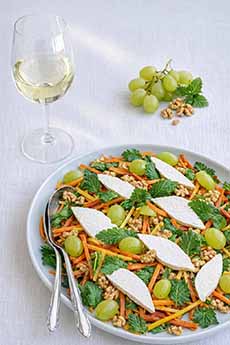
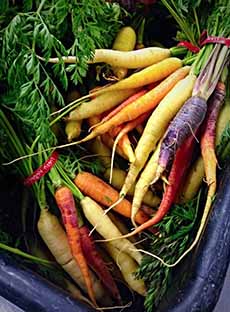
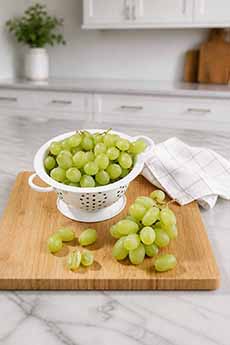
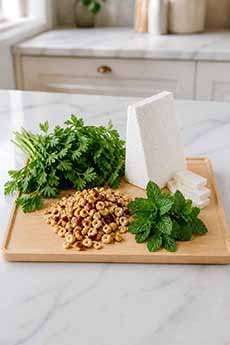
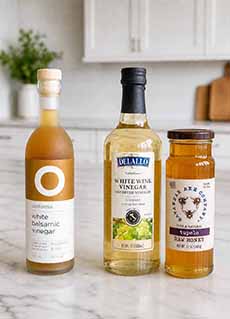
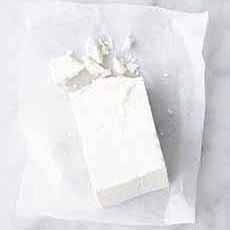
Given the number of people we personally know who are avoiding lettuce right now, here’s a refreshing summer salad that has none of it, adding greens with accents of basil and mint. Below: > How does ricotta salata differ from fresh ricotta? > The history of ricotta salata. Elsewhere on The Nibble: > The invention of baby carrots. > Baby-cut carrots vs. true baby carrots: the longer story. > Where do carrots get their color? > The year’s 8 carrot holidays. > 10+ delicious uses for carrot tops. > The different types of cheese: a photo glossary. > The year’s 30 cheese holidays. This salad puts it all on the plate: crunchy sweet carrots, sweet grapes that pop in your mouth, earthy coriander, and nutty, salty ricotta salata. Vibrant, flavorful and refreshing, this lettuce-free salad is ready to pitch in when you’re not eating lettuce. It’s a perfect partner for everything from grilled salmon to roast chicken. Enjoy with a chilled California white wine like Sauvignon Blanc or Vermentino. Thanks to the California Wine Institute for this recipe idea. 1. COMBINE the carrots and grapes in a large bowl. 2. WHISK together in a small bowl the olive oil, vinegar, honey, shallot, mustard, coriander, salt, and pepper. Pour three-quarters of the dressing over carrot mixture and toss to coat. 3. ARRANGE the carrot mixture on a platter. Top with hazelnuts, parsley, mint, and ricotta salata. Spoon the remaining dressing over the salad and serve. Ricotta salata (photos #1, #7, and #8) is an Italian sheep’s milk cheese: an aged, salted, and pressed version of the soft, creamy, fresh ricotta. Think of it as feta’s milder, nuttier Italian cousin: salty and tangy, but less briny, with a snowy-white, crumbly texture. While fresh ricotta is known for its high moisture and spreadable texture, ricotta salata—which translates literally to “salted ricotta”—is a firm, dry, and crumbly cheese often compared to a mild feta or a young Pecorino. Unlike most cheeses, which are made from freshly-coagulated curds, ricotta—fresh or other form—is a “re-cooked” product made from the proteins left behind in the whey after other cheeses (like Pecorino Romano) are produced. This results in tiny curd particles†. Ricotta means re-cooked. Re-cooking the leftover whey results in a second set of curds, which are then pressed into molds: rectangles, rounds, and truncated pyramids are most common. Pressing removes almost all the moisture, which creates the dry, crumbly texture. The cheese is heavily salted and aged for a minimum of two to three months. The result is a pearly white paste with a milky, slightly nutty, and noticeably salty (but not overly salty) flavor. The primary differences between ricotta salata and fresh ricotta lie in their texture, flavor, and culinary uses. Texture |
|
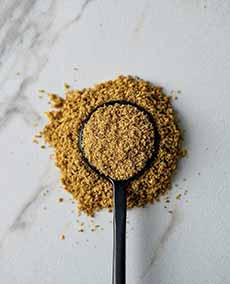
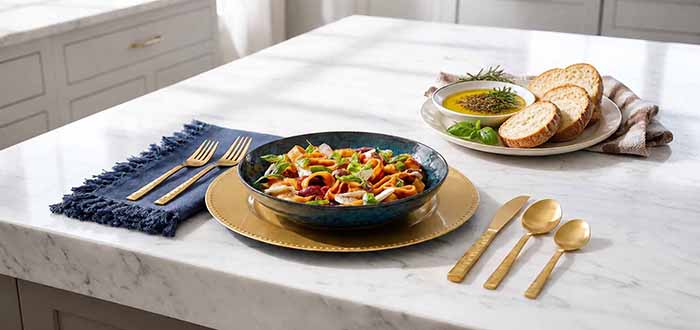
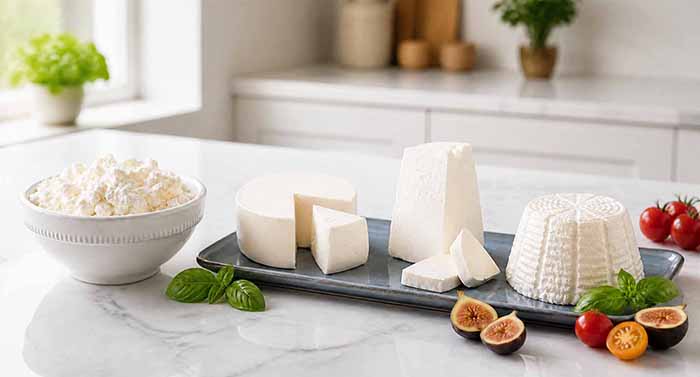 [8] A bowl of fresh ricotta and three shapes of aged ricotta salata (photo © The Nibble). 3. WHEN TO USE RICOTTA SALATA? Ricotta salata is often described as a “finishing cheese” because its firm, dry, salty character makes it especially good shaved, grated, or crumbled over a finished dish—like Asiago, Grana Padano, and Parmigiano Reggiano. It delivers a bright, milky-salty accent. Its classic role is as the cheese grated over Pasta alla Norma, Sicily’s famed tomato-and-eggplant pasta dish (photo #9, below). Ricotta salata is typically used as a finishing touch for other tomato-based pastas, as well as for beans, grains, and roasted vegetables. The history of ricotta salata is deeply rooted in the agricultural traditions of Southern Italy, particularly in Sicily and Sardinia. In a traditional Italian farmstead, women made the primary cheeses for the family or for sale. They were left with a massive pot of leftover whey. Since they were already managing the fire in the kitchen, they were the ones re-cooking (ri-cotta) the whey to extract the very last bits of nourishment. But some of the highly perishable fresh ricotta they made daily needed to preserved. By pressing and salting the cheese, they transformed a product with a shelf life of just a few days into a hardened pantry staple that could last through the winter and be easily transported to market. Farm wives stocked the larder with ricotta salata, to ensure that the bounty of the spring milking season could be used as a seasoning for pasta and soups six months later. Ricotta salata became a foundational ingredient in Sicilian cuisine, most famously as the finishing touch on Pasta alla Norma (photo above), a classic dish featuring eggplant, tomatoes, and basil accompanying the pasta and ricotta salata. *Substitutes for ground coriander in this recipe: You want a substitute that mimics ground coriander’s unique citrusy and floral earthiness without being overpowering. A 1:1 ratio of cumin and lemon zest is often the closest way to replicate the specific earthy-citrus profile of ground coriander in a fresh salad. Otherwise, the best choices: Caraway seeds, the best match for complexity. Caraway has those anise and citrus notes that mimic the “bright” side of coriander. It pairs exceptionally well with carrots and salty cheese. Crush them slightly to release the oils. Ground cumin, the best match for earthiness. Cumin has a similar earthy depth but is much stronger and “warmer.” Because it can be aggressive, use about half the amount of cumin as you would coriander so it doesn’t overwhelm the delicate sweetness of the grapes and carrots. Fennel seeds, the best match with the grapes. Ground fennel or crushed fennel seeds provide a sweet, licorice-like aroma that complements the grapes beautifully. Like cumin, it’s potent, so start with a smaller amount. Lemon zest, the best for “fresh” flavor. Since ground coriander is famous for its citrusy “pop,” a bit of fresh lemon zest added to the dressing can replicate that brightness. It will keep the raw carrot and grape flavors vibrant. Garam masala. This spice blend usually contains a large percentage of ground coriander. Use it sparingly, as it also contains “warm” spices like cinnamon and cloves, which may shift the flavor profile of the salad slightly toward a spiced-Mediterranean vibe. †When whey is reheated, its remaining whey proteins—mainly albumin and globulin—unfold and clump together, especially when the whey is naturally acidic or has a little acid (sour milk, vinegar) added. These delicate white particles (fine curds) rise to the surface to be skimmed or strained into ricotta. So while in the initial cheesemaking, rennet or acid coagulates the casein, forming the main cheese curd, re-cooking the whey (heat and acidity) coagulates leftover whey proteins producing the soft, fine ricotta curds. ‡You may see the term “ricotta dolce,” sweet ricotta. In Italian pastry shops, ricotta dolce usually refers to fresh ricotta that has been refined to use in sweet baked goods. It is strained longer to remove excess whey, making it much thicker and dryer. The drained cheese is whipped with sugar (and sometimes vanilla or orange zest) until completely smooth…and extremely delicious! CHECK OUT WHAT’S HAPPENING ON OUR HOME PAGE, THENIBBLE.COM. |
||