Pommes Soufflees For National Potato Souffle Day
|
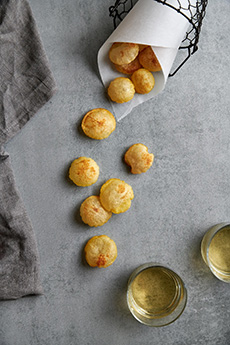
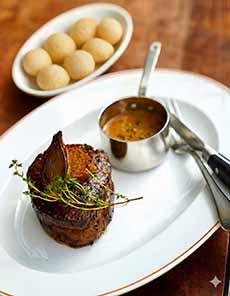
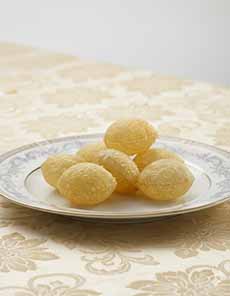
September 30th is National Soufflé Potato Day, called pommes souffleés in French. It’s a dish that connects us to our youth. We began our foodie life under our mother’s tutelage in grade school. In high school we found a boyfriend with similar interests, and every Saturday night we’d go to another great New York City restaurant. There was one called Charles a la Pomme Soufflé (“soufflé potato” in English). It closed in 1990, but for years we went there every chance we could get. > The different types of potatoes: a photo glossary. > The year’s 30 potato holidays Like chocolate ganache and Crêpes Suzette, pommes soufflées were one of France’s famous culinary accidents (the U.S. can count chocolate chip cookies, fudge, Popsicles, and potato chips, and the U.K has Worcestershire sauce). Pommes soufflées began with a royal origin story, dating to a 1837 inauguration of a railway line between Paris and Saint-Germain-en-Laye. Chef Jules Collinet, chef for King Louis-Philippe of France* (image #5), was preparing a meal for the king and dignitaries at the Saint-Germain station (some versions place the event at the château of Saint-Germain-en-Laye). The king’s train was delayed, so Collinet removed the potatoes that were frying in the pan to prevent overcooking in the hot oil. When the king arrived, he placed the partially cooked potatoes back into hot oil and to his (and everyone’s) amazement, the potato slices puffed up like a cross between golden tan pillows and airy, hollow balloons. It was a visual and gustatory sensation. The technique became a signature of fine French cuisine, spreading beyond the great restaurants of France to the rest of the world. However, to make pommes soufflées requires significant cooking chops. We tried it a few times, and gave up in favor of Charles’ perfect execution. Actually, we are referring you to this recipe from Eater (photo #1). It’s a not as simple as removing sliced potatoes fromt he pan and returning them to hot oil. Rather, it’s tricky, precise technique better studied on YouTube: One source we consulted relayed that even experienced chefs might only experience a 60%-80% success rate! So order them when you encounter them, and if you want to try making them, we wish you the very best luck. |
|
|
|
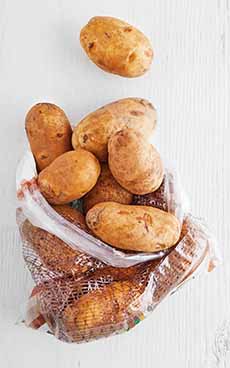
†Waxy potatoes, which are higher in moisture and lower in starch than floury potatoes, naturally resist breaking down when cooked, maintaining their solid shape. This stability can make them seem unsuitable, but advocates for waxy potatoes use a technique that relies on a mechanical seal rather than the potato’s natural starch to create the air pocket. CHECK OUT WHAT’S HAPPENING ON OUR HOME PAGE, THENIBBLE.COM. |
||