Detroit Greek Salad Recipe & The Different Types Of Greek Salad
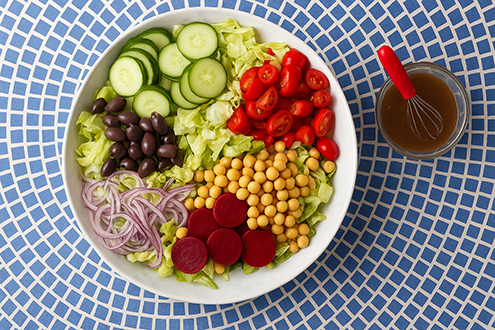
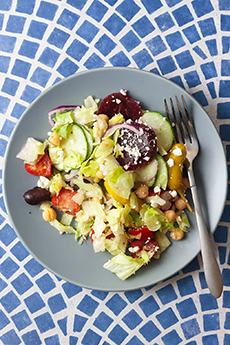 [1] The Detroit Greek Salad, with beets and chickpeas (photo © Sarah Tramonte | Taste Of Home).
|
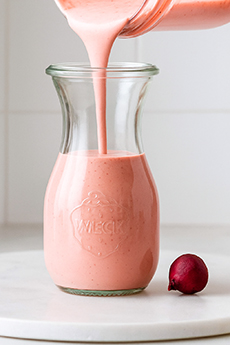
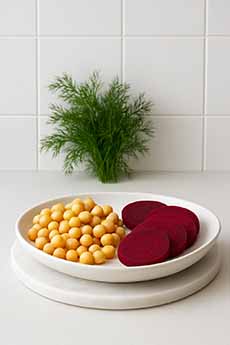
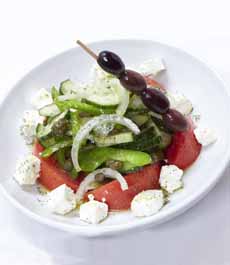
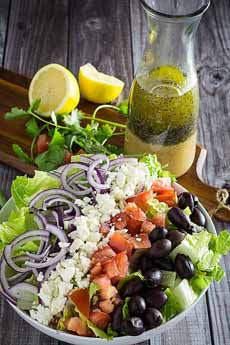
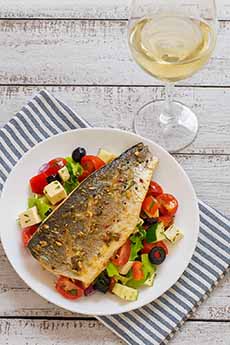
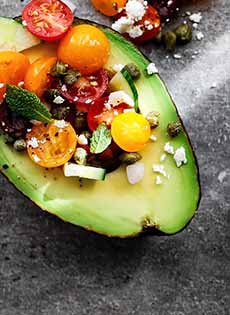
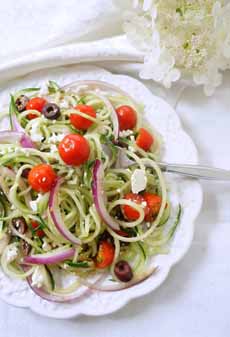
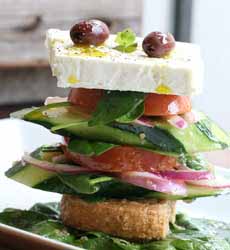
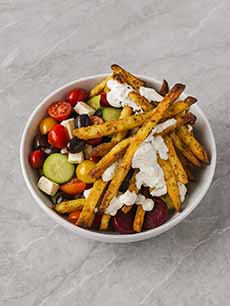
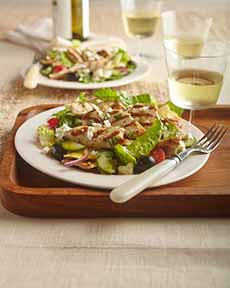
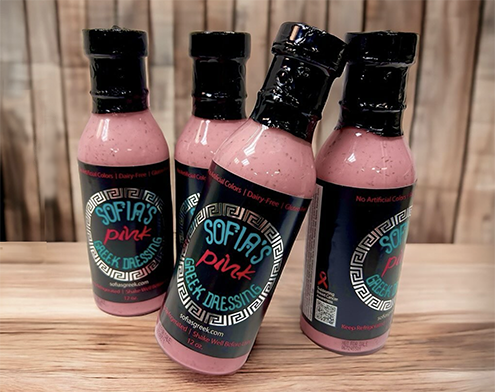
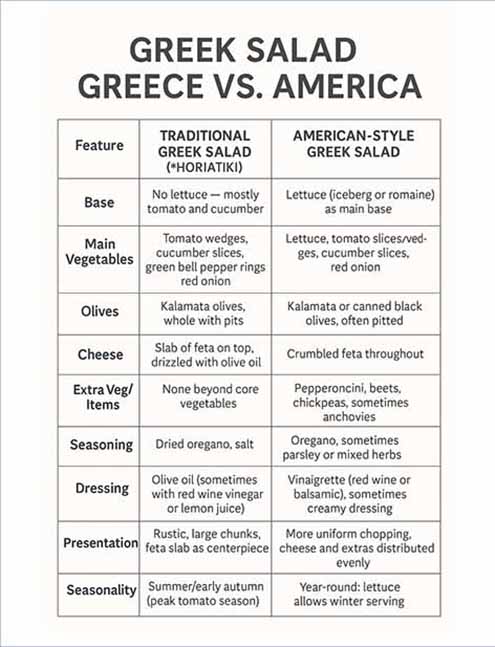
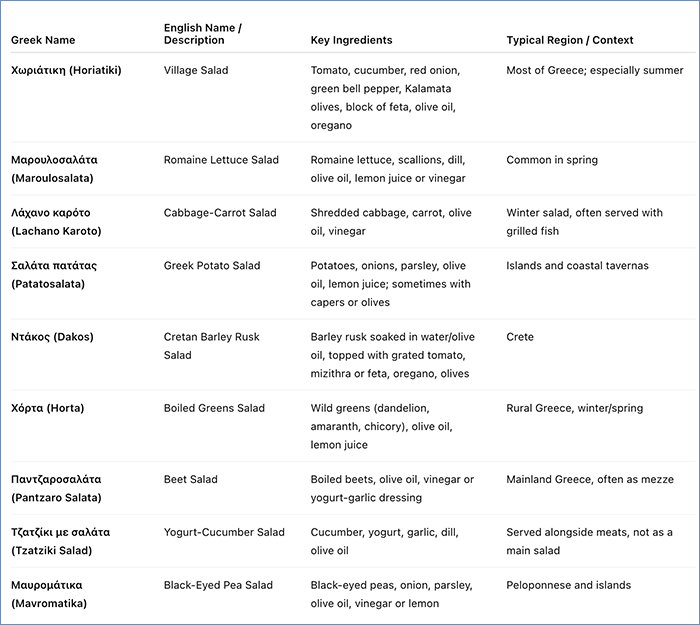
There are 30 cheese holidays each year, but feta isn’t one of them. There are 40+ salad holidays, but no Greek Salad Day. So we’re honoring one of our favorite salads with lots of creative Greek salad recipes, starting with Detroit’s version. The recipe is below, as well as: > American Greek salad vs. horiatiki: a comparison chart. > The authentic salads of Greece. > Links to more Greek salad recipes, below as well as in the photos. > The history of salad. Point of information: The ubiquitous salad in restaurants nationwide is the American Greek salad. See image #14 for the difference between the Americanized Greek salad and the horiatiki you’ll find at Greek restaurants. So who created the “American” Greek salad? The American-style Greek salad—with a lettuce base, pepperoncini, olives, feta, and a red wine vinaigrette—evolved organically in Greek-owned diners and restaurants across the U.S., particularly in cities with large Greek immigrant communities such as Chicago, Detroit, and New York. A conventional Greek salad (which is an American adaptation—see below) has lettuce, feta, cucumbers, tomatoes, Kalamata olives, and hopefully a couple of pepperoncini and a stuffed grape leaf or two (dolmades). The dressing is olive oil and red wine vinegar. Why is this one called a Detroit Greek Salad? It has all of the conventional Greek salad ingredients, plus a few extras: chickpeas and pickled beets. At the turn of the 20th century, many Greek immigrants settled in the Detroit area and established businesses and restaurants in a neighborhood that is now known as Greektown. The diners served a variation of the classic Greek salad, which became known as the Detroit Greek salad. In Detroit, the salad is topped with the Detroit-famous pink Greek dressing (photo #2), which is mayonnaise-based. We include that recipe, along with the classic red wine vinaigrette should you prefer it (we do). In fact, authentic Greek salad dressings are always simple, usually just olive oil, vinegar or lemon juice, salt, and oregano. Plus, the crumbled feta in the recipe is an American substitution. When feta cheese is served with a salad in Greece, it is as a slab, not crumbled. Back to the dressing: Sofia’s Famous Pink Greek Dressing is largely sold in the Midwest, but is available online (photo #13). The salad is delicious for lunch or dinner as a side, or as a main course with, perhaps, strips of lamb, chicken (photo #16, or a filet of grilled or baked fish (photo #7). We happened to have a ripe avocado on hand and added it along with a bag of mostly-crushed Stacey’s Pita Chips in the manner of the Lebanese fattoush† salad. Prep time is 20 minutes. Thanks to Taste Of Home for the recipe. It was submitted by Susan Bronson of Rhinelander, Wisconsin and tested by the Taste of Home Test Kitchen. For The Detroit Pink Greek Dressing 1. MAKE the dressing. For the Greek Pink Dressing, add all ingredients to a food processor or blender, and blend on high until throughly combined. Chill until ready to serve. For the vinaigrette, in a small bowl, whisk together olive oil, vinegar, salt, oregano, and pepper; set aside. 2. PLACE the lettuce, cucumber, tomatoes, and onion in a large bowl. Add the chickpeas and olives; toss to combine. 3. DRIZZLE the dressing over salad; toss to coat. Top with the crumbled feta, sliced beets and pepperoncini. Serve immediately. Note: To avoid soggy greens, don’t add the dressing until just before serving. If you have leftover salad that’s dressed, plan to use it the same day if possible. |
|
|
MORE GREEK SALAD RECIPES †Fattoush, a Middle Eastern bread salad that originated Lebanon, has become a staple throughout the Levant region. Like a horiatiki or Greek salad, it includes a medley of fresh vegetables, such as lettuce, cucumbers, tomatoes, bell peppers, and radishes. Fresh mint and parsley are commonly added. The defining feature of fattoush is the inclusion of toasted or fried pieces of pita bread, providing a unique texture and crunch. (Because pita is so thin, they’re much crunchier than regular bread croutons). CHECK OUT WHAT’S HAPPENING ON OUR HOME PAGE, THENIBBLE.COM. |
||