Perfect For Snacking, Hors & More: Cucumber Sandwiches & Tea
|
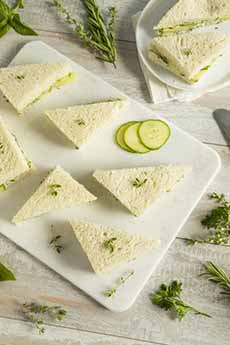
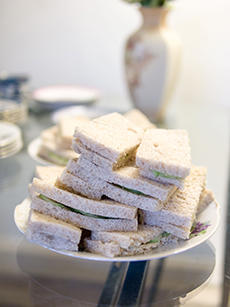
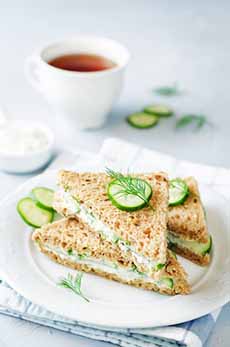
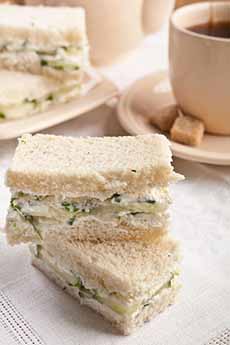
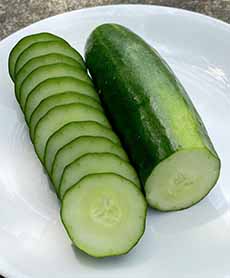
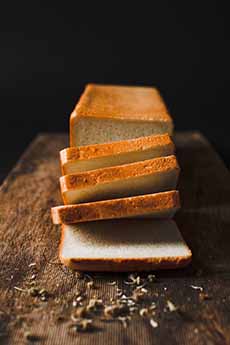
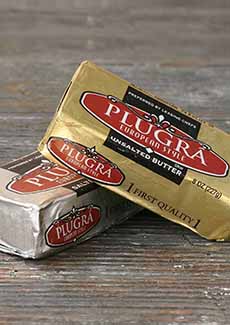
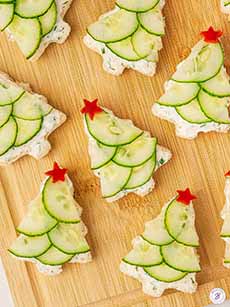
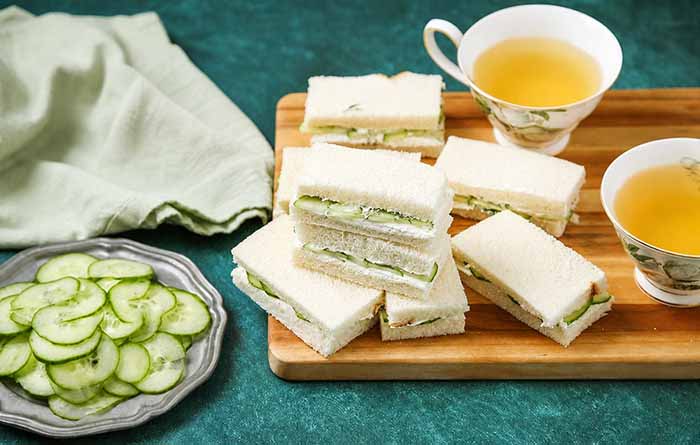
Updated July 2026 Have you ever had a cucumber sandwich? It’s an English tradition that was likely arrived in the U.S. in the 1800s, along with the concept of afternoon tea, a formal light meal, traditionally served at 4 p.m. The high-class snack, meant to tide over wealthy people who didn’t eat dinner until 8 p.m. or later. Cucumber sandwiches were served at Queen Victoria’s Golden Jubilee in 1887, were enjoyed by the Raj of India in the late 1800s, and were referenced in Oscar Wilde’s play, “The Importance of Being Earnest,” as a “reckless extravagance” (cucumbers were pricey before they became more available in the Edwardian era). The traditional cucumber sandwich is composed of paper-thin slices of cucumber (no peel) placed between two thin slices of crustless, lightly buttered bread. You can make the traditional dainty tea sandwiches (photo #2), smaller canapés, or full-size luncheon sandwiches (some people leave the on the crusts for those). You can cut the sandwiches into triangles, squares, fingers, circles or other cookie cutter shapes. And if “cucumber sandwich” sounds strange to you, trust us: They’re delicious, with or without a proper cup of tea. Any tea, black or green, hot or iced, goes with cucumber sandwiches. But if you prefer a glass of Sauvignon Blanc or an IPA, go for it. > June is National Cucumber Month. June 14th is National Cucumber Day. Below: > Traditional cucumber sandwich recipe. > What is a “proper cup of tea?” > Why a cucumber is a fruit, not a vegetable. Elsewhere On The Nibble: > The different types of cucumbers. > The year’s 4 cucumber holidays. > The different types of sandwiches: a photo glossary. > The year’s 28+ sandwich holidays. Warmer weather beckons to cool-as-a-cucumber sandwiches for: It’s a no brainer, but we give you the traditional recipe plus ways to modernize it. First, a note about the cucumbers: English cucumbers were bred in the U.K. to create a cucumber more desirable for cucumber sandwiches. They have tender flesh, with tiny or no seeds. Some stores sell them as a burpless cucumber, European cucumber, hothouse cucumber or seedless cucumber. While the classic cucumber sandwich is minimal—just cucumbers and butter on bread with the crusts removed—our British grandmother always added radish or watercress, which are used by some in the U.K. 1. PEEL or score lengthwise the dark green peel of the cucumber. If you have an English cucumber or other thin-skin variety, cut a thin slice and see if you enjoy it with the peel on. You can easily get very thin slices using a mandoline. It’s all up to you. 2. PLACE the cucumbers between paper towels and tamp them to allow some of the moisture to drain. You can then salt them lightly—which also removes moisture—the longer the better (30 minutes to 3 hours). When ready to prepare the sandwiches: 3. THINLY BUTTER the slices of bread all the way to the edges. This edge-to-edge technique prevents the bread from becoming damp with cucumber moisture. NOTE: If you have an unsliced loaf, freezing it before you cut it helps you make even slices. 4. TOP the bottom slice with cucumber and any other ingredients. If using smoked salmon, chicken salad, sliced egg, etc., it should go on the bread first. See the modern variations below. 5. SLICE the sandwiches as you like: triangles, fingers, squares, etc. For holidays, we’ve seen hearts and Christmas trees. Some Americans replaced the butter with cream cheese (the latter invented in 1872 in New York), some leave the peel on the cucumber and some don’t cut the cucumbers paper-thin (egad!). The English traditionally use bread from a Pullman loaf—a whole loaf sliced thin (photo #6; called pain de mie in France). There are numerous variations below. Our personal cucumber sandwich is made on Pepperidge Farm Very Thin Bread, which is available in White and Whole Wheat. We use the best butter (Finlandia, Plugra, Vermont Creamery) and snipped dill, the perfect herb to complement cucumbers. Other Americanizations include: |
|
|
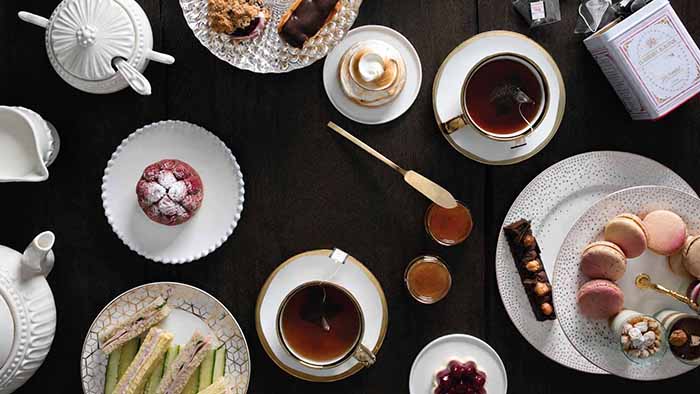 [9] Afternoon tea with cucumber sandwiches (photo © Harney & Sons). 5. WHAT IS A “PROPER CUP OF TEA” In British culture, the Western home of the cup of tea, a “proper cup of tea” (often called a “proper cuppa”) is a term primarily used to describe tea brewed according to a specific, traditional method. While there is a technical international standard for brewing tea (ISO 3103)‡, a “proper cup for everyday enjoyment typically follows a set of cultural rules to ensure maximum flavor and quality. According to traditional guides and experts, a proper cup of tea requires: Botanically, cucumbers, Cucumis sativus, are fruits. They are members of the same binomial genus as cantaloupe, honeydew, Persian, and other melons. Fruits are not necessarily sweet. Tomatoes are fruits, avocados are fruits, hot chile peppers are fruits, cucumbers and squash are fruits. Because they aren’t sweet, people think of them (and classify them in recipes and in produce departments) as vegetables. But by botanical definition, fruits carry their seeds on the inside (the only exception is the strawberry). With fruits, the seeds, or pits, are contained in the fruit’s ovary sac. True vegetables have no pit or seed sac. ________________ *The best bread for cucumber sandwiches is high-quality white pullman bread (also known as pain de mie) or a dense, fine-crumbed white sandwich bread. Because the sandwiches are delicate and intended to be eaten in a few bites, the bread needs to be a soft, neutral canvas for the crisp cucumber and creamy spread. It’s the ideal bread for tea sandwiches. Another choice is brown bread or whole wheat bread. While white bread is traditional, some prefer the nutty contrast to the cool cucumber. A British afternoon tea can even alternate white and brown bread sandwiches for a “checkerboard” effect. Whatever you select, look for a tight crumb, meaning there are no large air holes. Otherwise, the butter or cream cheese can leak through. A tight crumb also helps the sandwich maintain its structural integrity when the crusts are removed. Avoid crusty breads: baguette, rustic, sourdough, anything with a hard crust. They are too chewy and will cause the delicate cucumber slices to slide out of the sandwich when you take a bite. **Salted vs. unsalted butter: Many traditional recipes, such as the one from the London Ritz, explicitly call for salted butter. It provides an immediate, savory contrast to the extremely mild flavor of the cucumber without your having to sprinkle extra salt directly onto the butter. Conversely, other classic recipes use unsalted butter, because it allows you to control the seasoning yourself. Since cucumbers are traditionally salted and drained in a colander for 20 minutes before assembly to remove moisture, they already carry some salt. And if it isn’t a top salted butter (we love Vermont Creamery’s cultured butter with sea salt), the salt can be perceived as aggressive. However, if you’re using a high-quality, high-fat butter like Plugrá, the richness of the butter is the star. Use unsalted butter with a high-end brands and add a pinch of flaky sea salt atop the cucumber slices: a “pop” of salt that doesn’t make the bread taste salty. †Do you need to remove the crusts from the bread? For a formal afternoon tea, the crusts are almost always removed. This is a legacy of the Victorian era, where serving bread without crusts was a status symbol. It demonstrated that the host could afford to waste bread and had the kitchen staff available to perform the meticulous task. It also ensures a uniform, delicate texture. For a more casual garden tea or a simple lunch, keeping the crusts on is perfectly acceptable—and even preferred if you are using a high-quality artisanal or whole-grain loaf where the crust adds flavor and a pleasant chew. If you do choose to leave the crusts on for finger food, it’s better to cut the sandwiches into triangles, fingers, or smaller rectangles rather than leaving them as full-sized sandwich slices. ‡There actually is a formal definition for a professional cup of tea, established by the British Standards Institute and the International Organization for Standardization. The standard, ISO 3103, is not meant to ensure the best-tasting tea, but rather to provide a scientific “standard, repeatable cup” so professional tasters can compare different tea leaves fairly. CHECK OUT WHAT’S HAPPENING ON OUR HOME PAGE, THENIBBLE.COM. |
||