March 22nd is National Broccoli Day, one of 95 vegetable holidays celebrated each year—and that’s just the vegetables, not foods made with them, like gazpacho or spanakopita (spincah pie).
While you can see all the vegetable holidays below, in botany there is no such thing as a “vegetable.” The term doesn’t exist in science,
Plants comprise stems, bulbs, fruits, leaves, rhizomes, roots, seeds, and stems.
Since it isn’t a scientific term, we define it by how we eat it: It is purely a culinary and legal invention.
The culinary definition of a vegetable: any edible part of a plant that is generally savory, rather than sweet, and is served as part of a main course or other dish (appetizer, salad, side, etc.
The legal definition of a vegetable is not unsurprisingly misguided. In 1893, the U.S. Supreme Court (Nix v. Hedden) legally ruled that a tomato is a vegetable for tax and tariff purposes, even though they acknowledged it is botanically a fruit***.
Below:
> The history of vegetables.
> Botany meets kitchen: categories of vegetables.
> Some vegetable histories.
> The year’s 95+ vegetable holidays.
THE HISTORY OF “VEGETABLES”
1400s: The Linguistic Origin
Originally, the word vegetable didn’t mean a food group. It came from the Medieval Latin vegetabilis, which meant growing or flourishing.
In the 15th century, if you called something a vegetable, you just meant it was a living plant (as opposed to an animal or a mineral).
People used the Old English word wyrt (root/herb) to describe the specific plants they ate.
1700s: The Scientific/Culinary Split
The specific use of “vegetable” to distinguish savory produce from sweet fruit didn’t solidify until the mid-18th century.
In 1755, Samuel Johnson’s famous dictionary defined a vegetable broadly as “anything that has growth without sensation.”
In 1767, the first recorded instance appears where “vegetable” was used specifically to mean “a plant cultivated for food, an edible herb or root.”
This led to more rigorous classification. Cooks and botanists began to drift apart. Botanists focused on how the plant reproduced (seeds = fruit), while cooks focused on how it tasted (savory = vegetable).
As the kitchen required a way to distinguish savory from sweet foods, the culinary use of “vegetable” became a category.
What defines a “vegetable?”
1893: The U.S. Courts Weigh In
As mentioned earlier, he most famous “official” distinction happened in the U.S. Supreme Court in the case of Nix v. Hedden, adjudicated in 1893. It wasn’t about science; it was about taxes. To recap:
The Tariff Act of 1883 placed a tax on imported vegetables, but fruit could be imported for free.
A tomato importer,John Nix, sued, arguing that tomatoes are botanically fruits and should be tax-exempt.
Justice Horace Gray admitted that while a tomato is botanically a fruit, in the “common language of the people,” it’s a vegetable because it’s served with dinner and not as a dessert.
> The subcategories of follow, but first:
THE HISTORIES OF FAVORITE VEGETABLES
This is a small portion of The Nibble’s food histories. See the full list here.
Acorn Squash History
Artichoke History
Asparagus History
Avocado History
Beet History
Belgian Endive History
Bell Pepper History
Broccoli History
Broccolini History
Cabbage History
Carrot History
Cauliflower History
Celery History
Chile Pepper History
Chives History
Corn History
Crudités
Cucumber History
Delicata Squash History
Eggplant History
Fennel History
Garlic History
Hops History
Iceberg Lettuce History
Indian Corn History</li>
Jerusalem Artichoke (Sunchoke) History
Kale History
Lettuce History
Mint History
Mushroom History
Okra History
Onion History
…to be continued.
|
|
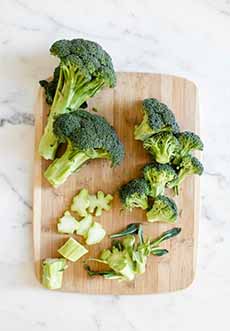
[1] Broccoli spans two categories: the bus are Flowers, and the stalks are Stems (photo © California Olive Ranch).
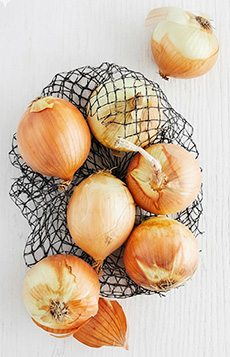
[2] Bulbs are a plant’s underground energy storage. Garlic, onions (in photo), and shallots are examples (photos #2 and #3 © Good Eggs).
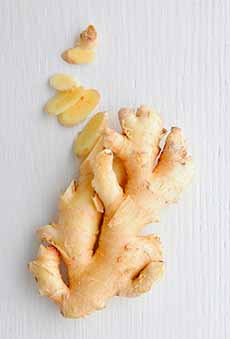
[3] Rhizomes are horizontal underground stems that send out roots. Examples include galangal, ginger (in photo), and turmeric.
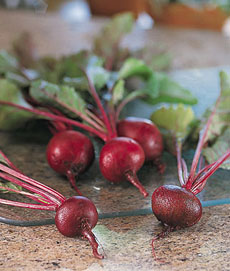
[4] Root crops are those that are pulled from the soil. Botanically, they are divided into taproots (a single, dominant root that grows straight down e.g., beets, carrots, parsnips, radishes, and turnips) and tuberous roots, which are modified lateral roots that swell to store nutrients (e.g., cassava, sweet potatoes). The photo may appear to be radishes, but they’re baby beets, a cousin (photo © Burpee).

[5] Tubers are swollen underground storage stems. They’re different from roots. Examples include Jerusalem artichokes a.k.a. sunchoke (in photo), potatoes, and yams (photo © Culinary Vegetable Institute).
|
WHAT ARE THE SUBCATEGORIES OF “VEGETABLES?”
These are all vegetables, but have subcategories listed by botanical parts.
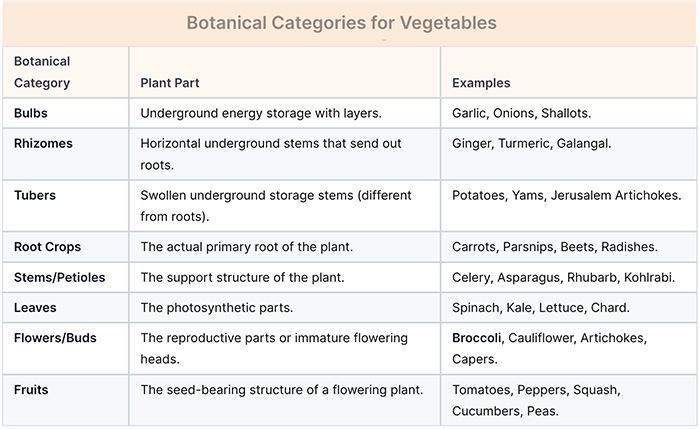
[6] How to categorize vegetables (Abacus Chart).
|
THE YEAR’S 95+ VEGETABLE HOLIDAYS
|
|
January
January: Artichoke And Asparagus Month
January 15: National Fresh Squeezed Juice Day
January 30: Hug a Jicama Day
January 31: Eat Brussels Sprouts Day
February
February: Exotic Vegetables And Star Fruit Month
February: National Avocado And Banana Month
February: National Canned Food Month
February: National Potato Lover’s Month
February: National Sweet Potato Month
February: Vegan Cuisine Month
February, 1st Week: Shape Up With Pickles Time
February 1: National Canned Food Day
February 2: National Tater Tot Day
February 4: National Stuffed Mushrooms Day
February, 2nd Full Week: National Kraut and Frankfurter Week
February 17: National Cabbage Day
February 17: National Cauliflower Day
February 22: National Cook a Sweet Potato Day
March
March: Exotic Winter Fruit & Leeks and Green Onions Month
March: National Celery Month
March: National Frozen Food Month
March: National Nutrition Month
March: Veggie Month
March 6: National Frozen Food Day
March, 3rd Week: National Agriculture Week
March, 3rd Tuesday: National Agriculture Day
March 16: National Artichoke Day/National Artichoke Hearts Day†
March 17: National Corned Beef and Cabbage Day
March 22: National Broccoli Day/We Love Broccoli Day
March 26: National Spinach Day
March 31: National Tater Day
April
April: National Brussels Sprouts and Cabbage Month
April: Fresh Florida Tomato Month
National Fresh Celery Month
National Garlic Month‡
Tomatillo And Asian Pear Month
April 4: International Carrot Day
April 6: Fresh Tomato Day
April 16: Day Of The Mushroom
April 19: National Garlic Day‡
May
May: National Lettuce Month
May: National Salad Month
May 1: National Salad Day
May 5: Totally Chipotle Day
May 24: National Asparagus Day
Late May-Early June: British Tomato Fortnight
June
June: National Cucumber Month
June: National Fresh Fruit And Vegetable Month
June: National Okra Month
June, First Two Weeks: British Tomato Fortnight
June 5: National Veggie Burger Day
June 10: Herbs And Spices Day
June 11: National Elote Day / National Corn On The Cob Day
June 14: National Cucumber Day
June 16: Fresh Veggies Day
July 16: National Corn Fritters Day
June 17: National Eat Your Vegetables Day
June 22: National Onion Ring Day
June 27: National Onion Day
|
July
July: National Asparagus Month
July: National Corn Month
July: National Eggplant Month
July: National Horseradish Month
July, 1st Full Week: Great British Pea Week
July, 2nd Friday: National French Fry Day
July 16: National Corn Fritters Day
July 16: National Fresh Spinach Day
August
August 5: National Green Pepper Day
August 8: National Zucchini Day / Sneak Some Zucchini Onto Your Neighbor’s Porch Night
August 17: National/World Eggplant Day
August 19: National Potato Day
August 28: National Stuffed Pepper Day
Aug 29: More Herbs Less Salt Day
September
September: National Fruits and Veggies Month / More Matters Month
September: National Mushroom Month>
September 7: National Acorn Squash Day
September 8: National Ants on a Log Day
September 25: Hug A Vegetarian Day
September 15: National Shiso Day
September 22: National Eat Local Day
September 30: National Soufflé Potato Day
October
October: Celebrate Sun-Dried Tomatoes Month
October: National Chili Month
October: Vegetarian Month
October, 1st Week: National Chili Week
October, 1st Week: National Vegetarian Week
October 1: National Kale Day
October 1: World Vegetarian Day
October 2: National Produce Misting Day
November
November: Greens and Plantains Month
November: Good Nutrition Month
November: National Pepper Month
November: Spinach And Squash Month
November: National Sweet Potato Awareness Month
November: World Vegan Month
November 1: International/World Vegan Day
November 6: National Healthy Eating Day/li>
November 14: National Pickle Day
November 16: National Mediterranean Diet Day
November, 3rd Saturday: World Squash Day
November 22: National Kimchi Day
November, 4th Thursday: National Idaho Potato Day (and Thanksgiving)
November, 4th Friday: National Maize Day
December
December: Root Vegetables And Exotic Fruit Month
December 3: National Green Bean Casserole Day
December 28: Eat Vegetarian Day
Fruits That Are Treated As Vegetables
These are the “sneaky” fruits that many people think are vegetables because they aren’t sweet:
Avocados
Bell pepper and all chile peppers
Cucumbers
Eggplants
Okra
Pumpkins, zucchini, and all squash
Tomatoes
Tomatillos
Vegetables That Are Treated As Fruits
Rhubarb
Carrots and sweet potatoes are used in sweet preparations, such as jams and cakes
|
________________
*National Tomato Day is June 1st. April is National Florida Tomato Month. October is National Tomato Month.
**Botanically speaking, a tomatillo is a fruit, specifically, a berry. However, like its cousins the tomato and the eggplant, it is almost always treated as a vegetable in the kitchen because of its acidic, savory, and slightly herbal flavor profile.
***The Tariff Act of 1883, signed by President Chester A. Arthur, required a tax to be paid on imported vegetables, but not fruit. The John Nix & Co. company filed a suit against Edward L. Hedden, Collector of the Port of New York, to recover back duties paid under protest on his imported tomatoes, which were botanically fruits. The Supreme Court unanimously voted that the tomato should be classified under the customs regulations as a vegetable, based on the ways it is used. While there have been numerous tariff law revisions since then, since the Supreme Court never overturned its decision, it remains the standard for how the U.S. government interprets produce categories when a law doesn’t provide a specific botanical definition—i.e., the heck with science, it depends on how the item is used.
†The official name for March 16th holiday is National Artichoke Hearts Day. However, many people and organizations (including the California Artichoke Advisory Board) use the names interchangeably, so you will frequently see it listed simply as National Artichoke Day.
‡Botanically, garlic is not a vegetable in the traditional sense; it is a bulb. It belongs to the genus Allium, making it a close cousin to chives, leeks, onions, and shallots. Because it’s a part of a plant that stores energy underground, a bulb functions similarly to a tuber, but its structure (layers of cloves) classifies it specifically as a lily-family bulb. It’s the underground storage organ of a perennial plant. In the USDA dietary guidelines, however, it’s grouped with vegetables because of its nutrient profile.
CHECK OUT WHAT’S HAPPENING ON OUR HOME PAGE, THENIBBLE.COM.
|




