Bergamot Oranges For Lovers Of Earl Grey Tea
|
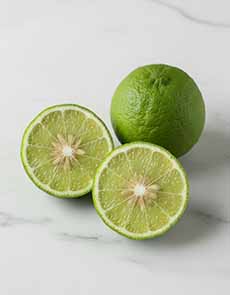
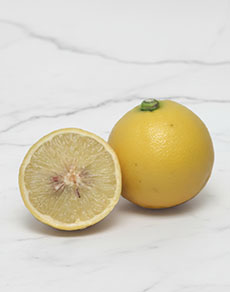
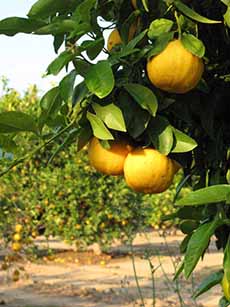
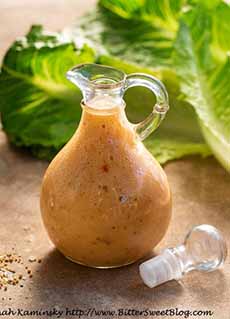
January is National Citrus Month, a good time to introduce you to a different citrus. If you’re an Earl Grey tea drinker, you may know about the bergamot orange, a Sicilian orange whose peel gives that special aroma and flavor to the tea. The oranges are in season through the end of this month—a chance for you to get hold of some if you’re inclined. Below you’ll find: > An overview of bergamot oranges. > How to use the juice and rind. > The history of bergamot oranges. > The year’s 13 orange and mandarin holidays. > The difference between oranges and mandarins. > The history of Earl Grey tea. > The different types of tea: a photo glossary. > The history of oranges. Bergamot oranges are quite distinct from oranges that are eaten. They’re inedible as fresh fruit, notable for being extremely sour and bitter. The size of a small oranges, they can be globular (round) or have a slightly ovoid (pear-like) shape. Their rind is smooth and turns from green (photo #2) to yellow (photos #1 and #3) when ripe. They never turn bright orange. They grow on bushy trees that can reach up to 10 feet in height (photo #4). Some 90% of the world output is grown in Calabria, a peninsula at the foot of the Italian mainland, due to its ideal microclimate. Small amounts are grown elsewhere, including California. They’re relatively juicy and low in seeds, but the most in-demand part of the fruit is the rind, or zest, which is bursting with aromatic oils (the very oils used to flavor Earl Grey). The oil contains unique compounds that give it that distinctive floral notes mixed with slightly spicy citrus undertones. In fact, the oil is so highly regarded that it received a Protected Designation Of Origin (PDO, DOP) in 2001 to protect the standard of quality of the oil from Calabria, Italy. The rind can be dried and added to homemade tea blends. But there’s more to be done with the bergamot: While you can’t eat the flesh of the bergamot, you can use its juice and zest to great effect, with its unique, citrusy, floral aroma. Like all citrus, the juice balances richness by cutting through fats in creamy dishes or fried foods; lifts dull or flat flavors; and prevents oxidation (browning) on cut surfaces of fruits . Bergamots have a rather short harvesting season, typically from October through February. Get yours from Melissa’s Produce. The fruits will keep for up to two weeks when stored in the refrigerator. You can also squeeze and freeze the juice. The fragrant citrus fruit, most likely a natural hybrid of a bitter orange (Citrus aurantium) and citron (Citrus medica) or lime, is believed to have originated in Italy’s Calabria region—still the world’s largest producer of bergamots (Citrus bergamia). Some sources claim its origin as Southeast Asia, instead. What is currently believed is that, while its parent citrus came from Southeast Asia, the bergamot fruit itself originated as a seedling in Calabria*. Citrus species are known for cross-pollinating naturally when grown near each other. If bitter orange trees and lemon trees were growing in proximity in Calabrian orchards or gardens, bees and other pollinators could easily create hybrid seeds without any human intervention. If someone planted seeds from fruit that was unknowingly a cross-pollinated hybrid, it grew into a tree with this unusual aromatic fruit. Someone recognized its valuable oil properties and began propagating it through grafting. |
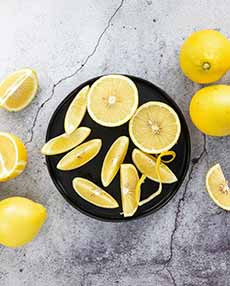 [1] They may look like lemons, but they’re bergamot oranges (photo © Melissa’s Produce).
|
|
|
Of course, it’s possible that Arab traders or Crusaders brought the bergamot to the Mediterranean, but the first records, from Calabria, appear in the 1600s (the 17th century). So while we can’t know for certain without historical records, the bergamot was most likely a happy accident of nature…in Calabria. For most of its history, bergamot cultivation has been almost exclusive to Calabria due to the unique microclimate. The evidence is split between whether Calabria began cultivating bergamots in the 1600s or 1700s. The discrepancy likely reflects the difference between anecdotal presence versus documented cultivation. For the 1600s, we know that: On the side of the 1700s: While the 1750 date by Niccolo Parisi is described as the “first reliable” planting date, it may be that earlier claims are less well-documented. Arguably, bergamot was likely present in Calabria by the late 1600s, with more certain evidence if cultivation by the mid-1700s. The etymology is a uncertain, but there are two contenders: Many other citrus varieties arose the same way, as chance seedlings that were then preserved through vegetative propagation. The navel orange, for instance, arose as a spontaneous mutation in Brazil in the 1820s, and the Cara Cara orange was first discovered in 1976 growing on a navel orange tree. †Paolo Feminis (1666-1736) moved from a small northern Italian village near Santa Maria Maggiore to Cologne, Germany, where he invented eau de cologne, using bergamot along with other ingredients like neroli oil, lavender, and rosemary. The formula was later passed on to Giovanni Maria Farina, who refined and commercialized the formula in 1709. CHECK OUT WHAT’S HAPPENING ON OUR HOME PAGE, THENIBBLE.COM. |
||