Basque Cheesecake Recipe & The History Of Basque Cheesecake
|
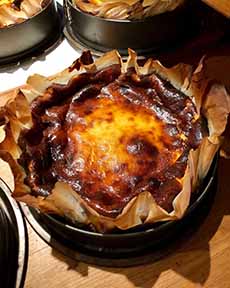
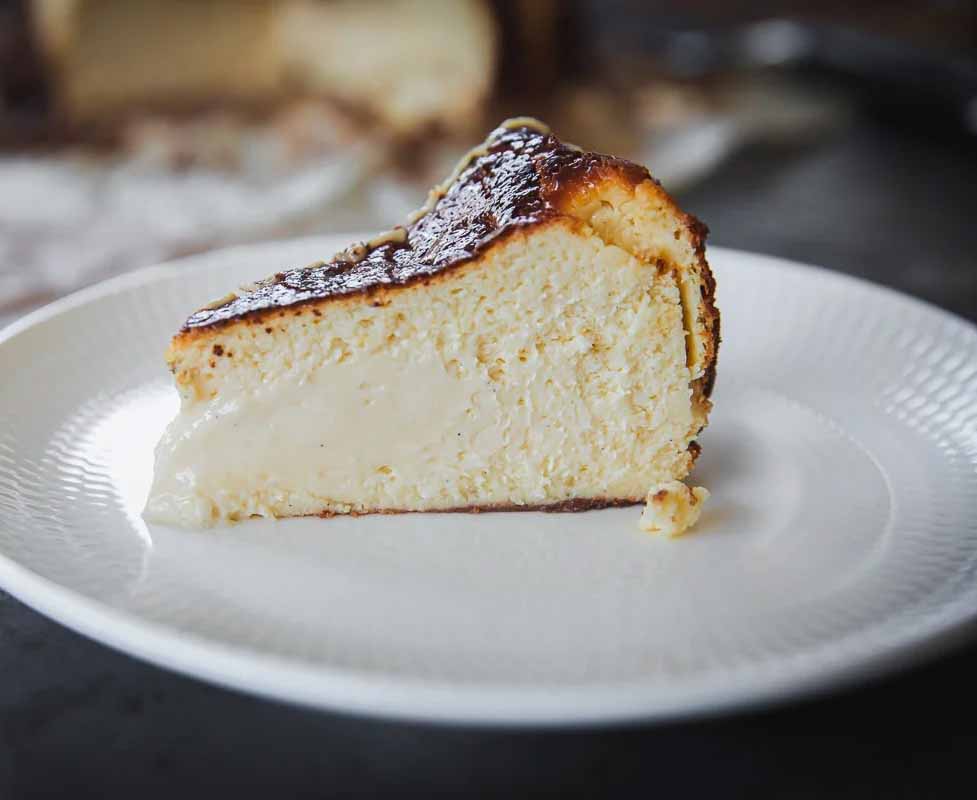
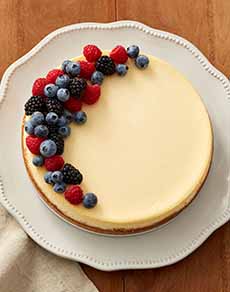
We are a devotee of cheesecake, and haven’t yet found a good Basque cheesecake in our home town. Even the slice we had at the gourmet Spanish market owned by a prominent chef we admire was bland. July 30th is National (and International) Cheesecake Day. No time like the present to create this drool-worthy dessert. Basque cheesecake it isn’t [yet] a style familiar to many Americans. The top should be cracked, sunken and burnt, and the technique used makes the top taste caramelized. Originating at a restaurant in San Sebastián, a resort town on the Bay of Biscay in Spain’s Basque Country, the creamy cheesecake is also known as Burnt Basque Cheesecake, Burnt Cheesecake, San Sebastian Cheesecake. You can serve it with coffee or tea, but consider what the local Vascos* serve: brandy, sherry, sweet Riesling, ice wine, or other dessert wines. The recipe follows, but first: > The year’s 16 cheesecake holidays. > See the year’s 11 Spanish food holidays below. > The history of Basque cheesecake is below. > 80 more cheesecake recipes, including sweet, savory, and more (cheesecake ice cream, floats, pops, waffles, etc.). What makes Basque cheesecake unique is its rustic appearance and intense flavor. It’s baked at a higher temperature, 400°F (200°C), which creates its signature blackened top. New York Cheesecake is typically baked at between 300°F and 350°F (150°C and 175°C). A few more differences: You can make Basque cheesecake the day before serving and refrigerate it until an hour before serving. It tastes best at room temperature. Prep time is 20 minutes and bake time is 45 minutes, plus cooling. This version of the recipe was developed by Lauren Habermehl of Pewaukee, Wisconsin and tested by By Lauren Habermehl and Val Goodrich of the Taste of Home Test Kitchen. We also provide the original La Viña recipe, which differs slightly. > Here’s a video of the preparation. For comparison, here are the ingredients from the original La Viña recipe (photo #4). Most significantly, the Taste Of Home version above uses an extra egg yolk, less heavy cream, more salt, plus vanilla extract. The extra egg yolk and less cream in the Taste Of Home version results in a denser texture due to the increased fat content. We liked the softer center better—it’s different—but both were equally delicious. Here’s the full La Viña recipe. 1. PREHEAT the oven to 400°F. Line a 9-inch springform pan with two overlapping pieces of parchment paper. Set aside. 2. BEAT the cream cheese and 1-1/2 cups sugar in a stand mixer fitted with the paddle attachment. Beat on medium speed until the mixture is smooth. 3. ADD the whole eggs and the egg yolk, one at a time, until incorporated. Reduce the mixer speed to medium-low; beat in the heavy cream, flour, vanilla extract and salt until smooth. 4. TRANSFER the filling to the springform pan, spreading it into an even layer. Dust the top of the cheesecake with remaining 1 tablespoon sugar. 5. BAKE for 25-30 minutes. Increase oven temperature to 450°; bake an additional 20-25 minutes. Remove from oven; let cool completely on wire rack. Remove sides of springform pan and peel back layers of parchment paper. Use a sharp knife to cut into slices. 6. TO STORE: You can store Basque cheesecake in the fridge for up to five days. You can freeze it whole or in individual slices for up to three months, tightly wrapped in two layers of plastic wrap and a layer of aluminum foil. Defrost it overnight in the fridge and let warm on the counter for an hour before serving. Basque cheesecake, known as tarta de queso in Spanish, is a relatively new addition to the pantheon of cheesecake recipes. Note that tarta de queso simply means cheesecake in Spanish, and other styles of cheesecake have long existed before what we call Basque cheesecake. They were (and are) typically lighter, often had crusts, and were baked at lower temperatures (i.e., not “burnt”). Basque cheesecake was created in 1990 in San Sebastián, Spain—the eponymous Basque region of northern Spain—by Santiago Rivera at his restaurant La Viña. At the end of many hours of experimentation on taking traditional cheesecake to the next level, he baked it at a much higher temperature, for a longer time than usual, and without a crust. The result was a dessert with a deeply caramelized, almost burnt exterior and an very creamy, custard-like interior—an innovation. |
|
|
|
As its fame spread, the international culinary world adopted the designation “Basque” to distinguish this new style from other cheesecake varieties (see its different names around the world, below). For decades, Basque cheesecake remained largely regional, popular in the Basque country and parts of Spain. However, it began to gain international attention in the 2010s when food bloggers and chefs began discovering and sharing the recipe online. Its Instagrammability helped fuel its global popularity. The cheesecake truly exploded worldwide around 2018-2019, becoming a trendy dessert in restaurants from Tokyo to New York. In 2021, the New York Times called it the “Flavor of the Year,” and it more mainstream food culture. It has inspired countless variations and interpretations. It was reported by the Times that a Basque cheesecake soft-serve flavor appeared in Singapore! Here’s a recipe for Basque cheesecake gelato (photo #7), which incorporates large pieces of the cheesecake into vanilla gelato. In the U.S. we call it Basque cheesecake, Basque burnt cheesecake, or burnt cheesecake. Elsewhere, the name varies quite a bit. (Note that vasca/vasco refers to the Basque people.) The “burnt” descriptor is also commonly added in many languages to emphasize the distinctive caramelized top that sets it apart from other cheesecake styles. In Spanish-speaking countries, it’s often called: Note that these holidays originated in Spain, and do not include Tex-Mex foods. The one food we think of as Mexican or Tex-Mex that actually originated in Spain is the empanada†. Spain is also home to the world’s biggest food fight: La Tomatina. The festival takes place in Buñol, Spain (a municipality in the province of Valencia), where participants throw tomatoes at each other. What began as a food fight between friends on the last Wednesday of August, 1945 now attracts participants from all over the world. The town of 9,000 residents has seen 40,000 to 50,000 people show up. For safety reasons, attendance is now capped at 20,000, and the event always sells out. La Tomatina only uses tomatoes that are unfit for consumption and would usually be thrown away by vendors or farmers—150,000 kilos of tomatoes (about 330,000 pounds)! For all this effort, the event lasts for just one hour! Check out these fun facts about the event. CHECK OUT WHAT’S HAPPENING ON OUR HOME PAGE, THENIBBLE.COM. |
||