It’s National Hand Roll Day. Who Invented The Hand Roll?
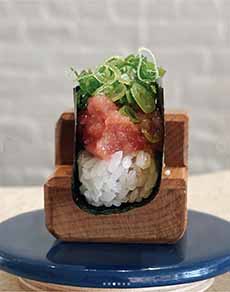
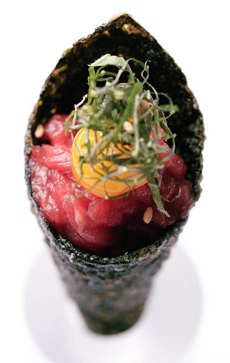 [1] Maguro uzura no tamago temaki, or maguro uzura for short. Maguro means tuna, uzura means quail, and tamago means egg. Maki means roll, te means hand roll; thus, temaki (photo © Jungsik).
|
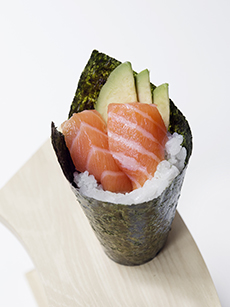
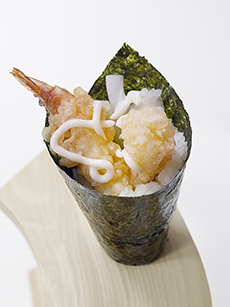
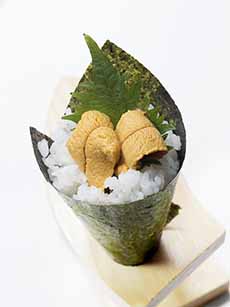
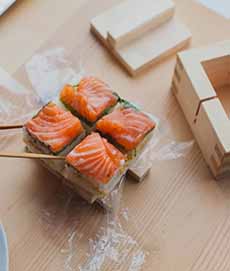
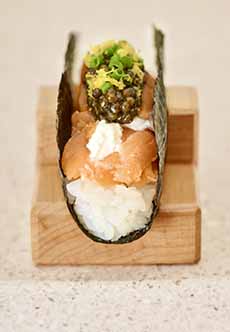
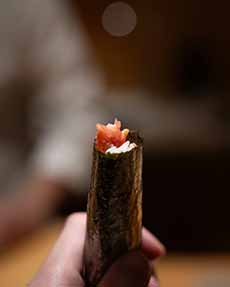
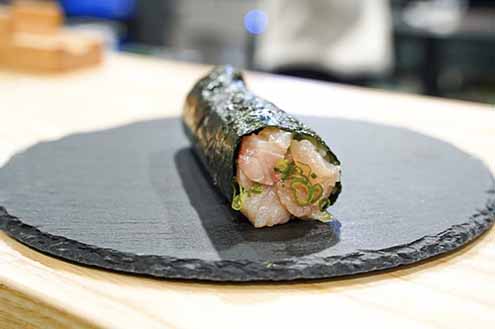
July 6th is National Hand Roll Day, one of our favorite fun foods. The Japanese word is temaki. As a sushi item, it arrived much later than the ubiquitous nigiri—slices of fish atop pads of rice. But it’s equally delicious and easier to make. The history of the hand roll follows, but first: > The year’s sushi holidays are below, along with other Japanese food holidays. > Sushi Glossary: a photo glossary of the different types of sushi and sashimi. > The history of sushi. Scholarship can’t determine when the earliest people on the island of what is now Japan—the hunter-gatherers of the Jōmon Period—had access to wild rice. We do know that grains of it have been dated to the 11th century B.C.E. Evidence does show that the cultivation of rice in Japan began approximately 2,800 years ago, about 775 B.C.E. While the island is surrounded by waters full of fish, the first hard evidence we have of salted fish served with cooked rice dates to 700 C.E.—1,474 years after rice cultivation began. But the sushi trail is easier to follow after that. First we jump to: But makizushi (cut roll maki, photo #6) and temaki, the hand roll, (photos #1. #2, #3, and #4), took more time. While precise dates have not yet been determined, both rolls likely evolved in the late end of the Edo Period (1603-1868) when sushi was becoming more available to commoners, not just the well-to-do. The word temaki literally means hand roll in Japanese: te for hand and maki for roll (regular rolls are maki, large rolls are futomaki, reverse rolls are uramaki, and so on). Why are there seem to be no sushi restaurants named for Hanaya Yohei? This Tokyo restaurateur and chef (1799–1858) is generally credited as the inventor of Tokyo-style sushi, edomaezushi* in Japanese or nigiri sushi at the end of the Edo period, around 1824. He is also regarded as the inventor of modern sushi (see the footnote** below). Prior to this, the sushi consumed was oshizushi, known in English as pressed sushi or box sushi. It is made by pressing layers of sushi rice and toppings into a rectangular mold, creating a compact, layered block of sushi. The toppings are laid out artistically (photo #5). Nigiri, the most popular form of sushi today, literally means “two fingers,” which refers to the typical size and the hand-pressing technique used to create it (see this video). It can be easily be picked up by two fingers, the thumb and index finger, without the need for chopsticks. That made it an excellent food for gamblers, who didn’t have to put down the cards or the dice as they ate, and for casual eaters who didn’t want a sit-down meal but could eat quickly at a street-side sushi cart. Even though Tokyo is a coastal city and the fish freshly-caught, food safety was a concern before the advent of refrigeration (which didn’t get to Japan until after World War II). To prevent spoilage, Hanaya either slightly cooked or marinated the fish in soy sauce or vinegar. He then placed the sliced fish on vinegared rice balls (su = vinegar, shi = rice) that were large, by today’s standard. His predecessors and contemporaries making oshizushi (pressed sushi) similarly prepared their fish by curing, fermenting, marinating, or pickling. Note that even today, in the U.S. and elsewhere, fish must be frozen before served. Before the FDA instituted this ruling, fish such as mackerel, salmon, and herring needed to be marinated to kill the parasites they contained. > There’s more about this below. Unlike the formal presentation of nigiri or the precise rolling and cutting required for maki rolls, temaki was designed for convenience and casual consumption. You may have noticed two recent developments in temaki: taco-style sushi (photos #7 and #8) and the cylinder or cigar shape (photos #9 and #10). We can’t pin down who created the taco-style sushi, although it was pretty recent and seems to have emerged organically from the fusion cuisine movement. In 2024, Alvin Zhang, owner of Engawa Fusion in Sacramento, created the restaurant so he could have Japanese and Mexican cuisine in one dish. The sushi taco was a big hit. In the United States, the Food and Drug Administration (FDA) has specific regulations requiring that most fish intended to be eaten raw—sushi, sashimi, ceviche, or tartare—must be frozen prior to serving to kill parasites. Freezing is not about bacteria: Proper handling is still crucial. Freezing is specifically to eliminate parasites, which would normally be destroyed by heat in cooking. Per the FDA Food Code, unless the fish is specifically exempt, it must be frozen by one of the following methods: Many states and municipalities adopt the FDA Food Code, and some may impose stricter rules. Certain fish do not need to be frozen before serving raw if they meet the following conditions:
|
|
|
_____________
*Edomaezushi, referring Tokyo-style sushi, is a broader category that includes nigiri. Even before nigiri appeared, all the fish used in pressed sushi and other styles were caught in Tokyo Bay (Edo is the old name for Tokyo and mae means front, as in waterfront). Edomaezushi was created in the 1820s to meet the need for fast food (grab-and-go). It includes specific preparation methods like aging, curing, and marinating fish. Nigiri is a subcategory of edomaezushi. It was a revolution in format: hand-shaped rice patties topped with fish, instead of rice molded in a box (photo #5). It’s the most common form of edomaezushi today. **Modern sushi includes nigiri (a slice of fish on a pad of seasoned rice), maki (roll, or cut roll, made in regular and large [diameter] sizes), and temaki, hand roll. A maki is usually wrapped in a sheet of seaweed (nori), but specialty versions are wrapped in a thin, crepe-like omelet, in soy paper, in thinly cut, continuous cucumber wrap; and in shiso (perilla) leaf. Other forms considered part of modern sushi include: > Chirashi, scattered sushi where sashimi and other toppings are served over seasoned sushi rice in a bowl, rather than formed into individual pieces. > Inari sushi, a sweet, seasoned deep-fried tofu (bean curd) pouch stuffed with seasoned sushi rice. This style became popular in the Edo period along with nigiri. > Gunkan-maki, literally, “battleship roll” because the nori is rolled around an oval-shaped pad of rice (the battleship) and topped with loose ingredients like ikura (salmon caviar) or uni (sea urchin), that could not be held in place atop nigiri. This style wasn’t invented until the 1940s by Imada Yoshiaki, the founder of a famous Tokyo restaurant, Ginza Kyubey. > Uramaki is an inside-out roll: rice on the outside of the sheet of nori on the inside. It is an American sushi innovation (like the California roll, Philadelphia Roll, spicy rolls, and scores of specialty rolls like dragon rolls, rainbow rolls, volcano rolls, and countless others). > Sashimi, while technically not sushi (since it lacks the seasoned rice), is logically grouped with modern sushi styles. **National Matcha Day is celebrated on February 6th in Japan. †Poke, pronounced poe-KEH, is a raw fish and vegetable dish initially served as an appetizer or salad course in Hawaiian cuisine, but now popular as a main course like chirashi sushi. Although not called as such, it’s a variation of sashimi of chirashi sushi (and a relative of ceviche, crudo, tartare, and tataki) that was created in Hawaii. Here’s more about it. ††Why is there a Fresh Poke Day? Isn’t poke always fresh? Well…poke can be purchased frozen and thawed, as can sushi, and often it is pre-made in grab-and-go sushi in certain markets. Also, the fish can be pre-sliced, waiting to be mixed. So this holiday emphasizes the freshness front and center: You order it and it is sliced and mixed for you. “Fresh” signals an elevated experience, with fish that’s just been cut, and is vibrant and bursting with flavor (exactly how poke was meant to be!). CHECK OUT WHAT’S HAPPENING ON OUR HOME PAGE, THENIBBLE.COM. |
||