Homemade Bubble Tea & Bubble Coffee Recipes
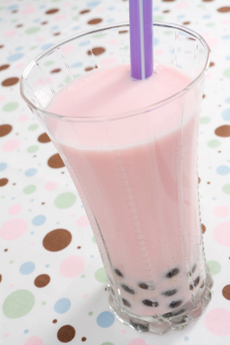
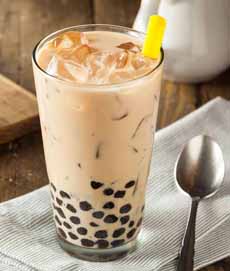 [1] Bubble tea; bubble coffee looks pretty much the same (photo © Twinings).
|
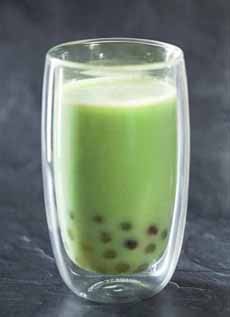
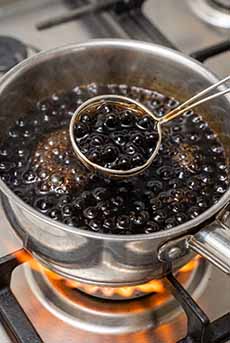
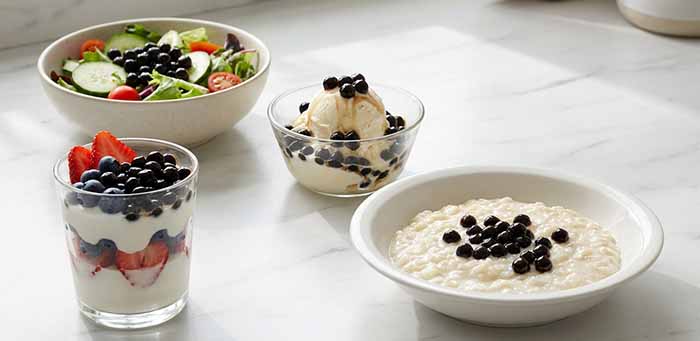
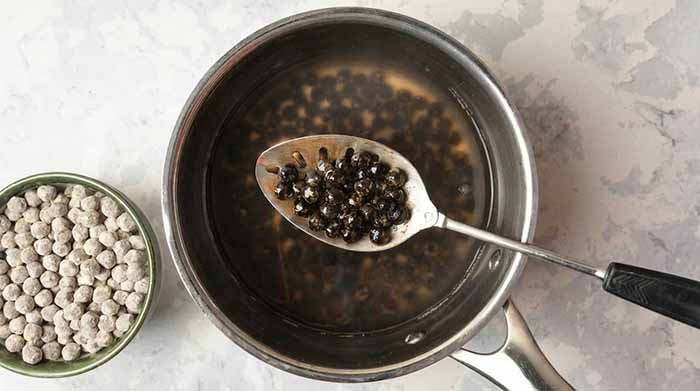
Originally found only in Asia and in Chinatowns in some cities in the U.S. (and elsewhere), bubble tea emporiums have been popping up nationwide over the past decade (photo #1). They sell variations of sweet, milky black, or green tea made with milk, non-dairy creamer, or plant-based milk, in “original” or a choice of flavors. There are also fruit teas, which blend fruit and tea into a colorful drink (photo #2). And now, there’s bubble coffee, too. The recipe below works with both. April 30th is National Bubble Tea Day. Below: > The difference between bubble tea or and milk tea. > The recipe for bubble tea or coffee. > More uses for boba (the tapioca pearls). > The two different types of boba: traditional and popping. Elsewhere on The Nibble: > The different types of tea: a photo glossary. > The year’s 25 coffee holidays. At the bottom of each are large, chewy tapioca boba or “bubbles.” There are also alternative choices, popular in Asia, that include agar jelly, fruit jelly and grass jelly (like Jell-O). The customer can choose a regular, looking like iced tea or coffee, or an ice-blended version that is frozen and then put into a blender, creating a slush. The bubbles/boba/pearls are sucked up through tapioca pearls through a wide straw. And now, today’s tip: You don’t have to seek out a bubble tea shop. You can make your own “original” version at home. A benefit for those cutting back on sugar: You can use noncaloric sweetener or drink it without sweetener; although sweetness is part of the fun. You can buy the boba and the straws in Asian markets or on Amazon. The boba are available in black, white, and colors. If you can’t find fat straws, you can scoop out the pearls with an iced tea [long] spoon. And…you can also make bubble coffee! The recipes follow, along with the history of bubble tea. Milk tea is a broad category of beverage that simply refers to any tea (black, green, oolong, white) combined with milk (dairy, creamer, or plant-based) and usually a sweetener. If it seems obvious, we include it here just because some sources reference “milk tea” when talking about bubble tea. Bubble tea is a specific evolution of milk tea that originated in Taiwan in the 1980s (the origin story is below. The “bubble” refers to two aspects: Ingredients For 2 Servings 1. SOAK the tapioca pearls to reconstitute, according to the package instructions. Once fully softened, drain them and set aside. Tapioca pearls are best used within a few hours of reconstituting. 2. BREW the tea or coffee. is still hot, add the sugar and stir to dissolve completely. Let cool and then refrigerate until completely chilled, about 2 hours. 3. TO SERVE: Place the tapioca pearls at the bottom of 2 glasses. Use a cocktail shaker to shake together the ice, milk, and tea. Strain into the cups and serve with a straw or spoon. Variations Bubble tea is a sweet, cold, black, or green tea drink created in 1983. The history of bubble tea says that Mr. Liu Han-Chieh, proprietor of the Chun Shui Tang teahouse in Taichung, Taiwan, introduced tapioca pearls. Prior to then, tea was not served cold in Taiwan. Liu Han-Chieh actually got the idea when visiting Japan, where he saw coffee served cold. He began to serve iced tea. In 1988, his product development manager, Ms. Lin Hsiu Hui, was sitting in a staff meeting with a glass of iced Assam tea and a bowl of sweetened tapioca pudding called fen yuan. For fun, she poured the tapioca balls into her iced tea, and the rest is history. The new food fad was especially popular among school children, who liked the boba in cold, milky, flavored tea drinks. The teas became available in many flavors, made with flavored powders that give color to the drink. The large, chewy pearls are now made in gray-black, beige-white, and colors. The tapioca pearls look like bubbles, and earned the drink the name, “bubble tea.” Other names include black pearl tea, boba, boba drink, boba ice tea, boba nai cha, pearl ice tea, pearl milk tea, pearl shake, pearl tea drink, tapioca ball drink, zhen zhou nai cha, plus initials: BBT, PT and QQ (which means “chewy” in Chinese). When you make your own, you can pick a signature name (e.g., TBT for Tad’s Bubble Tea). Today, bubble tea shops serve a choice of tea (e.g., classic milk tea, jasmine milk tea, matcha, Mexican horchata, made of ground raw rice spiced with cinnamon), a choice of toppings (boba—tapioca balls), almond jelly or grass jelly (a gelatin similar in texture to Jell-O), sweet red beans and others. Customers can specify the sweetness level. Some shops even offer organic, soy, and almond milk, plus lactose-free cow’s milk. Some companies used powdered teas and milk, others fresh-brewed tea and whole milk. They all taste good! Boba is a Chinese word that does not relate to tea. Its origin regarding the tea is a colorful piece of 1980s Taiwanese slang. |
|
|
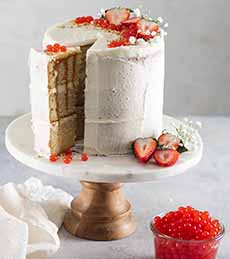
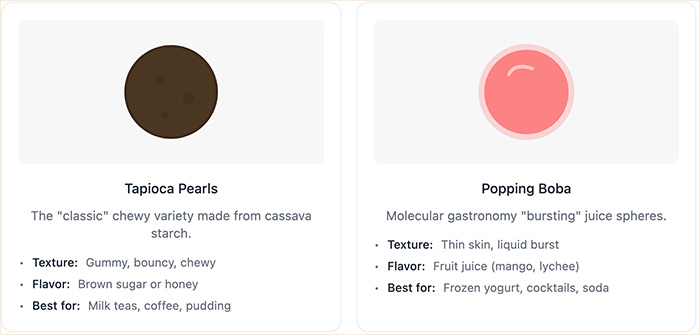
In the 1980s (when bubble tea was invented in Taiwan), “boba” was Taiwanese slang for a buxom woman or a sex goddess. It was specifically associated with the Hong Kong action star Amy Yip, who was nicknamed the “boba” of the film industry. When bubble tea shops in Taiwan began to transition from the original small tapioca pearls (called zhēnzhū, “pearls”) to the larger, 10mm pearls used today, a street vendor in Tainan, a city on Taiwan’s southwest coast, allegedly used the slang “boba” to describe the larger size of the pearls as a cheeky marketing gimmick. While it may seem harmless today, four decades ago the “buxom” analogy was slightly risqué, which fit the youthful, fun vibe of the emerging tea shop culture. Most people hear “boba” and think of the dark, chewy balls at the bottom of bubble tea. But there are actually two very different worlds of boba: tapioca pearls and popping boba. Sweet Uses ________________ CHECK OUT WHAT’S HAPPENING ON OUR HOME PAGE, THENIBBLE.COM. |
||