FOOD 101: The Difference Between Crème, Creme & Cream For National Creme Filled Chocolates Day
|
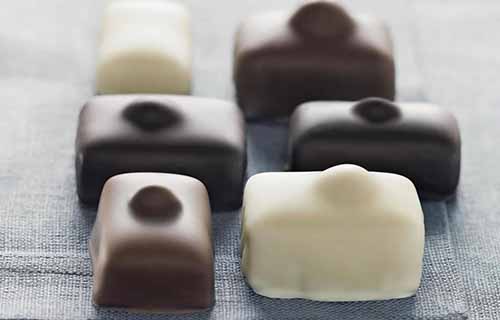
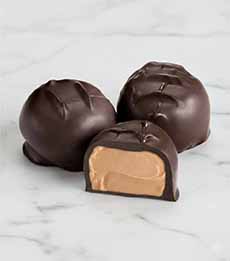
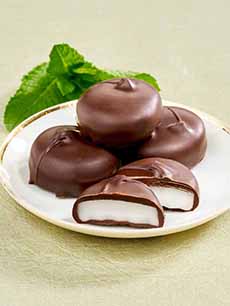
February 14th—Valentine’s Day—is also National Creme Filled Chocolates Day. It’s accurate to call them “creme,” as they contain no cream or other dairy. But please allow us the opportunity to discuss how Americans use creme vs. cream when there is real cream involved. We’ll get to that below. > Now, onto the creme-filled chocolates, below. > Also below: cream vs. creme. Elsewhere on The Nibble: > Check out all the chocolate holidays (all 69 of them). > The different types of chocolate: a photo glossary. > Pairing wine with chocolate. > The year’s 69 chocolate holidays. > February 14th is National Creme Filled Chocolates Day. Whether they’re called cream, crème, or creme, most chocolates with creamy centers contain no cream! Rather, they contain fondant, a mixture of sugar, water, and flavors whipped until “creamy.” The exception: There exists a teeny minority of fine chocolates that are actually filled with whipped cream. Few American chocolatiers make them because of their shorter shelf life. Leonidas, a Belgian chocolatier, is known for its chocolates filled with fresh whipped cream. Their signature Manon Café (coffee-flavored whipped cream) and Manon Blanc (vanilla-flavored whipped cream) chocolates have many fans (photo immediately below).
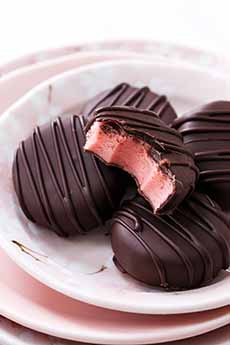
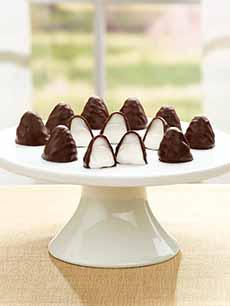
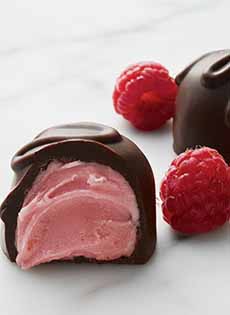
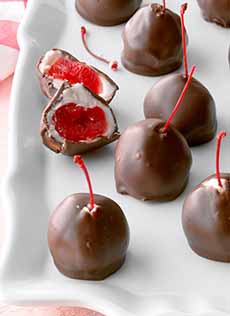
When people refer to creme-filled chocolates, they are referring fondant cream. Fondant is sugar and water that has been cooked and whipped into a smooth paste, flavored with extract or fruit purée. Fondant also refers to a stiff, dense, dough-like covering used to drape over cakes. Same ingredients, different proportions, different texture. The fondant that fills chocolates is smooth and melts on the tongue. Depending on the recipe, when you bite into the chocolate it can be firm or almost liquid (like a the center of some cherry cordials/chocolate-covered cherries). Yes, it’s creamy; it just isn’t cream. Buttercream is essentially a frosting and a filling, typically used on cakes and cupcakes. It’s a base of butter and powdered sugar, sometimes lightened with egg whites (known as Italian or Swiss style buttercream) or thickened with heavy cream. Yes, some high-end chocolatiers fill their chocolates with real buttercream. The taste is richer and more mellow, creamy rather than sugary fondant. But because of the high butter content, the shelf life is shorter with real buttercream filling. Butter is sensitive to heat and buttercream can become rancid faster than fondant creams. Most commercial “buttercream” Easter eggs are butter-enriched fondants. They have just enough butter to legally list “butter” on the ingredients label. But they’re essentially butter-flavored whipped fondant made with sugar or corn syrup and water. Mass-market brands might have 1% to 5% butter, with the rest of the creaminess coming from vegetable shortening. For a buttercream filling from a premium chocolatier, the filling is typically 15% to 30% butter. That’s a big difference in flavor (as is the quality of the chocolate surrounding it). For major retail distribution, “fondant-style” buttercream is more stable. If you buy an Easter egg from a high-end or artisan chocolatier, it’s likely to be true buttercream, made by whipping actual butter with sugar and often a lightener like marshmallow cream (e.g. Fluff) or egg whites. If you want to know if it’s real buttercream, look at the ingredients list. There’s “cream,” indicating the presence of cream in the recipe, and there’s “creme,” which should only be used to designate that something is “creamy” without the presence of any dairy product. That describes “creme”-filled chocolates. They have no cream. Is it proper? No. It’s commercialism. (rant continues below) |
|
|
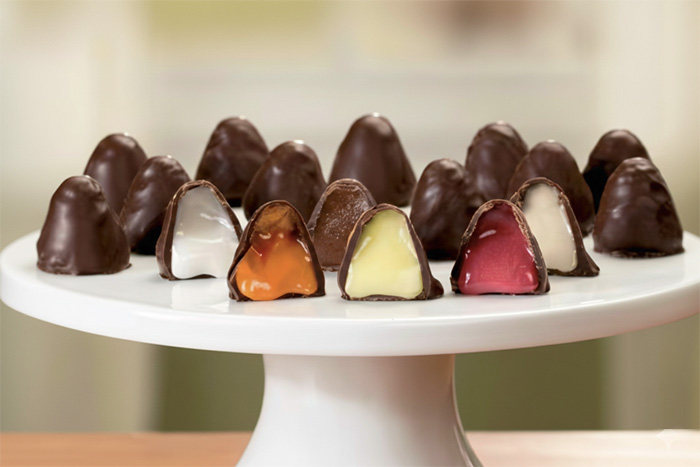 [8] Assorted fruit creme flavors from Vermont Country Store. Because they contain no dairy, they should be called “creme” instead of “cream.” Banana cream pie, for example, does contain cream and should use the correct spelling. But it’s not the case with many other recipes called “creme” that do, indeed, contain cream (banana creme pie, carrot creme soup, chicken in creme sauce, and many others that contain real cream). In the U.S., adding an “e”” to the end of a word or using a pseudo-French spelling is a common tactic to make a product seem more elegant or “gourmet.” But it’s a misappropriation. It borrows the visual prestige of the French word crème while completely ignoring the French pronunciation (krem). Worse, it’s typically pronounced kreem, like cream—the spelling that should have been used in the first place! Over time, this misusage has become so common that many Americans view “creme” as an appropriate stylistic variant of “cream,” rather than a foreign word. In standard English prose as well as in the culinary arts, one should always use cream when referring to the dairy product. Use crème with the accent if referring to a French product: un café crème (coffee with cream), crème chantilly (whipped cream), crème brûlée, etc. Thus, in the U.S., when naming a product or writing an article or menu, naming a recipe, etc., “cream” is the correct English spelling. Not everyone is good with French accent marks, but anyone can spell creme and say krehm instead of kreem. The bigger question is: If it isn’t a French dessert or confection—crème brûlée or crème caramel, for example—why not just use the English-language word cream, instead of, e.g., Strawberry Creme Pie? We recently saw a menu listing “creme of mushroom soup.” Why not “cream of mushroom?” If you want to get fancy, go full-French: “crème de champignons.” More than a few people—both professionals and home cooks—use “creme” in recipes that don’t even contain cream. Instead, the recipes have fillings made with coconut cream, cream cheese, tofu, various starches and other ingredients that create a creamy texture. So why not simply use the adjective creamy? Some who choose the misspelling are pretentious, others are merely unaware. We’ve spoken our piece. We are all ranted out. Thanks for listening. CHECK OUT WHAT’S HAPPENING ON OUR HOME PAGE, THENIBBLE.COM. |
||