50+ Ways To Eat Pierogi For National Pierogi Day - The Nibble Webzine Of Food Adventures For National Pierogi Day, Here Are 50 Ways To Enjoy Pierogi


THE NIBBLE BLOG: Products, Recipes & Trends In Specialty Foods


Also visit our main website, TheNibble.com.

50+ Ways To Eat Pierogi For National Pierogi Day

Updated October 2026

October 8th is National Pierogi Day. Pierogi are dumplings, although they are frequently compared to stuffed pastas like ravioli.

Pierogi are dumplings of Central and Eastern European origin, traditionally stuffed with cheese, fruit, ground meat, mashed potato or sauerkraut. They can be served boiled, baked or fried/sautéed, usually in butter with onions.

The closest Russian and Ukrainian equivalents are vareniki and varenyky (don’t confuse pierogi with pirog, the Russian word for pie).

The Polish word pierogi is plural. The singular form, pieróg, is rarely used since a typical serving consists of multiple pierogi.

You may come across different spellings: perogi, pierogy, perogy, pierógi, pyrohy, pirogi, pyrogie, or pyrogy. For why there are so many, see the †footnote below.

The dumplings are usually semicircular, but in some areas they are rectangular or triangular.

Here’s how to celebrate: 50+ ways to eat pierogi.

Serve them as appetizers, in salads, on skewers, as mains, as a pasta course, and as dessert.

Below:

> Pierogi dips.

> Pierogi toppers.

> Elaborate pierogi presentations.

> The year’s Polish-related food holidays (in the *footnote).

Elsewhere on The Nibble:

> The history of pierogi.
 
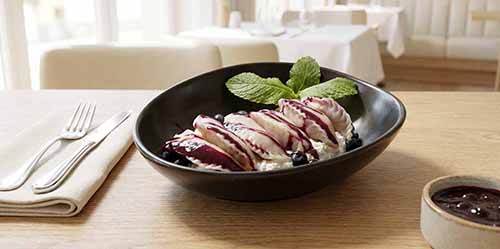
A bowl of dessert pierogi: a sweet cheese filling with blueberry sauce.
[8] Cheese pierogi with a sweet sauce are a yummy dessert (photo © The Nibble).
 
 
1. PIEROGI DIPS

  • Dipped in honey mustard or Dijon mustard
  • Dipped in Greek yogurt
  • Dipped in ranch dressing
  • Dipped in sour cream and hot sauce (spicy dip)
  • Dipped in sour cream and chopped green onions (onion dip)


2. PIEROGI TOPPERS

Boil, fry or sauté the pierogi and serve:

  • Topped with Alfredo sauce
  • Topped with applesauce (cheese pierogi)
  • Topped with Béarnaise sauce
  • Topped with butter and chives
  • Topped with caramelized onions in butter and paprika sour cream
  • Topped with caramelized onions, sage and jalapeño
  • Topped with caramelized onions and Polish sausage
  • Topped with caramelized onions, finely chopped bacon and garlic
  • Topped with caramelized onions and sour cream
  • Topped with chili con carne
  • Topped with Greek yogurt, dill, diced cucumber and red onion
  • Topped with green curry sauce
  • Topped with jelly or jam and optional sour cream (cheese pierogi)
  • Topped with mango peach salsa (cheese pierogi)
  • Topped with marinara sauce and cooked ground meat
  • Topped with melted butter
  • Topped with melted Cheddar cheese
  • Topped with mushroom sauce
  • Topped with pesto sauce
  • Topped with roasted eggplant and tomatoes
  • Topped with roasted tomatoes and garlic
  • Topped with salmon or whitefish caviar (cheese or potato pierogi)
  • Topped withsautéed apples
  • Topped with smoked salmon, thinly sliced onions and capers (cheese pierogi)
  • Topped with sour cream, fresh basil, and scallions
  • Topped with sour cream and fresh salsa: chopped onion, garlic, tomatoes, cilantro, lime
  • Topped with sour cream, garlic, and chives
  • Topped with spicy salsa
  • Topped with whitefish, sable, smoked salmon, lettuce, tomato, red onion, cucumbers, and capers (cheese pierogi)
  • Topped with yogurt, garlic and herb sauce


3. ELABORATE PIEROGI PREPARATIONS

  • Bacon-wrapped pierogi appetizers
  • Baked pierogi casserole with bacon, tomato and cheese or your favorite casserole ingredients
  • Pierogi crostini topped with mushrooms, scallions and spicy fresh salsa
  • Pierogi tossed with garlicky string beans, onion, bell pepper, and bacon
  • Pierogi “salad”: cold or hot pierogi on a bed of lettuce with honey Dijon mustard sauce or vinaigrette
  • Pierogi “salad” with other favorite ingredients (vegetables, ham, turkey, spinach, etc.)
  • Pierogi tossed with fried mushrooms, bacon, and onions
  • Pierogi tossed with onions, peppers, and chicken sausage
  • Pierogi with melted mozzarella, caramelized onions, and sautéed mushrooms
  • Pizza pierogi: potato or cheese pierogi with pizza sauce, melted mozzarella cheese, and pepperoni
  • Salmon skillet with pierogi, onions, capers, lemon, dill, and garlic
  • Sautéed pierogi in butter, topped with chili, cheese, sour cream, and habanero sauce
  • Sautéed pierogi in butter, topped with steamed broccoli, and melted cheese
  • Sautéd pierogi in olive oil, with onion, kale, fresh garlic, lemon and oregano
  • Sautéd pierogi in sesame oil, with kale, fresh garlic, red bell pepper and sesame seeds
  • Vegetable pierogi frittata with asparagus and garlic

 
This should keep you busy through the next National Pierogi Day!

   
LN Fast Snack Cheese Pierogy Bites-230
[1] Pierogi topped with melted Cheddar (photo © Mrs. T’s).


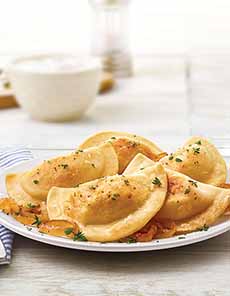
[2] A classic garnish of butter and onions (photo © Mrs. T’s).


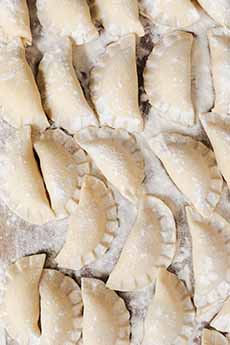
[3] Pierogi freshly made and ready to boil (photo © Karolina Grabowska | Pexels).

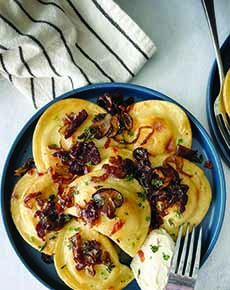
Pierogi Topped With Caramelized Onions
[4] One of our favorite ways to enjoy pierogi: topped with caramelized onions (photo © Mrs. T’s).

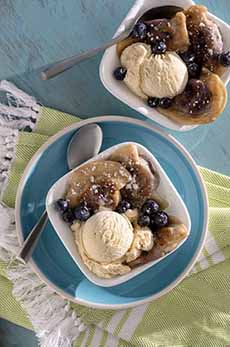
Pierogi A La Mode
[5] For dessert: cheese or fruit pierogi à la mode with fruit sauce (photo © Millie’s Pierogi).

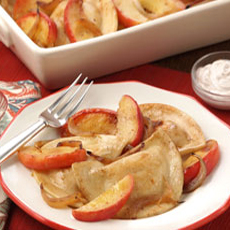
AUTUMN_PIEROGIES_APPLES-MrsTs-230
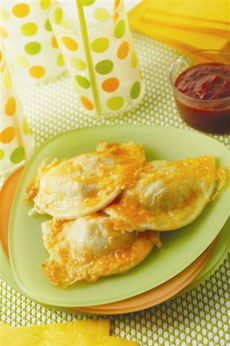
[6] For dessert or a side, especially with poultry: pierogi with sautéed apples (photo © Mrs. T’s).

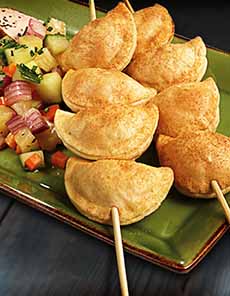
Pierogi Skewers
[7] Mini pierogi on skewers. Serve them as a fun snack or appetizer with a dip (photo © Mrs. T’s).


Bowl Of Pierogi
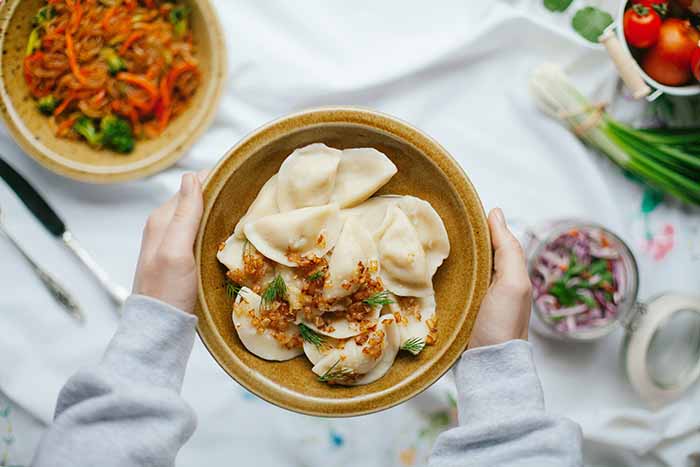
[9] Pierogi can be a main course with different salad sides (photo © Victoria Shes | Unsplash).


*Polish holidays in addition to National Pierogi Day October 8th, include: Pączki Day is celebrated on Fat Thursday (the last Thursday before Ash Wednesday) in Poland and on Fat Tuesday (Shrove Tuesday, the day before Lent) in Polish-American communities. Celebrants in Poland as well as Polish-American communities enjoy pączki, yeast doughnuts filled with jam or custard and dusted with powdered sugar. Other holidays related to foods of Polish origin:

Bagels, which originated in Poland have 4 holidays, the first of which is National Bagel Day on January 15th (here are the other three). The bagel originated in 17th-century Poland within Jewish communities, possibly evolving from ring-shaped breads such as obwarzanek or bublik.

National Vodka Day is October 4th. Both Poland and Russia have legitimate historical claims to vodka, and the origin remains debated. Poland has the earliest written record of the word wódka in a document from 1405, in court documents from the Palatinate of Sandomierz, where it referred to medicinal and cosmetic preparations (early spirits were used as medicines). There is some evidence that the first grain-based vodka in Russia could have been distilled at the Chudov Monastery in the Moscow Kremlin by a monk named Isidore, around 1430, but the earliest recorded date of a vodka distillery in Russia is 1174, listed in the Vyatka Chronicle regarding a distillery in Khlynovsk.

†The various spellings reflect Polish and other Slavic forms meeting English pronunciation and spelling habits, especially in immigrant communities. Pierogi is the standard Polish spelling. In Polish it’s plural; one dumpling is pieróg. English speakers often use pierogi for both one and several. Perogi, pierogy, perogy, pyrogie, and pyrogy are English-language spellings that approximate how people hear or pronounce the word. Perogy/perogies is especially familiar in Canadian English.

Pyrohy reflects a related East Slavic or regional form used in some Ukrainian and Carpathian communities. It can name a similar dumpling, though local food names and traditions don’t always line up exactly. Pirogi is trickier: similar-looking words exist in other Slavic languages, sometimes with different meanings. For example, Russian pirog means a pie, so the spelling can cause confusion. Pierógi isn’t the standard Polish spelling; the accent is an English-language variant, not part of the usual Polish word.

In sum, the variants are a mix of informal English spellings, regional/diaspora forms, and related Slavic words—not all simply interchangeable spellings in every context.


CHECK OUT WHAT’S HAPPENING ON OUR HOME PAGE, THENIBBLE.COM.


Comments are closed.


© Copyright 2005-2026 Lifestyle Direct, Inc. All rights reserved. All images are copyrighted to their respective owners.