National Lobster Newburg Day: Recipe, History & More
|
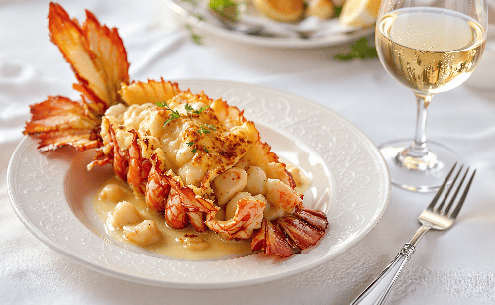
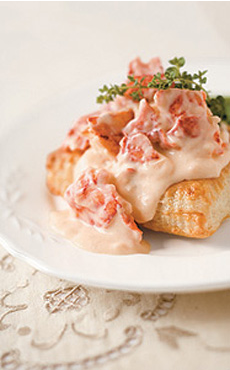
National Lobster Newburg Day is March 25th, National Crab Newburg Day is September 25th. This article celebrates both of them. Below: > The history of Lobster Newburg. > The difference between Lobster Newburg (photo #1) and Lobster Thermidor (photo #7) is also below. > > Substituting fish for shellfish. > > What is vol-au-vent (photo #1). Elsewhere on The Nibble: > The year’s 56 seafood holidays. > The history of lobster. Newburg or Newberg is very rich sauce of butter, cream, egg yolks, cognac, sherry, cayenne pepper and nutmeg, to which cooked shellfish—crab, lobster, scallops, shrimp—is added, alone or in combination. It is creamed seafood; in fact, in French, the dish Lobster Newburg is called homard sauté à la crème (lobster sautéed in cream). Some sources credit M. Pascal, a chef of the once-famous Delmonico Restaurant* in New York City, with its creation, saying that it was originally named after Mr. Ben Wenburg, a frequent guest at the restaurant. According to Wikipedia, however, the dish was invented by Ben Wenberg himself, a sea captain in the fruit trade. In 1876 he demonstrated the dish to Charles Delmonico, the restaurant’s manager. After some tweaking by the chef, Charles Ranhofer, Lobster à la Wenberg was added to the menu and became very popular (it is exquisite!). Mr. Wenburg and the manager subsequently quarreled, and Wenburg demanded that his name be removed. The first three letters of his name were reversed to “New” to create the now-famous Newburg sauce. Ah, how short-sighted of you, Mr. Wenburg. How many of us refuse the opportunity to enter culinary history? In Chef Ranhofer’s printed recipe of 1894, the lobsters were boiled for twenty-five minutes, then fried in clarified butter, then simmered in cream while it reduced by half, then brought again to the boil after the addition of Madeira. A far simpler contemporary recipe is below. You can use with any seafood, including crab, lobster, scallops or shrimp. Lobster Newburg is related to Lobster Thermidor, a similar dish that involves lobster meat cooked with eggs, cognac, and sherry that appeared in the 1890s. The dishes are so similar—seafood in cream sauce—that they are often confused for each other. The principal difference is the sauce. Here’s the first recipe we made, adapted from Fanny Farmer. Depending on how large you like your portions, it can be a first course for 4 or a main course for 2. Mushrooms can “stretch out” the recipe for additional servings, and lower the cost of the dish.
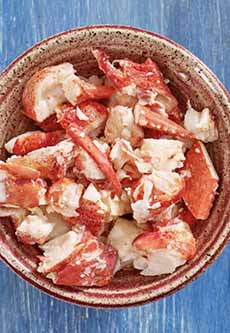
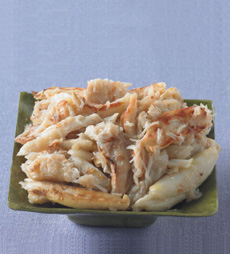
Lobster Newburg was originally served in puff pastry shells, called vol-au-vent (see next section). The pastry absorbed the sauce. We originally did that, as the “elegant French style.” It’s no longer in fashion, and pastry shells are bland and unnecessary carbs. Instead, we now serve the Newburg with a side of toast points: quality white bread or brioche. Instead of the toast points, we sometimes serve a brioche à tête, which doesn’t require toasting (see them both here). Although the green garnish is not part of the original recipe, we add it as a tasty pop of color. Ingredients |
|
|
|
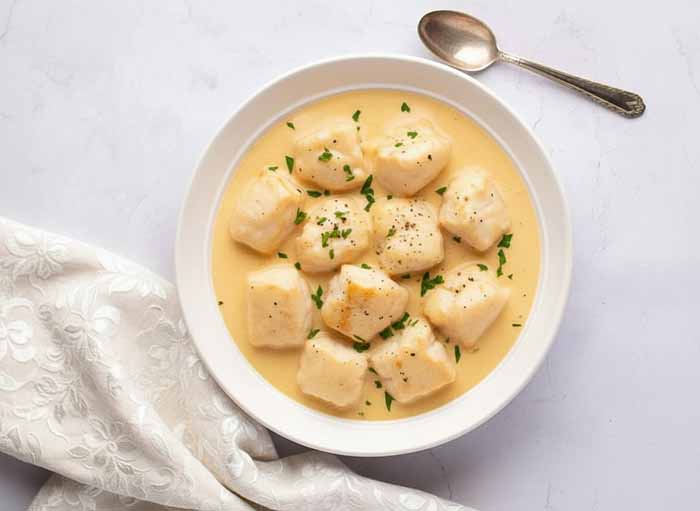
Preparation 1. SLICE the cooked seafood as needed. Cook with the butter for 3 minutes in a large non-stick saucepan. If using mushrooms, first sauté in butter; then add seafood and additional butter as needed. 2. ADD cream, beaten egg yolks, and seasonings to taste. Stir over low heat until slightly thickened. Add sherry and brandy; cook 1 minute more. Serve on toast or puff pastry. In the beginning, Newburg was served in a puff pastry shell called vol-au-vent (pronounced vol-oh-VON). The French term literally translates to “flying in the wind,” a poetic reference to how light and airy the puff pastry shell is. They’re made from puff pastry formed into a hollow, cylindrical shell with a lid, designed to be filled with savory (or sometimes sweet), creamy fillings, like chicken, mushrooms, seafood, or veal in a rich béchamel or velouté sauce. They technique was popularized by the legendary French chef Marie-Antoine Carême in the early 19th century, making them very much of the same culinary era as Lobster Newburg Related term: Bouchée à la reine (“mouthful for the queen”) is essentially the same thing — a smaller vol-au-vent filled with a creamy mixture, traditionally chicken and mushrooms. It’s named after Queen Marie Leszczyńska, wife of Louis XV. Not everyone eats shellfish, or wants to pay for it. Beyond the shell, there are options in the finny field of fish. 1. CUT the fish into generous chunks (similar to lobster pieces) rather than leaving it as a whole fillet. 2. DUST the chunks lightly with flour to help them stay intact when seared. 2. SEAR the fish briefly before adding to the sauce to give it some color and help it hold together. 3. ADD the fish toward the end of the sauce-making process to avoid overcooking. Fish cooks faster than lobster. *The original Delmonico’s was operated by the Delmonico family in the Wall Street area of Lower Manhattan, beginning in 1827. Established by Swiss brothers John and Peter Delmonico, the Delmonico presence expanded as other family members opened restaurants using the same name. The original grew into a grand destination, attracting the rich and famous, including visiting royalty. The space still stands at 2 William Street. You can still eat there, although the restaurant is now operated by an unrelated company (here’s the history). The restaurant is credited with Eggs Benedict, Chicken à la King, Delmonico Potatoes, Delmonico steak, Lobster Newburg. Credit is also given for naming Manhattan Clam Chowder, and the name of Baked Alaska. †Lobster Newburg sauce is based on a cream reduction, in a category of its own. Typically made with: heavy cream, egg yolks (for richness and thickening), butter, Sherry or Madeira wine, and ideally a touch of cayenne and nutmeg, here’s how it differs from two of the “mother sauces” of French cuisine, mentioned above: ‡What is a liaison sauce? This French culinary term refers to a thickening or binding agent used to give a sauce body and richness: egg yolks and heavy cream whisked together and then tempered into a hot sauce to thicken it without curdling. The key distinction from a roux: CHECK OUT WHAT’S HAPPENING ON OUR HOME PAGE, THENIBBLE.COM.
|
||