National Chocolate Pudding Day, Pudding History & Best Chocolate Pudding Recipe
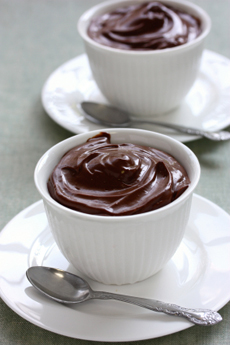 [1] From-scratch chocolate pudding; the recipe is below (photo © Bonchan | iStock Photo).
|
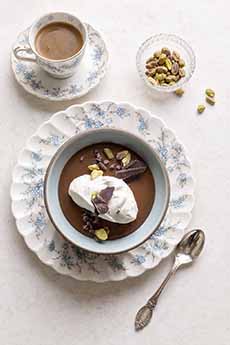
Updated June 2026 June 26th is National Chocolate Pudding Day. If you don’t already make chocolate pudding from scratch, it’s the day to discover this intense, creamy chocolate delight. Sure, instant pudding is tasty. But imagine how much better it is made from scratch, with quality chocolate. Here‘s the recipe our Nana lovingly made for us, every week. We’d try to get there twice a week, we loved it so much. (It wasn’t just the pudding; we loved Nana, too.) We got to scrape the pot and eat the hot pudding remnants from a spatula: It is equally delicious hot/warm or chilled. Remember: The better the chocolate. the better the pudding. Look for 100% cacao (i.e., unsweetened) chocolate in stores that sell gourmet chocolate. You can substitute higher-cacao sweetened chocolate (75% or higher) and cut out a teaspoon or two of the sugar in the recipe. Below: > Recipe: Nana’s chocolate pudding. > Recipe: Dairy-free/vegan chocolate pudding. > The history of chocolate pudding. > American pudding vs. British pudding: the difference. > Chocolate pudding vs. chocolate mousse: the difference. Elsewhere on The Nibble: > The year’s 24 pudding holidays.> Recipe: banana pudding with Nilla wafers > Recipe: butterscotch pudding. > Recipe: lemon pudding with stewed blackberries. > Recipe: salted caramel pudding. > Recipe: caramel custard. Ingredients For 4 Servings 1. SCALD 2 cups milk with chocolate in the top of a double boiler or a glass bowl set over a saucepan of lightly simmering water (the water should not touch the bottom of the top pan or glass bowl). Beat until smooth. 2. COMBINE cornstarch, sugar and salt. Stir in cold milk. Add to scalded milk and cook 15 minutes in double boiler. Stir constantly until mixture thickens; then stir occasionally. 3. COOL slightly and add vanilla. Fold in optional heavy cream. 4. SERVE warm or chilled. |
|
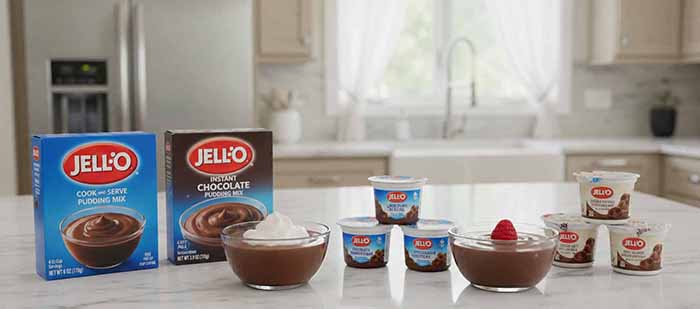
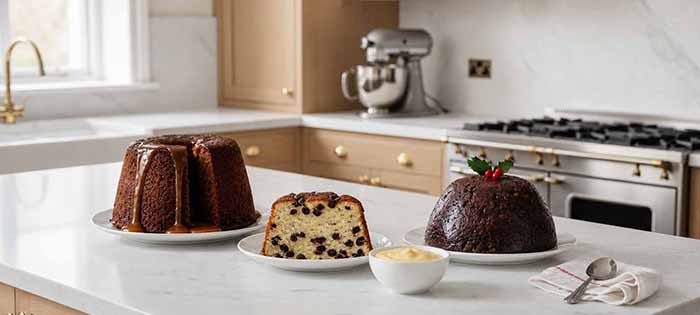
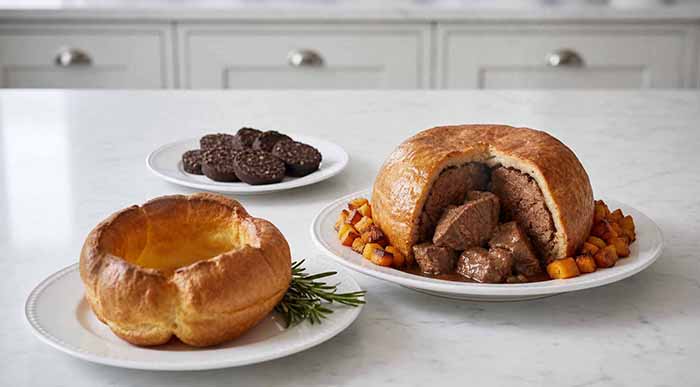
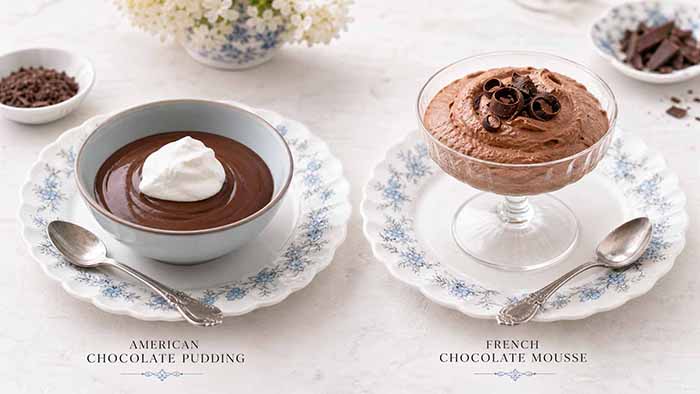
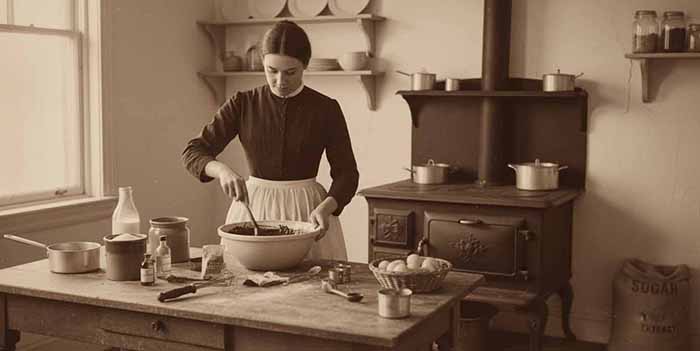 [4] Making chocolate pudding at the turn of the 20th century (photo: Abacus). DAIRY-FREE CHOCOLATE PUDDING If you’re vegan or lactose intolerant, you can still enjoy a delicious chocolate pudding—dairy free! This budino, the Italian word for pudding, was created by Debi Mazar and Gabriele Corcos, stars of Cooking Channel’s show, Extra Virgin. They used House Foods’ premium soft (silken) tofu. Tofu Chocolate Budino* Ingredients For 4 Servings 1. COMBINE sugar, water and cocoa in a medium sized saucepan. Bring to a boil, and stir until sugar is dissolved. Simmer for 5 minutes. Turn off heat and cool slightly. Stir in vanilla. 2. MELT chocolate in a double boiler or a glass bowl set over a saucepan of lightly simmering water. 3. ADD both mixtures plus tofu into a blender or food processor; purée until completely smooth. 4. DIVIDE the chocolate mixture among ramekins and place in the refrigerator for 2 hours or up to overnight. Conquistadors brought “chocolatl” (the Aztec spelling, pronounced cho-co-LAH-tay) from Mexico to Spain in 1528. Originally a bitter drink mixed with cornmeal and spices, it was up to Spanish chefs to find different ways to make chocolate more palatable. For starters, they sweetened it. About this heavily taxed import, one official of the time commented, “None but the rich and noble could afford to drink chocolatl as it was literally drinking money. Cocoa passed currency as money among all nations; thus a rabbit in Nicaragua sold for 10 cocoa nibs, and 100 of these seeds could buy a tolerably good slave.” Over time, this costly ingredient was used to flavor custards and other puddings. Solid chocolate was not “invented” until 1847, in England (here’s the history of chocolate timeline). “Pudding” means different things in different countries. There are two basic types: AMERICAN PUDDING VS. BRITISH PUDDING Two countries divided by a common language, as the saying goes: The word “pudding” refers to quite different foods depending on your side of the Atlantic. Both usages derive from a common ancestor. The medieval and early modern British pudding was often a savory or sweet mixture cooked in an animal stomach or cloth bag. Over centuries the meaning branched dramatically, with Americans narrowing it to one specific preparation while the British retained the broad original breadth of the term. Thus: American pudding is one very specific thing; British pudding is almost anything. American Pudding In the U.S., pudding refers specifically to a soft, creamy, custard-like dessert made from milk, sugar, and a starch thickener like cornstarch, cooked on the stove top or set with gelatin. Pudding is always sweet, smooth, cold, and spoonable: chocolate pudding, vanilla pudding, butterscotch pudding and other flavors. Note the emphasis on “smooth.” There are other American puddings that long predate the modern and fall into a somewhat different category. The 19th and 20th century development of creamy, starch-thickened, pudding—and the ease of making it once boxed mixes became available—became so ubiquitous that it redefined the word πpuddding” in the U.S. But there are other, earlier American puddings that don’t fit the mold. Cornstarch was widely available by 1850s, boxed cooked pudding mix by 1936, and boxed instant pudding mix in 1950. Each development enabled a further move from the laborious older pudding traditions to the effortless modern version. The final leap forward was ready-to-eat pudding cups, launched in 1985, requiring refrigeration. Shelf-stable pudding cups, which require no refrigeration, represent the final step in pudding (or at least, the final step as of today). Just grab and go, open and eat. Different Types Of Pudding: Other American Puddings These baked or boiled American puddings are continuous with the British tradition. They’re legitimately called puddings in the U.S., but represent the older, broader definition. In the U.K., pudding refers to a broader variety of foods, both desserts and savories. Dessert Puddings These have nothing whatsoever to do with dessert. Examples: These two popular desserts are related in spirit but quite different in technique and texture. The details are the same no matter the flavor. Mousse carries that cultural association with high-end restaurant desserts and general elegance. American pudding is considered domestic and casual—although we serve it dressed to the nines with fancy garnishes, and actually prefer that it’s so much easier to make. See the differences in photo #8, below. Chocolate Pudding As noted above, American chocolate pudding is thickened with cornstarch and cooked on the stove top. Mousse, the French word for “foam,” gets its texture from aeration rather than starch thickening. It’s the key distinction between airy mousse and dense pudding. Despite its lightness, mousse is a richer dessert. It typically uses high-quality dark chocolate, butter, eggs, and heavy cream, giving it a greater choolate intensely. Savory Mousse At the beginning of a meal, savory mousse is served as a first course. Salmon mousse is the most popular, but all are delicious. †The 100% chocolate bar options today are excellent. Nana only had Baker’s Chocolate from the grocery store. You have Dandelion, Dick Taylor, Domori, Lindt, Michel Cluizel, Ritual, and Valrhona. The price is higher, but if you can spend for it, it’s worth it. ‡Steak and kidney pudding is different from steak and kidney pie. Both traditionally contain braised beef, kidney (usually ox or lamb kidney), and often mushrooms and onions in a rich gravy. Some versions include oysters, which was more common historically when oysters were cheap working-class food. With the pudding, the filling of braised beef and kidney is encased in a suet pastry crust and then steamed for several hours in a pudding basin. The suet pastry is dense, soft, almost doughy, and absorbs the rich meaty juices from the inside, becoming deeply flavorful and slightly translucent. Suet pastry is the defining element of the pudding and what makes it distinctly British. It’s made from raw beef or mutton fat rather than butter, giving it a unique texture and flavor. The pudding is unmolded at the table, the crust holding the filling like a self-contained package. It is a winter dish of considerable substance and antiquity. Steak and kidney pie, on the other hand uses conventional butter-based pastry—typically shortcrust on the bottom and puff or shortcrust on top. It’s baked in the oven rather than steamed. The crust is flaky, crisp, and golden. It’s lighter in character than the pudding version, the pastry providing a contrasting texture to the filling rather than merging with it. Steak and kidney pudding is considered the older and more traditional preparation, deeply associated with Victorian working-class and pub food. Steak and kidney pie is more everyday and widely available. Both appear on pub menus but the pudding is the more celebrated yet somewhat rarer dish today. CHECK OUT WHAT’S HAPPENING ON OUR HOME PAGE, THENIBBLE.COM. |
||