|
THE NIBBLE’s Kids & Family Editor, Cricket Azima, says that if you haven’t settled on a pumpkin dish for your Thanksgiving dinner, these South African Pumpkin Fritters are a snap. You can also serve them for dessert with ice cream or whipped cream, or make them for brunch over Thanksgiving weekend.
And they’re delicious any other fall or winter day, including December 2nd, National Fritters Day.
The recipe is from Cricket’s cookbook, Everybody Eats Lunch.
These fritters are topped with cinnamon sugar (photo #1). If you’d rather take a savory approach, top with plain nonfat Greek yogurt (or serve it on the side) and garnish with pumpkin seeds (optional).
You serve them for breakfast, as a first course with dinner, as a side, and dessert (with ice cream or whipped cream, of course!).
You can substitute apples if you’d like to make apple fritters. See the directions below.
> The history of fritters is below.
> The difference between fritters and croquettes is also below.
> The history of pumpkins.
> The year’s 8 pumpkin holidays.
> There’s another fritters holiday, National Corn Fritters Day on July 16th.
PUMPKIN FRITTERS RECIPE
Ingredients For 4 Servings (16 Fritters)
1 can pumpkin (15-ounces)
1/2 cup flour
1 egg, beaten
3 tablespoons sugar
1 teaspoon baking powder
1/4 teaspoon salt
2 tablespoons butter
2 tablespoons vegetable oil
1/2 teaspoon ground cinnamon
Optional garnish or side: apple sauce, mascarpone, sour cream, vanilla ice cream or yogurt
Preparation
1. COMBINE the pumpkin, flour, egg, 1 tablespoon sugar, baking powder, and salt in a large bowl.
2. HEAT 1 tablespoon of butter and 1 tablespoon of oil in a large skillet over medium heat.
3. COOK in two batches. Drop spoonfuls of mixture into the pan and lightly flatten with a spatula. Cook until golden, about 4 minutes per side.
4. COMBINE the remaining sugar with cinnamon in a small bowl, and sprinkle over the hot fritters before serving. Editor’s Note: A bit of maple syrup is also nice.
Prefer apple fritters?
A 15-ounce can of canned pumpkin holds nearly 2 cups (it’s actually 2-1/2 tablespoons short of 2 cups). So, substitute 2 cups of peeled, finely diced Granny Smith
THE HISTORY OF FRITTERS
A fritter is a small cake of batter that is fried in deep fat or sautéed. They’re a way to transform simple, affordable ingredients into something with the universal appeal of a crispy, golden exterior and a tender interior. This made them a beloved food across social classes and cultures.
Fritters are one of the oldest forms of cooking, with roots tracing back to ancient Rome to a dish called scriblita, fruit or vegetables dipped in batter and fried.
The word fritter itself comes from the Latin frictura, to fry. The word evolved through Old French friture into Middle English. By the time it reached Middle English in 1350–1400, friture was one step away from fritter.
|
|
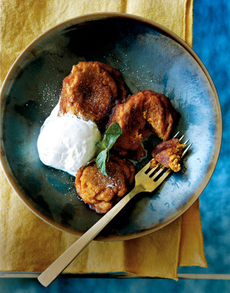
[1] Mmm, pumpkin fritters. Serve with the main course, for brunch or for dessert with ice cream or whipped cream (photo © Blueee | Fotolia).
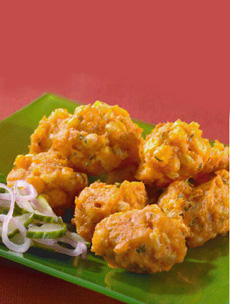
[2] Corn fritters. Here’s a recipe (photo © I Love Corn).
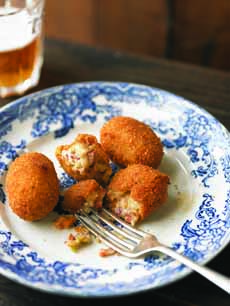
[3] Ham croquettes. See the difference between fritters and croquettes below (photo © Kyle Books).
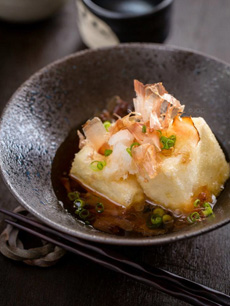
[4] Agedashi-tofu (pronounced AH-gay DAH-she) is a different kind of fritter, from Japan. It’s one of our favorite dishes at Japanese restaurants. Here’s a recipe (photo © Just One Cookbook).
|
|
Plain fritters are deep-fried cakes of chou paste or a yeast dough, often sprinkled with powdered sugar and/or served with a sweet condiment, like preserves. European versions include French beignets, Italian bigne, and Greek loukoumades.
Dutch oliebollen (literally “oil balls”) are traditional fritters that are especially popular around New Year’s Eve, made from a yeast-based batter that often includes raisins or currants, and sometimes diced apple, lemon zest, or other fruits.
Buñuelos are a Spanish/Latin American version that are made in balls or, in Mexico, in thin, crispy discs, often served with cinnamon sugar, syrup, or honey. There are also savory versions made with cheese, sweet potato, and yuca.
Italian zeppole are deep-fried dough balls, typically topped with powdered sugar and sometimes filled with various creams or jellies.
A more complex fritter contains pieces of meat, seafood, vegetables or fruit. They are coated with batter and then deep-fried. American corn fritters (photo #2) are an example, as are Indian pakora, which contain pieces of cauliflower, eggplant, or other vegetable.
Different cultures developed their own fritter traditions. The parent of fritters is the familiar batter-coated fried food, from Southern fried chicken to Italian fritto misto to Japanese tempura. (The technique of batter-frying was introduced into Japan in the late 16th century by Portuguese traders.)
In medieval and Renaissance Europe, fritters were often served during Lent as a way to make vegetables more appealing when meat was forbidden.
In America, fritters became particularly popular in colonial times and throughout the 19th century as a practical way to use seasonal produce. Apple and corn fritters are two popular examples; and pursuant to the recipe above, pumpkin fritters were mentioned in American cookbooks as by the 1800s.
THE DIFFERENCE BETWEEN FRITTERS & CROQUETTES
Both are fried in deep fat, but there are significant differences.
A fritter is a batter that is fried. It takes a free form, depending on how the batter is dropped into the oil.
A croquette is a shaped oblong or round (photo #3), that is breaded in flour or bread crumbs and beaten egg, and fried.
The word derives from from the French croquer to crunch.
CHECK OUT WHAT’S HAPPENING ON OUR HOME PAGE, THENIBBLE.COM.
|