| Sales of organic coffee are growing so fast these days, that most other categories can only be envious. U.S. retail sales of organic coffee increased 24% in 2006 to $110.36 million, impressively outpacing the 15% growth of organic foods in general, according to the 2007 Organic Manufacturer Survey conducted by the Organic Trade Association (OTA). According to Caren Wilcox, OTA’s Executive Director, the dramatic increase in organic coffee sales also reflects consumers’ growing interest in organic products, awareness of their availability in venues ranging from small coffee shops to “Big Box” stores, and the ever-increasing quality of organic coffee. In fact, several organic coffees from farms in Nicaragua won the Cup of Excellence competition in that country, held in June. The prestigious award program, managed by the U.S.-based Alliance for Coffee Excellence, selects the best coffees produced in a particular country in a particular year. |
|

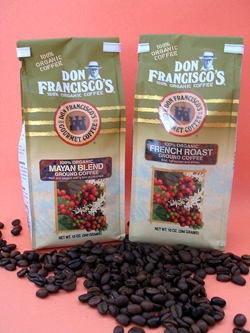
Don Francisco’s, one of the top organic coffees in our review. |
| Participants in the Organic Coffee Collaboration, a project of the Organic Trade Association, are driving much of the increase in retail sales. The companies provide much of the organic decaffeinated, caffeinated, flavored and instant coffees widely available at retail outlets nationwide and direct from roasters via the Internet. The companies include Café Bom Dia (marketer of the Marques De Paiva brand, and also certified as carbon-neutral, of Coral Gables, FL), Dallis Coffee (also Fair Trade Certified, of New York City), DaSilva Fine Brazilian Coffee (marketer of ultra premium single-estate coffee directly from Espírito Santo, Brazil, of Winston-Salem, NC), Elan Organic Coffee (marketer of socially responsible coffees it develops through partnerships with village co-ops, of San Diego, CA), Equal Exchange (worker-owned cooperative, Fair Trade Certified™ and one of largest U.S. organic coffee roasters, of West Bridgewater, MA), F. Gaviña & Sons (producer of Don Francisco’s Specialty Coffee brand, of Vernon, CA), Fresh Harvest Products (of New York City), Green Mountain Coffee Roasters (of Waterbury, VT) and Swiss Water Decaffeinated Coffee Company (of Vancouver, BC, Canada). Try them! (You’ll find some of them reviewed in our article on organic coffees.) Organic coffee is grown in more than 30 countries, including the United States. It uses methods and materials that have a low impact on the environment, replenishing and maintaining soil fertility, avoiding the use of toxic and persistent pesticides and fertilizers, and building biologically diverse agriculture. Third-party certification organizations verify that organic farmers use only methods and materials allowed in organic production. Consumers who choose organic products do so for both the chemical-free factor and to support the environment. |
|