|
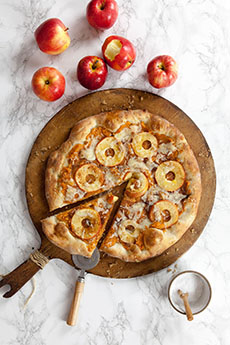
This Sweet Potato Apple Pizza recipe from Colavita Olive Oil is delicious for brunch, lunch, dinner, or even dessert. It combines two delicious pairings—sweet potato and apple—and offers variations: butternut squash instead of sweet potato, pear, or pineapple instead of apple. You can also substitute a different cheese for the Manchego.
There’s a lot more about Manchego, the great cheese of Spain, below.
February is National Sweet Potato Month, February 22nd is National Sweet Potato Day.
RECIPE: SWEET POTATO APPLE PIZZA
For a dessert pizza, add a bit more brown sugar.
Ingredients
3 apples, cored and sliced into rings
2 medium sweet potatoes
Pizza dough
2 Manchego cheese
1 teaspoon ground cinnamon
Brown sugar for sprinkling
Pinch of salt
Colavita Extra Virgin Olive Oil for drizzling
Optional garnish: fresh rosemary
Preparation
1. PREHEAT the oven to 350°F. Place the sweet potatoes on a baking sheet and roast them in the oven for 1 hour, until soft. Cool.
2. REMOVE the skins and mash the potatoes in a medium bowl. Set aside.
3. RAISE the oven temperature to 500°F. If you’re using a pizza stone, allow the stone to heat up in the oven for 30 minutes before baking on it.
4. STRETCH out the dough onto a pizza peel dusted with flour. If you don’t have a peel and stone, use a baking sheet lined with parchment paper. Oil the parchment with a little olive oil so the dough doesn’t stick.
5. SPREAD a layer of mashed sweet potatoes on top of the stretched-out dough. Add the apple rings on top of the potato, spreading them out symmetrically.
6. SPRINKLE the brown sugar and a pinch of salt on top of the apples. Layer the grated Manchego cheese on top of the apples.
7. DRIZZLE 1 tablespoon of olive oil over the top of the pizza. Slide the pizza into the oven and bake for 8-10 minutes, until the crust is golden brown and the cheese is bubbling.
WHAT IS MANCHEGO CHEESE
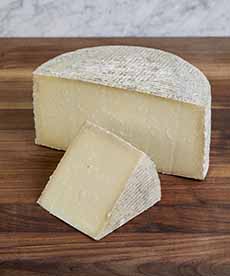
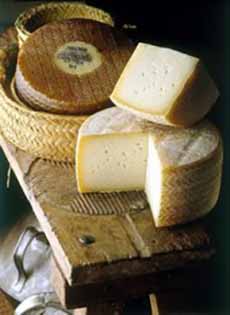
Queso Manchego (KAY-so mon-CHAY-go, usually just referred to as Manchego) is one of Spain’s most famous cheeses (photo #2). It is to Spain what Cheddar is to England.
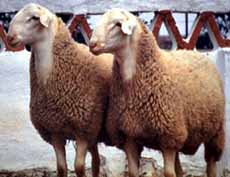
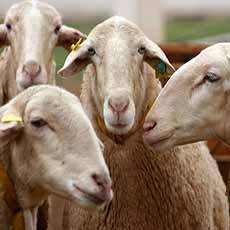
Manchego is traditionally made from the milk of just one breed of ewe, the Manchega (photos #6 and #7), in the La Mancha region of central and southern Spain. (Other Spanish cheeses made with ewe’s milk are commonly referred to as Manchego-style.)
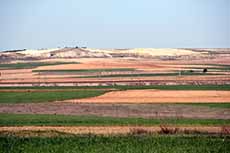
The Manchega sheep graze mostly on dry pasture, fallow land, and stubbly brush fields on a high plateau outside of the cities of Toledo, Albacete, and Cuenca, southeast of Madrid (photo #8).
One might think that these somewhat harsh grazing conditions would yield low-fat milk, but exactly the opposite happens. The sheep yield high-fat, thick, aromatic milk that gives Manchego its unique and distinctive character. The milk for the cheese must have at least 6% fat.
As a result, Manchego cheese has a fat content of up to 57% and a very rich flavor. In the process, the cheese undergoes a rigorous and detailed production process under 75% to 85% humidity [source].
Authentic Manchego is protected under the Denominación de Origen Protegida (D.O.P.). This law includes strict regulations on how a protected product must be produced.
For example, Manchego molds that weigh less than 1.5 kilograms have to be aged for at least 30 days, and anything larger requires at least 60 days of aging. At that point, it can be aged up to two years.
HOW DOES IT TASTE?
Authentic Manchego is a firm-textured cheese. It starts out whitish in its youth, ages to yellowed ivory, and can have a lovely golden hue.
It has an intense, zesty, piquant, nutty taste and a crumbly texture that’s rich and full, with a slight saltiness on the finish.
Its aroma is unique as well; it suggests roast lamb to some connoisseurs [source].
Manchego is marketed at various stages of maturity from “cured” at 13 weeks to ”aged” at more than three months. It is delicious at all stages, but to get to know Manchego, buy young and older together for a comparison tasting. Look for:
Curado, aged 2-3 months
Semi-curado, aged 6-9 months
Viejo or reserva, aged 9 months or longer
The longer it is aged, the nuttier, spicier, richer, complex, and more intense the cheese is.
Cheese Trivia: Manchego cheese, like many others, contains casomorphin, a compound similar to an endorphin, which gives cheese a highly addictive quality. Casomorphin derives from the milk protein casein, which your body breaks down into casomorphins. These compounds attach to dopamine receptors in your brain, possibly triggering cravings for similar foods [source]. However, as every turophile* knows, the compulsion to eat more and more cheese is only dangerous to the waistline.
More Cheese Trivia: In his epic novel Don Quixote (1605 and 1615), Miguel Cervantes has multiple references to Manchego cheese. Don Quixote, of course, lived in La Mancha.
SERVING MANCHEGO CHEESE
Manchego is a true “workhorse” cheese, in that it does almost everything well, including melting.
You can cook with it, or use it as is in sandwiches.
It’s a natural pairing with fruit and wine, or by itself as a snack.
You can serve pieces of Manchego as cocktail tapas, with Serrano ham, membrillo (quince paste), and a glass of Spanish (or other red) wine.
Wheat beer and hard cider are also good pairings.
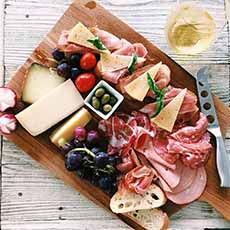
On a cheese board or charcuterie board (photo #4), consider adding sun-dried tomatoes or grape tomatoes and honey.
NON-SPANISH MANCHEGO-TYPE CHEESES
In the U.S., Roth Cheese (formerly Roth Käse) makes its award-winning GranQueso (“big cheese”) in a Spanish style similar to Manchego—although Manchego is made from the milk of Wisconsin cows instead of Spanish sheep (photo #4).
|
|

[1] The flavors of fall and winter: sweet potatoes and apples. Find many more recipes at ColavitaRecipes.com (photo © Colavita).
[2] Manchego cheese from Spain is one of the world’s great cheeses (photo © De Laurenti).
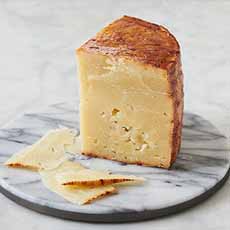
[3] The best American-made Manchego-style cheese is the award-winning Roth Canela, made in Monroe, Wisconsin. It has the same sharp, nutty flavor, but with a sweet finish from the cinnamon rubdown on the rind red (photo © Murray’s Cheese).
[4] A lovely charcuterie board with Manchego (photo © Susan J | @MissHappyBelly | The Feed Feed) .
[5] Manchego is aged in baskets that give the rind its special texture (photo © Iberian Foods U.K.).
[6] Manchega sheep give milk only in April, May and June, after lambing (photo © Petmapz).
[7] Thank you, ladies (photo © Noma Distribution | Australia).
[8] The La Mancha plains (photo licensed under CC BY-NC-SA 2.0).
|
Note that in Mexico and Spanish-speaking areas of the U.S., cheeses called Manchego or Manchego-type (queso tipo manchego) are factory-made cow’s milk cheeses that taste similar to Monterey Jack. It melts well and is used as both a table cheese and for cooking. Apart from the name, this cheese has little in common with authentic Spanish Manchego [source].
THE HISTORY OF MANCHEGO CHEESE
Manchego is an ancient cheese. Archeologists have found that inhabitants of La Mancha were making cheese in the Bronze Age (3300 B.C.E. to 1200 B.C.E.) [source].
Historians of ancient Rome wrote of the area and its livestock farming.
For centuries, the pastures of the La Mancha of Spain were fought over between Spanish Christians in the north and Muslims in the south. The Muslims inhabited the area from the 8th through the 11th centuries. They called it “Manya,” ”land without water,” which evolved into Mancha.
In the 12th century, the Spaniards under King Alfonso VI conquered the region, and the Muslims retreated to the Andalucia region of Southern Spain.
By the end of the century, political instability caused the area’s livestock farmers to organize cooperatives.
By the 1600s, the more efficient use of pastureland led to the waning of livestock for wool and meat, and the rise of agriculture.
By the mid-1800s, wool production was in decline and meat and cheese moved to the forefront of the economy. Cheese production grew steadily.
By the beginning of the 1900s, La Mancha had grown into a regional cheese powerhouse, focusing on the local Manchega sheep herds. The result was the delicious Manchego cheese that the world enjoys today.
Creative cheesemakers have added a twist, adding flavors such as black truffle and rosemary to some of their cheeses.
THE HISTORY OF CHEESE
THE DIFFERENT TYPES OF CHEESE
________________
*A turophile is a cheese lover or connoisseur, from the Greek tyros, cheese, and the English -phile, lover.
CHECK OUT WHAT’S HAPPENING ON OUR HOME PAGE, THENIBBLE.COM.
CHECK OUT WHAT’S HAPPENING ON OUR HOME PAGE, THENIBBLE.COM.
|