THE NIBBLE BLOG: Products, Recipes & Trends In Specialty Foods
Also visit our main website, TheNibble.com.
|
April 12, 2011 at 7:39 am
· Filed under Easter, Tip Of The Day
|
|
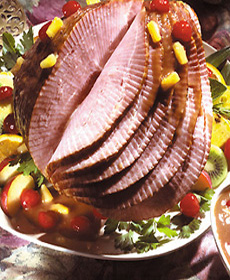
Ham spiral-sliced for a buffet. Photo courtesy
Cherry Marketing Institute.
|
|
If you typically have a sit-down Easter dinner, think about having a buffet this year.
Setting everything out at once and letting people serve themselves gives you more time to spend with your guests. It also enables you to accommodate more guests than your dining table allows–and it’s better for mingling.
You can place the food on a sideboard and seat guests at the dining table, or set the food on the dining table and let guests gather around the sofa or wherever they want to group and talk.
If you have outdoor space and the weather cooperates, some people may enjoy dining alfresco. |
|
|
Permalink
|
|
April 12, 2011 at 7:23 am
· Filed under Kosher Nibbles, Passover
|
|
The Jewish holiday of Passover begins Monday evening, the 18th of April, and continues for seven days. It commemorates the liberation of the Israelites from enslavement in Egypt, which many scholars agree took place in 1476 BCE. Moses led his people to Canaan, and God parted the Red Sea so the Israelites could escape from the pursuing Egyptian army. Here’s more about Passover.
Observers of Passover must avoid a variety of foods for the duration of the holiday: grains (wheat, rye, barley, oats and spelt) and fermented products such as alcohol, among other things. Any permitted food, from milk and cheese to matzoh, must be certified kosher for Passover.
These rules can leave one scrambling for ingredients and enough products to keep things interesting for seven days.
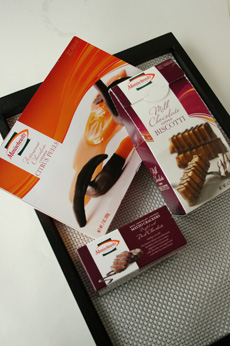
This year, The Manischewitz Company has introduced more than 25 products to expand the possibilities. There’s Buttery Spray for baking and stove top pans. There are tasty macaroon pie shells in coconut and chocolate, making it easy to whip up a pie—think banana cream, chocolate silk or key lime.
|
|

A small sample of Manischewitz’s new products
for Passover. Photo by River Soma |
THE NIBBLE. Placemat and tray by
PacificMerchants.com. |
|
You can make kosher-for-Passover cupcakes with the Magic Max Cupcake Fun Kit, nibble on Chocolate Covered Biscotti (not hard and crunchy like the conventional kind, but a fine nibble nevertheless), start the day with Honey Almond Crunch cereal and Brown Sugar Hot Cereal and end the day with chocolates, from Chocolate Covered Cherries to Mint Creme Candies.
See all of the products at Manischewitz.com.
|
|
|
Permalink
|
|
April 11, 2011 at 5:12 pm
· Filed under Beverages, Sugar-Free
|
|
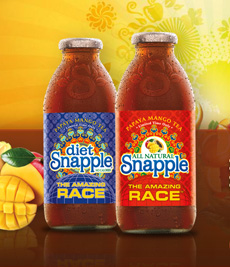
Papaya Mango is the new limited edition
Snapple tea. Photo courtesy Snapple.
|
|
Last year, Snapple sponsored an episode of Celebrity Apprentice that allowed Bret Michaels to create one of our favorite Diet Snapple flavors ever, Trop-A-Rocka. The layering of mango, pear and cinnamon was the most complex Snapple flavor we’d come across. And it’s not just our opinion: the limited edition was so popular that it was made into a permanent member of the line.
A couple of weeks ago, Snapple debuted its newest limited edition tea, Snapple Papaya Mango Tea, in Episode 6 of The Amazing Race.
Inspired by the exotic flavors of India (where the contestants spent the second hour of the show), the flavor combines green tea, black tea and the lush fruit flavors of papaya and mango. It’s available in both regular and diet versions at participating retailers nationwide.
If you like Peach Snapple (and we know people who buy it by the case), you’ll want to try Snapple’s Papaya Mango Tea. Like Tropa-Rocka, it deserves to be a permanent member of the family.
|
|
What will be the next co-branded Snapple limited edition? Please, Snapple, not the Real Housewives. We’d have to draw the line.
Find a Snapple retailer near you and print a $1.00 coupon at Snapple.com.
|
|
|
Permalink
|
© Copyright 2005-2026 Lifestyle Direct, Inc. All rights reserved. All images are copyrighted to their respective owners.