THE NIBBLE BLOG: Products, Recipes & Trends In Specialty Foods


Also visit our main website, TheNibble.com.

TIP OF THE DAY: Try Some Culantro & Recaito


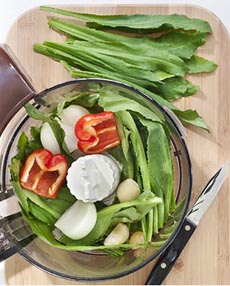
Making recaito: Simply blend culantro and other ingredients in a food processor. Photo courtesy BonniePlants.com.
  When we first saw the word “culantro,” we thought somebody had misspelled “cilantro.”

But we looked it up: Culantro is a cousin to cilantro. They’re members of the same botanical family, Apiaceae, commonly known as carrot or parsley family.*

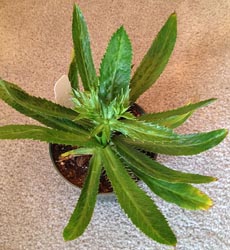
Cilantro (Coriandrum sativum), which looks like flat leaf Italian parsley, and culantro (Eryngium foetidum), which has elongated leaves, have a similar (but not identical) flavor and aroma. Culantro is much stronger in flavor, and is used in smaller amounts.

Easy-to-grow culantro is native to Mexico/Central America and is cultivated worldwide. It first grew wild at the edge of forests, so grows well in partial shade.

Culantro can be used as you would use cilantro, and is an essential ingredient recaito, a Caribbean green salsa used to flavor numerous dishes.

 
*The Apiaceae family includes angelica, anise, arracacha, asafoetida, caraway, celery, chervil, cumin, dill, fennel, parsley…and some 3,700 other plants.


RECAITO & SOFRITO

In the Caribbean, culantro is commonly called recao, which gives its name to recaito, a popular green sauce/salsa used to flavor a variety of dishes. Recaito is an aromatic purée of culantro (recao), green cubanelle peppers (similar in flavor to to bell peppers but longer, with thinner flesh and lightly more wrinkled), onions, garlic and ajies dulces (small red bell peppers).

Recaito is used in bean and rice dishes, soups and stews, often added toward the end of cooking as a finishing touch to the recipe. Add a tablespoon of it to your next rice or bean dish; you’ll love the bright flavor.

Culantro is also the base of sofrito.

 
If you see a culantro plant for sale, grab it. Or grow your own from seeds. Photo by Maxintaft | Wikimedia.
 
The difference between recaito and sofrito: Recaito is an uncooked green salsa; sofrito uses recaito as a base, sautéed with tomatoes. As with any recipe, there are regional differences (not to mention household diffrences). For example, Puerto Rican cooks typically don’t use tomatoes in their sofritos.

RECAITO RECIPE

Ingredients

If you can’t find all of the ingredients, substitute green and red bell peppers for the cubanelle and aji dulce peppers; and substitute cilantro for culantro.

  • 2 medium green bell, seeds removed
  • 2 medium onions, peeled
  • 1 bulb of garlic, peeled
  • 1 bunch culantro leaves, washed and patted dry
  • 6 small red bell peppers
  •  
    Preparation

    Simply chop and blend the ingredients in a food processor or blender.
    Culantro By Any Other Name

    Culantro is known by many names. In addition to recao (Spanish), which gives its name to recaito, there are: false coriander, long coriander, bhandhanya (Hindi), langer koriander (German), ngo gai (Vietnamese), pak chi farang (Thai).

    We know people who don’t like cilantro. There’s even a website, IHateCilantro.com, the opening line of which is, “Cilantro. The most offensive food known to man.”

    Let’s hope those folks don’t discover culantro.
      

    Comments off

    EVENT: Best Food Films Online


    Immigrants with pushcarts try to sell fresh
    fruit to people who really need it. Photo
    courtesy Laurie M. Tisch Illumination Fund.
     

    Launching on Sunday. April 22—Earth Day 2012—the Do Something Reel Film Festival affords the opportunity to watch some of the best food-focused documentaries online.

    It’s sponsored by Whole Foods Market and partners that include Applegate Organic & Natural Meats, Earthbound Farm Organic and Siggi’s Cultured Dairy Products.

    Each year, a number of terrific food films are released but get limited distribution. Even we, who would love to see them for professional reasons, don’t have the time to get to wherever they may be showing.

    But stream them online at DoSomethingReel.com, and we’ve got a whole month to tune in.

    The Do Something Reel Film Festival is a much-needed showcase for provocative films about food and environmental issues. Viewing is on a pay-per-view basis. Ticket sales help to fund filmmaker grants for new projects.


    Launching This Sunday

    The online film festival opens on April 22, with a live screening of “The Apple Pushers,” narrated by the actor Edward Norton. It will be followed by a panel discussion with the film’s writer/director, producer and other experts.

    While there is a charge to watch the film, the panel discussion can be viewed free online from April 22nd to April 30th.

    The film follows five immigrant street-cart vendors who sell fruits and vegetables in New York neighborhoods where fresh produce isn’t widely available. The vendors personify what it means to be an American entrepreneur, and their stories shed new light on the nation’s food crisis and skyrocketing obesity rates.


    A New Film Each Month

    Each month the festival will showcase a different film online. Following “The Apple Pushers,” the films currently slated are:

  • MAY: “Watershed,” which follows a Rocky Mountain National Park fly fishing guide and six others living and working in the Colorado River basin. The film illustrates the river’s struggle to support 30 million people across the western U.S. and Mexico.
  • JUNE: “Queen of the Sun: What Are the Bees Telling Us?,” a profound journey through the catastrophic disappearance of bees around the world, uncovering the long-term causes that could create one of our most urgent food crises.
  • JULY: “King Corn” and “Truck Farm,” the first film spotlighting the tragedy of our country’s corn crops and the second focusing on mobile gardens.
  •  
    The struggle of one watershed to support 30 million people. Photo courtesy Kontent Films.
     

  • AUGUST: “Lunch Line,” a fresh perspective on the politics of food and child-nutrition through an examination of the surprising past, uncertain present and possible future of the National School Lunch Program.
  • So mark your calendar for a monthly movie night with the Do Something Reel Film Festival. It’s your opportunity to connect with these important films and their thought-provoking issues. And you’ll see how your everyday decisions and purchasing power can make a difference.

    For additional information, a complete schedule of events and details about the grant program, please visit DoSomethingReel.com.


    Comments off

    TIP OF THE DAY: Grow Some Mint ~ You’ll Find Plenty Of Uses For It


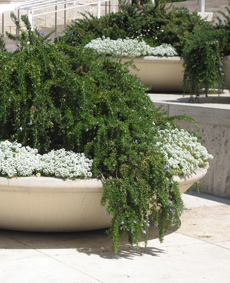
    Jumbo rosemary planters at the Getty
    Museum in Los Angeles (the white flowers
    are and allysum. Photo courtesy
    GardenSnob.com.
     

    Last night we tried a new restaurant. At the table, folded into our napkin, was a sprig of rosemary. There was a sprig of rosemary in our water glass. The food we ordered came garnished with rosemary.

    “There must have been a sale on rosemary this week,” we said to our companion.

    “No,” he said, “the planters out front are full of it.”

    We looked, and rosemary was indeed growing high in terra cotta pots on the outdoor patio. Had we been moving so quickly that we forgot to stop and smell the rosemary?

    We decided to hunt down a rosemary plant this weekend, to see how many different things we could do with the sprigs. Then, we received a tip on growing mint that caused us to switch gears. We’ll get to the rosemary later; today’s tip is an encouragement to use more mint—and different types of mint.

    The mint you plant will soon bear enough leaves to keep you in beverages (including cocktails), desserts, salads, soups and garnishes for the entire growing season.


    TYPES OF MINT

    Much of what you find in the market is spearmint. But there are other wonderful varieties of mint to enhance your cooking: Head to your gardening store.

  • Apple mint, with fuzzy leaves and fruity tones, is popular in mint jelly (which is also called apple mint jelly), but has universal applications.
  • Chocolate mint has a delightful minty chocolate flavor that has been compared to Girl Scout Thin Mint cookies. It rocks dessert recipes and chocolate mint tea.
  • Orange mint tastes like candied orange peel with lavender notes (two of our favorite flavors).
  • Peppermint has a strong, classic menthol taste.
  • Spearmint, also called yerba buena, is a strong and popular flavor and fragrance that is easily released with light crushing or bruising of the leaves.
  • Sweet mint has extra-large leaves that many cooks prefer for easier chopping.
  •  
    GROWING MINT

    Mints are fast-growing, spreading plants. You need to give them room to grow outdoors, or you can contain them in a pot—outdoors or indoors.

    Mints send out runners that spread above and just under the ground, quickly forming large, lush green patches. In the right place, mint makes a sensational, seasonal ground cover. You can also contain mint in tight places such as between pavers of a walkway.

    Mint perfumes the air wherever it is planted: It delivers an aromatic treat each time you walk past it.

    Here are mint-growing tips from Bonnie Plants, a national plant wholesaler committed to green gardening. The company makes eco-friendly gardening products and biodegradable peat pots and fiber pots that have already prevented millions of pounds of plastic from entering landfills.


    MINT GROWING TIPS

    1. POT IT. The most popular way to grow mint is in a pot where you can keep it contained and handy near the kitchen for a constant supply of sprigs. Choose a potting mix that retains water to be sure soil stays moist.

    2. PLANT IT. If you have outdoor space, select a damp area in your garden in either full sun or partial shade. Mint prefers fertile soil with a pH from 6.0 to 7.0. It is vigorous on its own but will appreciate a little fertilizer every few weeks, especially if you harvest a lot of mint.

    You can also mulch around the plants to keep roots moist; plants will die back in dry soil. Keep plants in check by harvesting the tips regularly and pulling up wayward runners in the garden. Mint’s small flowers bloom from June to September. Trim them before the buds open to keep the plant compact.

     
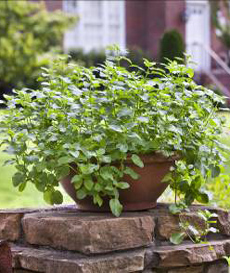
    A pot of mint ornamenting the front lawn. It can also grow inside. Photo courtesy BonniePlants.com.
     
    WHAT TO DO WITH YOUR BOUNTY OF MINT

    When cooking with mint, it’s best to use the leaves. Mint stems are tougher than leaves and not as flavorful.

  • Cocktails: Spearmint is popular in both the Mint Julep and the Mojito. For other drinks, match the flavors of mint to the flavors of the cocktail (orange mint in citrus-based cocktails, for example).
  • Desserts: Dry the leaves to flavor desserts: cake, ice cream/sorbet/granita, meringues and other cookies, and quick breads (chocolate mint is especially wonderful with desserts).
  • Hot Chocolate: You can steep sprigs of mint in the milk before you add the cocoa powder or chocolate; or crush a sprig into the finished cup as a flavorful garnish.
  • Garnish: Mint is one of the most popular garnishes—and you’ll have lots of it!
  • Hot Tea: Steep in hot water for an uplifting herbal tea. Mint tea has been a home remedy for millennia: to alleviate stomach pain and as a mild decongestant for the common cold and allergies. During the Middle Ages, powdered mint leaves were also used to whiten teeth; the legacy remains in mint-flavored toothpaste.
  • Iced Tea: If you make your iced tea from scratch, steep mint in the hot water. Otherwise, add a sprig to the cold tea. Crush the sprig in your hand before adding to the glass or pitcher: It releases the oils that contain the aroma and flavor.
  • Jelly: Use fresh leaves to make mint sauce for fish or lamb, or dry the leaves to make mint jelly. Orange mint and apple mint are especially lovely in these applications.
  • Salads: Add fresh leaves to salads. We snip the mint into small pieces with a scissors. It adds spark to each bite of salad.
  • Sauces: Add leaves to savory or sweet sauces. Chopped mint and garlic in Greek yogurt makes a delicious and cooling sauce; add cucumber and dill to turn it into the popular spread, tzatziki.
  • Water: Crush fresh leaves into water for a refreshing cold beverage. You can also freeze fresh mint leaves/sprigs into ice cubes.
  •  
    If you have lots of mint, share the wealth with neighbors and friends.

    For more info and tips on mint and other herbs visit BonniePlants.com.


    Comments off


    © Copyright 2005-2026 Lifestyle Direct, Inc. All rights reserved. All images are copyrighted to their respective owners.