About Sourdough, The World’s First Leavened Bread
|
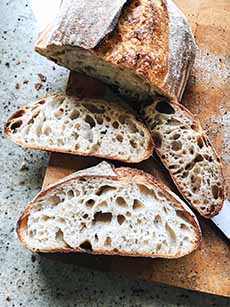
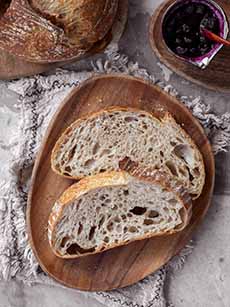
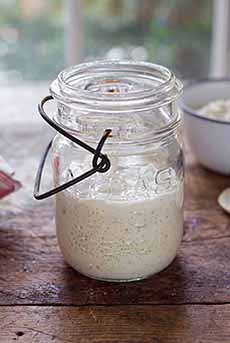
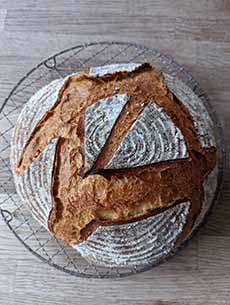
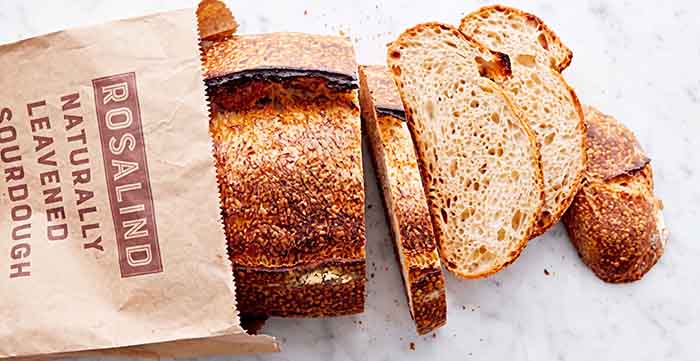
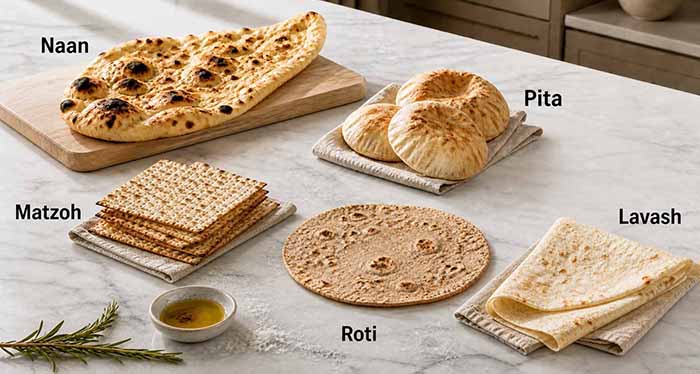
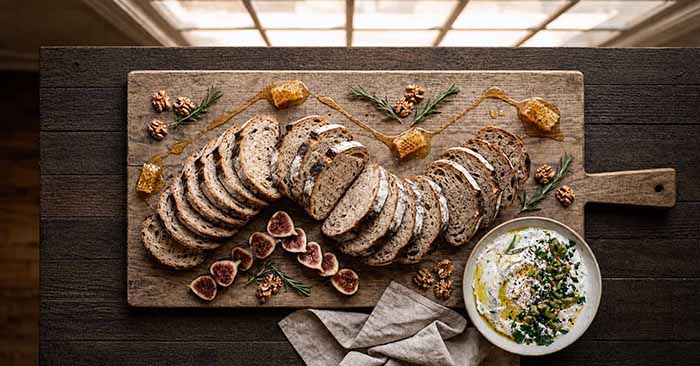
Updated September 2026 September is Sourdough September. April 1st is National Sourdough Bread Day: two occasions to focus on the world’s oldest leavened bread. For those who really celebrate their daily bread (we’re among them), there’s Real Bread Week, usually beginning the the last Saturday to the last Sunday in February‡. This annual international campaign, begun in the U.K., is dedicated to promoting additive-free bread and honoring the artisan bakers, millers, and teachers who create it. Known for its crisp crust, chewy interior, and tang, sourdough is the oldest form of leavened bread. Born in ancient Egypt, its history spans 6,000 years and multiple continents. Popularized in the U.S. during the San Francisco Gold Rush, it was reborn in the modern artisan bread movement of the 1980s, and got a lift during the pandemic when people stuck at home took up bread-making. Below: > The history of bread, before and after sourdough. > Sourdough names in 19 other countries. Elsewhere on The Nibble: > The year’s 20+ bread holidays. > The different types of bread: a photo glossary. Sourdough describes the leavening method: bread rises with a fermented culture of wild yeast and lactic-acid bacteria, usually called a starter or levain, rather than relying solely on commercial baker’s yeast. The dough is created during a long fermentation, originally using naturally occurring lactobacilli bacteria and wild yeasts (other types of breads use cultivated yeasts, which became available only in the 19th century). In comparison with breads made with cultivated yeast, sourdough usually has a mildly sour taste and aroma, the result of the lactic acid produced by the lactobacilli. The preparation of sourdough begins with pre-fermenting, using a “starter” made from flour and water (photo #3). The starter is also known as levain, the chief, chef, or head. Since the ratio of water to flour varies by baker, it can be a fluid batter or a stiff dough. The starter helps to develop the uniquely tart flavor of sourdough bread. Starters are maintained for years, even generations. The colony of bacteria and yeast inside the dough is kept alive by the baker, who needs only a piece of it to bake a new batch of bread. If you bake bread in a bread machine, you’ve probably noted that sourdough typically doesn’t work in one. The rise time of most sourdough starters is longer than that of breads made with baker’s yeasts. Sourdough requires conventional baking techniques. > Here’s how to make your own sourdough starter, from King Arthur Baking. How Sourdough Leavening Began In antiquity, bread was an essential staple. Workers were paid partly in bread and beer. Bread production has relied on the use of sourdough as a leavening agent for millennia. Before the Egyptians corralled wild yeast to leaven bread, the only option was flatbread—chapati, dosa, inerja, lavasch, matzoh, naan, pita, tortilla, and others. The development and use of [cultivated] baker’s yeast as a leavening agent dates back only to the mid- to late-19th century. Thus, for the millennia before the introduction of commercial yeast, bakers relied on wild yeasts and lactic acid bacteria—naturally present in flour and the environment—to get bread to rise. The discovery of leavened bread was likely an accidental by-product of brewing and porridge-making in the ancient Near East. It’s most prominently documented in Ancient Egypt. (One of the oldest Neolithic sourdough breads/porridges was found in a Swiss excavation site near Twann, Switzerland, dating to c. 3700 B.C.E.) The ancient Egyptians were leaders in bread baking, and archaeologists believe sourdough bread originated in Egypt, c. 4000 to 3500 B.C.E. Each village had a communal oven*, a central feature of village life from antiquity through the 19th and early 20th centuries. How did the happy accident that created sourdough occur?
Otherwise, they used barm†, the frothy foam that rises to the top of fermenting beer or ale. It was skimmed and used as a natural leavening agent. The process spread along trade routes through the Middle East and into what is now Europe. Ancient Greeks, c. 500 B.C.E., turned bread baking into an art, experimenting with different grains. They invented the front-loaded bread oven and a wide variety of doughs, loaf shapes, and styles of bread to pair with specific foods. Baking became a profession, and people began to buy their bread from skilled bakers. The Romans, c. 100 B.C.E. to 400 C.E., expanded on Greek techniques and improved milling technology. They invented the concept of grinding grain by rubbing it between two stones. Even after manual grinding was replaced by revolving grindstones driven by beasts of burden or slaves, grinding was a time-consuming process, and leavened bread was a costly food. White bread, also invented by the Romans and made by sifting the grains through linen, was even costlier. Ironically, given what we know about nutrition today, the poor ate dark, whole-grain bread, and the wealthy ate white bread, stripped of essential nutrients. This class separation by bread continued until the Industrial Revolution made the more elegant white bread available to everyone. Continental Europe. Bread was the cornerstone of the European diet, often providing more than half of daily calories. Sourdough was the common bread. In the Middle Ages, 500–1500 C.E., sourdough remained the standard leavening method in Europe. Rye sourdough was especially important in Northern and Eastern Europe, where wheat was less available. Bakers used sourdough starter from a prior batch to create the new batch. Sourdough remained the usual form of leavening in Europe into the Middle Ages. Sourdough starters were passed down for generations (and still are). Then, it was replaced by barm, the yeast-laden foam that forms in the process of brewing alcohol (for bread, the barm typically came from beer brewing). It took a few more centuries for scientists to learn to culture yeast, so bakers no longer had to rely on barm or sourdough starter. By the Renaissance, the 1500s–1700s, bakers across Europe had developed regional sourdoughs. French pain de campagne and German rye sourdoughs became staples. During the Industrial Revolution, 1760 to 1840, scientists isolated Saccharomyces cerevisiae, brewer’s yeast. Commercial yeast became widely available following the introduction of Fleischmann’s Yeast (introduced in 1868, patented and commercialized in 1876), enabling faster, more predictable rising than obtained with sourdough. As a result, sourdough began to decline in much of Europe and the U.S., and in the early 1900s, industrial bread—using commercial yeast, additives, and preservatives—became dominant, relegating sourdough to some artisanal bakeries. |
|
|
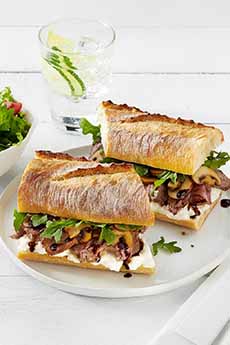
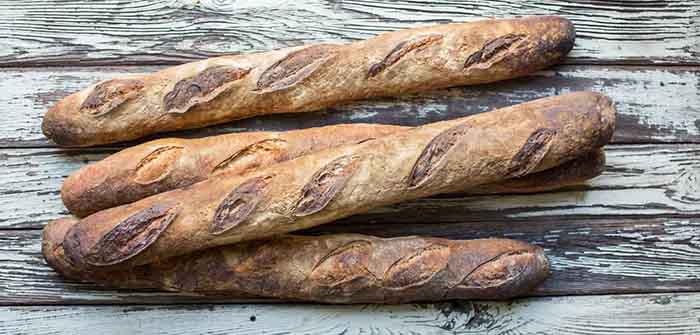 [9] Sourdough is now so popular that even baguettes are made from it. A loaf labeled sourdough baguette has been made with a sourdough culture. An ordinary baguette is typically yeast-leavened without sourdough fermentation. The flavor, acidity, fermentation time, and crumb can vary considerably (photo © Good Eggs). 3. SOURDOUGH COMES TO AMERICA Sourdough came to America with European immigrants, but it became the leading bread in San Francisco with the 1849 California Gold Rush. Miners and settlers kept starters alive in tin pails and even wore them around their necks to keep them warm. The term “sourdough” even became slang for experienced prospectors. French bakers brought sourdough techniques to Northern California during the Gold Rush (1848–1855), and the bread remains part of the culture of San Francisco, where it has been in continuous production since 1849. Some bakeries can trace their starters back to those days! San Francisco’s unique fog and local strain of Lactobacillus sanfranciscensis even gave the bread its signature San Francisco tang—more distinctly sour, especially in its aroma and finish. Thanks to the artisan food movement in the U.S., founded in the 1970s and fully matured in the 1980s, sourdough has undergone a revival. Now, most of us can enjoy it whenever we like—for toast, sandwiches and in the bread basket. During the COVID-19 pandemic (2020-2023), home sourdough baking exploded as people had time to nurture starters. This led to a global “sourdough boom.” From artisanal bakeries to fine restaurants to the commercial varieties on supermarket shelves, you aren’t far from a loaf. If you haven’t had sourdough bread recently, today’s the day! The earliest foods made from grain were gruel and porridge. Before anyone baked bread of any kind, mankind gathered wild cereal grains (and later cultivated grains). Crushed or ground grains were boiled or simmered in water—the easiest and most fuel-efficient way to make tough, fibrous wild grains digestible.
When people began cooking grain pastes on hot stones, in glowing hearth embers, beneath hot ashes, or on early griddles, the result was unleavened flatbread. Antiquity
In East Asia, where wheat was less suited to dry hearth baking and firewood was often scarce, leavened doughs were cooked over boiling water rather than in ovens. This produced soft, crustless, cloud-like breads such as Chinese mantou (plain steamed buns), baozi (filled steamed buns), and various Asian steamed flatbreads.
A technique originating in Central and Eastern European Jewish communities, dough was shaped into rings, briefly poached in boiling water to gelatinize the surface starch, and then baked. This method locked in interior moisture while creating a dense, chewy interior and a glossy crust, producing bagels, bialys, and bubliks, alongside the lye-dipped German pretzel family. The discovery of pearl ash (potassium carbonate), followed by baking soda and baking powder in the 19th century, made biological fermentation optional for leavening. Batters and soft doughs could rise instantly upon reacting with acid and heat, enabling the creation of Irish soda bread, American cornbread, biscuits, scones, and tea loaves. In the mid-1800s, the isolation and mass production of pure Saccharomyces cerevisiae (compressed and dry baker’s yeast) revolutionized baking. Combined with Hungarian roller-milling that produced ultra-refined white flour and Austrian steam-injected ovens, bakers developed Vienna bread. This process laid the groundwork for the modern French baguette, sandwich loaves, and consistent, predictable daily bakery output. The invention of the Chorleywood Bread Process in the U.K. in 1961, and similar automated high-speed mixing methods in the U.S., introduced ultra-soft, uniform, mass-produced sliced white breads, such as Pullman loaves and Wonder Bread. These relied on high-energy mechanical dough development, commercial enzymes, and oxidizers to bypass bulk fermentation entirely in under a few hours. In the 1970s and 1980s, a strong cultural backlash against hyper-processed, flavorless industrial white bread took hold across Europe and North America.
In the 21st century, bread baking became both a high-science discipline and a widespread domestic art.
Bread’s ten-thousand-year evolution has brought us full circle.
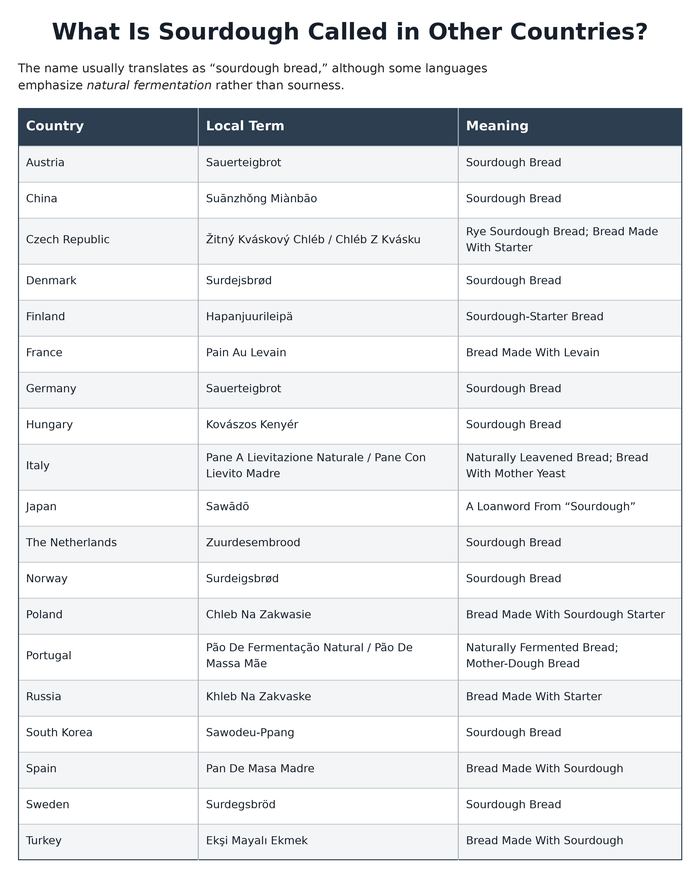
In English-speaking countries, of course, it’s sourdough. Travel elsewhere, and here’s what sourdough is called.
The large, sturdy oven produced more consistent bread than if each household baked independently in a small one. Experienced bakers often ran the communal ovens. In Rome, for example, the professional guild bakers (pistores) ran many of the city’s public ovens. The communal oven was also a gathering place where housewives or servants could gather and socialize. Among all the loaves, how did you know which loaf was yours? Households fashioned a stamping device from clay, and pressed their “brand” into the raw loaf. †Barm was likely first used in Ancient Egypt, circa 3,000 to 2,000 B.C.E., the time when brewing and baking overlapped. It was first documented in Europe in Roman accounts curing the 1st century C.E., which noted its use in Gaul and Iberia. In Northern Europe from approximately the 9th through 15th centuries, the use of barm became common wherever ale was brewed. The Old English word beorma (from Proto-Germanic bermô, meaning yeast or leaven) is the root of the word barm. With the isolation of pure Saccharomyces cerevisiae and the broad availability of commercial compressed yeast at the start of the 20th century. Slower and less consistent than commercial yeast was faster and more consistent. Even those dishes that retain the word “barm,” such as Irish barm brack (a fruit bread) and barm cake (soft rolls from Lancashire and Greater Manchester) use commercial yeast. ‡Real Bread Week was held Saturday, February 21st through Sunday, March 1st, 2026. The 18th annual celebration will take place Saturday, February 20th through Sunday, February 28, 2027th. CHECK OUT WHAT’S HAPPENING ON OUR HOME PAGE, THENIBBLE.COM. |
||