National Chop Suey Day: What Is Chop Suey & The History Of Chop Suey
|
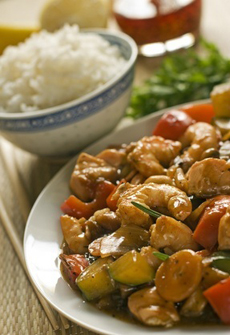
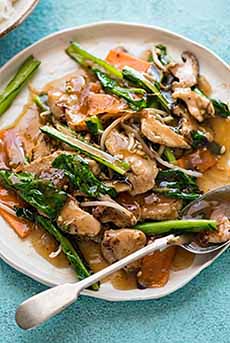
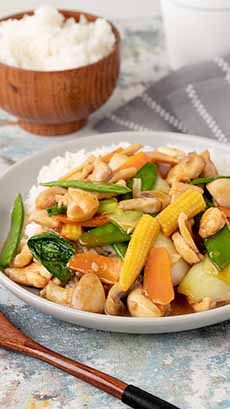
Updated August 2026 August 29th is National Chop Suey Day. Chop suey is often described as a Chinese-American invention, but its history is more complicated. The dish has Chinese antecedents, including Taishanese forms known as tsaap slui, while the version that became familiar in U.S. Chinese restaurants developed and evolved in America. Even the hit musical “Flower Drum Song,” about Chinese-Americans in San Francisco, got it wrong! Its song “Chop Suey” begins with an elder commenting to a woman proud to be a Chinese-American, “You are just like the Chinese dish Americans invented: chop suey.” (However, while Americans did not invention chop suey, the Chinese food paper takeout container with the metal handle is an American invention.) Chop suey is a stir-fry dish consisting of meat or seafood, vegetables, and sometimes eggs, stir-fried in a starch-thickened sauce. In this article you’ll find chop suey referred to as Chinese, Chinese-American, American Chinese, Taishanese, Cantonese, and Americanized. This indicates its Chinese roots as well as the separate, evolving American Chinese restaurant dish. Below: > Chop suey vs. chow mein: the differences. > The iconic chop suey painting by Edward Hopper. Elsewhere on The Nibble: > The year’s 17 Chinese food holidays. > The top 10 Chinese dishes in the U.S. > The history of fortune cookies. Chop suey was first available to non-Chinese Americans in the mid-19th century, when Chinese restaurants began to appear outside of Chinatown areas. The dish was received with much acclaim [source]. While there are several myths about how chop suey was invented in the U.S., it’s actually a prominent dish in Taishan, a county-level city in Guangdong province in southeast China. It’s about 90 miles from Hong Kong. A dish called tsap seui is common in the area, and Guangdong province was the home of many early Chinese immigrants to the U.S. [source]. Thus, when immigrants from that area opened restaurants, it was on the menu. The English name derives from the Toisanese** tsaap slui, a term historically associated with chopped entrails and giblets. In the U.S., it later became widely—but imprecisely—explained as “odds and ends” or leftovers. In a stir-fry recipe, chop suey means “assorted pieces,” “miscellaneous scraps,” or “odds and ends.” These can include beef, chicken, quail eggs or other cooked eggs, fish, pork, and/or shrimp, plus vegetables such as bean sprouts, cabbage, celery, and snow peas. Starch is added to create a thickened sauce from the oil and wok drippings. In the U.S., the dish was initially cooked in the late 19th century by immigrants from southern China who were simply cooking their familiar cuisine for their families and in restaurants in Chinatown communities. The transition of Chinese restaurants catering to mainstream American customers happened gradually over several decades. American versions of the dish have included vegetables that were not part of the original Taishan recipe; for example, broccoli, carrots, onions and zucchini. Numerous American recipes also “specialize”: beef chop suey, chicken chop suey, or shrimp chop suey, for example, instead of a mixture of proteins. American chop zuey is also a regional a regional New England comfort food made from ground beef, elbow macaroni, and a tomato-based sauce. Yikes! When the Chinese reformer Liang Qichao visited New York City in 1903, he was shocked to find hundreds of Chinese restaurants serving substandard Chinese cuisine. “As for what they call ‘chop suey,’” he remarked, “the cooking skills involved are so subpar that no one in China would ever eat it” [source]. Yet, chop suey restaurants in the U.S. proliferated, from posh establishments to no-frills diners like the ones that dotted New York’s working-class Chinatown. > Check out more food histories. In many American Chinese restaurant menus, chop suey is served with rice while chow mein centers on noodles. However, terminology and preparation vary by restaurant and region. In classic terms: Chop suey typically consists of vegetables, meat or seafood, cooked in a wok with a savory thick sauce. It’s served over rice, or with rice on the side. On the other hand, chow mein features stir-fried noodles with chicken, prawns, vegetables, and seasoning sauces. While chop suey is saucy and served with rice, chow mein is usually a dry stir-fry dish and highlights the noodles. |
|
|
|
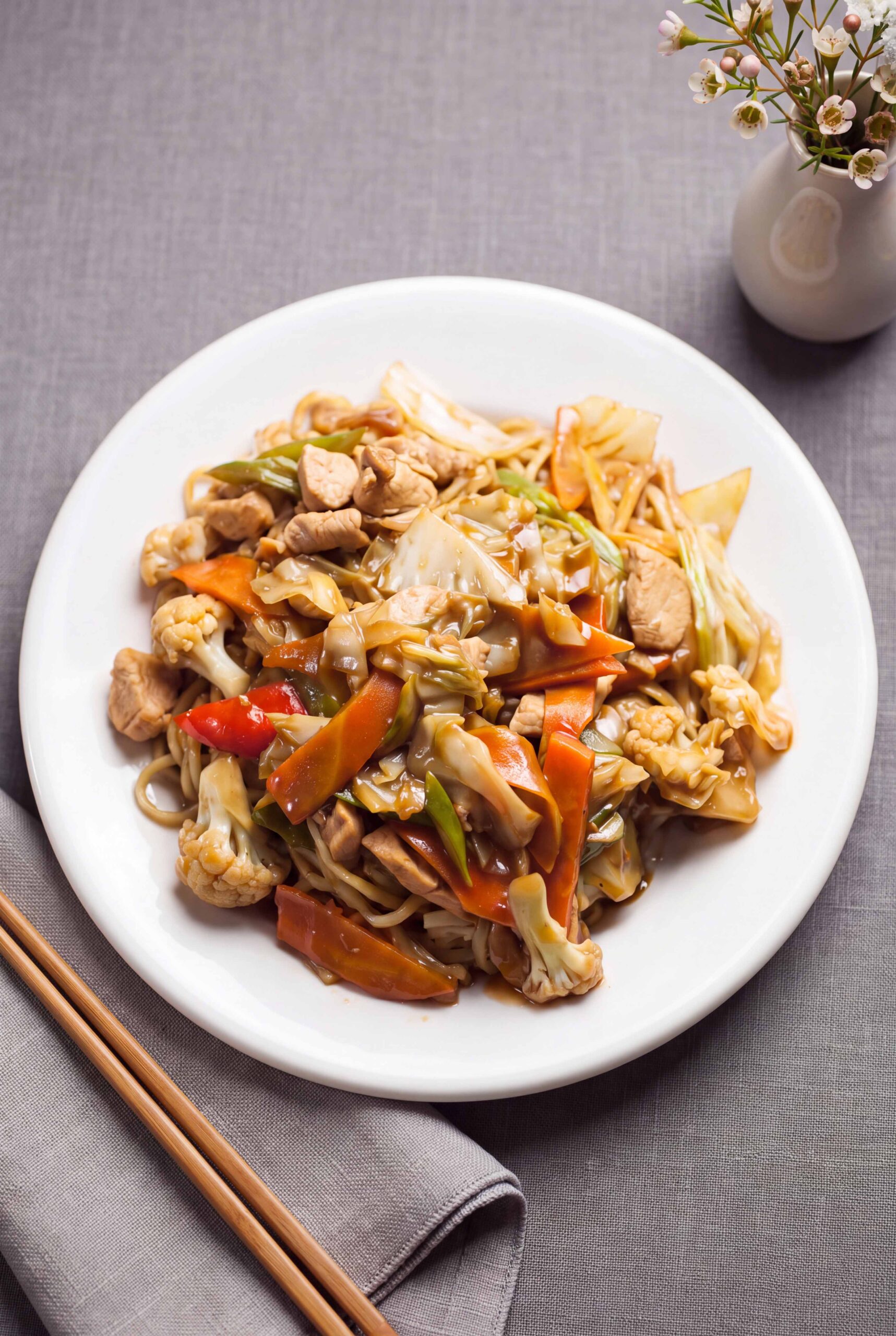
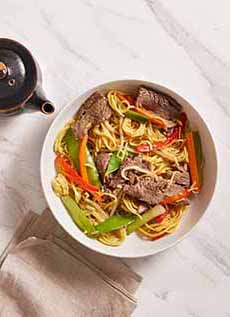
Chow mein (photo #6) has similar ingredients—chicken, prawns, vegetables, and seasoning sauces. However, noodles as the central ingredient and there is no rice. Depending on the style, the noodles may be soft and stir-fried or crisp and fried; they are then combined with the vegetables, protein, and sauce. In other words, if you order “chop suey” and get a dish with noodles, it’s chow mein. See the *footnote for more about chow mein. Caveat emptor: You can find canned chop suey and canned chow mein from La Choy. They are far removed from freshly made chop suey. For a moment of beauty on National Chop Suey Day, take a look at photo #6 below, the painting of a chop suey parlor (as some such restaurants were called many years ago) by the American painter Edward Hopper. Here’s more about the painting. *In American Chinese cuisine, chow mein is often prepared in two styles: crispy chow mein, which uses fried, flat noodles; and soft chow mein, which uses spaghetti-style noodles. “Chow mein” means stir-fried noodles. “Subgum” means “numerous and varied,” a chow mein that is a combination of ingredients (see the chop suey list above) instead of all vegetable, all chicken, etc. **Toisanese—also spelled Taishanese or Hoisanese—is a variety of Yue Chinese (Cantonese) spoken in Taishan and the surrounding Sìyì region of Guangdong Province, China. Guangdong has several major Chinese language varieties. Toisanese was historically especially significant in the U.S. because many early Chinese immigrants came from Taishan and neighboring counties. While their speech may be referred to broadly as Cantonese in American historical writing, Toisanese is distinct from the Cantonese spoken in Guangzhou or Hong Kong. †In China, the vegetables used vary based on what was available. These could include bamboo shoots, bean sprouts, bell peppers, bok choy and other Asian greens, broccoli, cabbage, carrots, celery, cauliflower, mushrooms, onions/scallions, and young “baby” corn. About baby corn: It’s simply regular corn em>(Zea mays) harvested very early, before the kernels have had a chance to develop and mature. The little ears are only 2—4 inches long and the entire cob is tender enough to eat. It’s popular in Asian cuisine for its sweet, mild flavor and crisp texture. Most canned baby corn comes from Thailand and other Asian countries where it’s grown specifically for this purpose. While most baby corn in the U.S. is sold canned, you can sometimes find fresh baby corn at Asian markets or specialty stores. It tastes noticeably sweeter and more flavorful than the canned version, so if you see it, grab it! ††Sichuan is the modern pinyin romanization used in mainland China and in most current English-language reference works. Szechuan is an older English spelling based on earlier romanization systems, that extremely common in the U.S., especially in restaurant names and menus. Szechwan is another historical variant. Pinyin is the official system used to Romanize (spell out using Latin letters) the sounds of Mandarin Chinese. The term literally translates to “spelling sounds.” ‡Some popular Cantonese menu items: beef and broccoli, cashew chicken, Cantonese-style roast duck and roast pork (char siu), chop suey, egg rolls, fried rice, lo mein noodles, salt and pepper dishes, calamari, sweet and sour pork, wonton soup, and our personal favorite, shrimp with lobster sauce. Not to mention dim sum, a Cantonese mainstay. CHECK OUT WHAT’S HAPPENING ON OUR HOME PAGE, THENIBBLE.COM. |
||