|
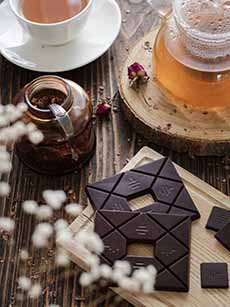
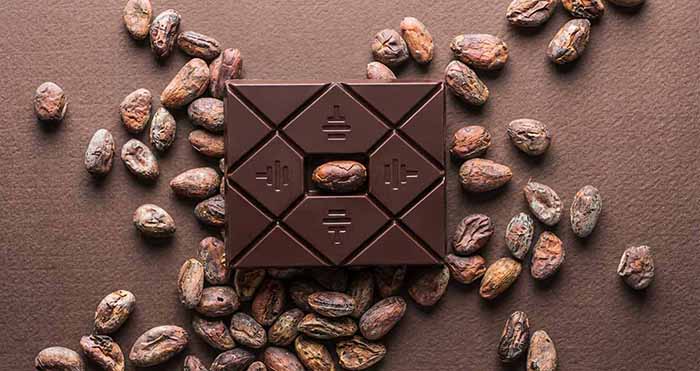
[1] To’Ak chocolate made from Ecuador’s Ancient Nacional cacao, one of the world’s finest (all photos © To’Ak).
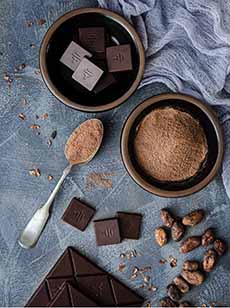
 [2] Because the chocolate is of such high quality, it’s made in bars and mini-bars, to be enjoyed a bit at a time.
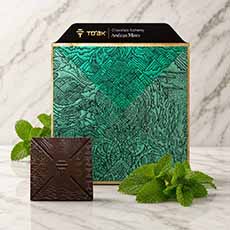
[3] The most “elevated” version of Andes Mints you’ll find.
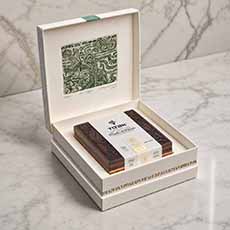
[4] All of the packaging is beautiful.
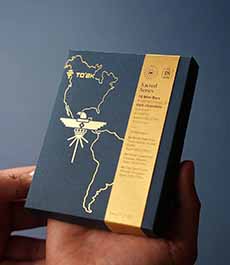
[5] The Masters Series of rare chocolate is packaged in a wooden box of local elm.
|
|
We’re passing along advice from To’Ak, one of the world’s exceptional artisan chocolate makers.
They specialize in Ecuador’s rare Nacional cacao, a genus which the company helped bring back from near-extinction.
This is a line of fine dark chocolate, with bars beginning at $8 and some very rare bars costing more than $400 apiece. (Discover why below.)
So they know how to care for chocolate!
Below:
> How to care for your chocolate in warm weather.
> About To’Ak chocolate.
Elsewhere on The Nibble:
> The history of chocolate.
> The different types of chocolate: a photo glossary.
> The year’s 69 chocolate holidays.
> Pairing wine with chocolate.
FINE CHOCOLATE, HOT WEATHER
You don’t have to own the costliest bars, bonbons, or cocoa powder to take good care of the good-quality ones you do have.
Even in our shade-drawn office, a box of fine chocolate disks on our desk melted together a bit in unusually high April heat (85°F), waiting for the air conditioning to be turned on in May.
Beyond melting, if chocolate gets too warm, even if it doesn’t melt, it can experience the phenomenon known as fat bloom.
Fat bloom happens when the cocoa butter starts to melt and then re-solidifies, altering the texture and leaving grayish streaks on the surface of the chocolate.
Even relatively small shifts in temperature (say, from 70°F to 75°F or 21°C to 23°C) can cause this restructuring of fats. It’s safe to eat, but the chocolate feels soft and slick.
That’s why it was timely to receive a reminder from To’Ak to keep chocolate and cacao powder cool, but not in the fridge.
Why You Shouldn’t Refrigerate Chocolate
Chocolate prefers a temperature between 65°F and 72°F (18°C – 22°C). A fridge is typically set at 40°F (4°C).
Refrigerators are cold, humid environments that can affect the look and consistency of chocolate. If you’ve ever gotten white spots on refrigerated chocolate, that’s “sugar bloom.”
A different phenomenon from fat bloom, moisture draws out the sugar and pushes it to the surface of the chocolate. When the condensation evaporates, the chocolate is discolored and spotted with dry, gritty, white sugar crystals. It can’t be fixed but it won’t affect the taste of the chocolate.
Even worse are all the flavors and odors the rich cocoa butter in the chocolate will absorb.
If you absolutely must use a fridge to avoid a melting disaster, use the vaccuum seal/wrap technique in Tip #3 below, and bring the chocolate to room temperature before consuming.
Instead, follow these guidelines:
Easy Steps To Better Chocolate
1. Store your chocolate in a cool, dry place, like a pantry.
Chocolate keeps best in an environment between 65°F and 70°F (about 18°C to 21°C) and protected from moisture.
If you have a wine fridge, it’s an ideal place.
2. Make sure the storage place is dark.
Both natural and artificial light makes chocolate more vulnerable to heat and oxidation.
3. Keep chocolate far away from all odorous items.
Chocolate easily absorbs any odors around it. Some may be pleasant, like spices, but you don’t want them migrating into your chocollate.
The refrigerator holds items that generates unpleasant aromas: cheese, fish, onions, etc.
If you can’t avoid odors in your kitchen—including cooking odors—keep your chocolate elsewhere.
If there’s no “elsewhere” to keep it, vacuum seal or wrap your chocolate tightly in plastic and store in an airtight container.
|
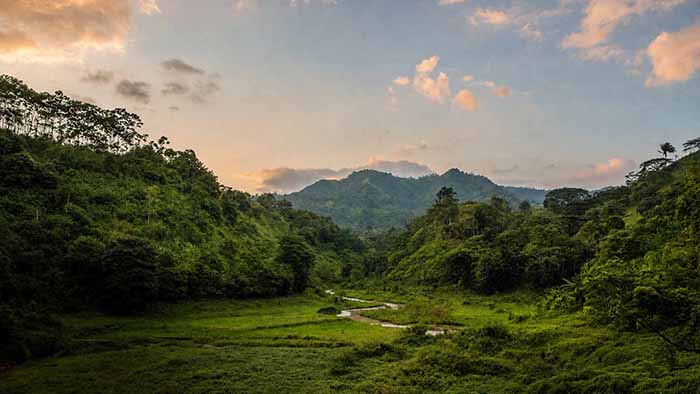
[6] To’ak chocolate was born from a rainforest conservation project that co-founder Jerry Toth started in Ecuador in 2007, through his nonprofit organization Third Millennium Alliance. This helped create the Jama-Coaque Ecological Reserve protecting, over 1,500 acres of coastal rainforest. The bars are garnished with a roasted cacao bean, a unique reminder of the fruit’s origin.
ABOUT TO’AK
The name To’ak comes from two ancient Ecuadorian indigenous languages and means “earth and tree.” The brand was born of a rainforest conservation project started by co-founder Jerry Toth started in Ecuador in 2007 (photo below).
The chocolatiers treat their chocolate with the same seriousness as a vintner of fine wine or a distiller of fine spirits.
While there are affordable options, some bars aged in a 50-year-old cognac cask cost $200, with higher prices the more rare the bean and process.
The prices reflect the rarity. This is serious chocolate, for connoisseurs with demanding palates. Here’s what makes the chocolate so exclusive.
The Rareness Of The Beans. To’ak exclusively uses the Ancient Nacional (na-see-oh-NOLL) variety of cacao bean, native to Ecuador, which was considered functionally extinct as recently as 2009.
The beans come from a tiny number of farms—just 13 or 14 growers in a single valley, Piedra de Plata. The supply of these single-origin cacao beans is radically limited by nature.
The farmers are paid up to 700% above the local market price for their beans. This factors into the cost and may seem extraordinary, but the farmers need strong incentive to make their rare trees economically valuable enough to protect.
Otherwise, you know what’s been happening to too many South American rainforests: They get chopped down for cattle grazing land.
Scarcity. Production runs are tiny.
Origin bars are typically limited to 150 bars per edition, Signature bars to around 1,000.
This is not artificial scarcity as a marketing device but a direct consequence of working with such a limited supply of rare beans.
The Aging Of The Beans. To’ak developed what they describe as the world’s first long-term chocolate aging program.
This is their most unusual and distinctive practice, and ages the chocolate as a winemaker or distiller would age their fine products.
In fact, the newly made chocolate bars are rested in casks that previously held Cognac, Bourbon or other whiskey, rum, Sherry, and Tequila.
Some bars are aged for 18 months, others for three years or more.
The casks impart flavor complexity while softening the tannins in the cacao.
Vintage Harvests. Like the grapes that make wine, each year’s harvest is different.
Flavor nuances change based on the growing season conditions: variations in rainfall, cloud cover, and temperature during the growing season.
This produces vintage variations: noticeably different flavor profiles in the finished product. A particularly dry or wet year produces a different bar, e.g.
To’ak releases harvest-specific bars with tasting notes reflecting those differences.
Packaging.
The presentation is extraordinary and the packaging alone is a collectible object after the chocolate is gone.
Origin bars come in handcrafted Spanish elm wooden boxes with tasting utensils, illustrated booklets, and original artwork.
The art series bars have included original prints by Ecuadorian artists with gold leaf details, hand-printed at old presses in Quito.
The Embedded Bean. A unique touch that honors the bean.
Each bar contains a single hand-selected roasted cacao bean placed in the center: a reminder of the fruit’s origin and a signature detail (photo above).
Some people find it fascinating to taste where chocolate comes from. Some people find the bitter austerity before cacao is sweetened to be not to their liking. Think of it like eating a roasted espresso bean, but even more intense.
Instead, you can chop or crush the bean and use it as you would cacao nibs. Or, grind it in a spice grinder and add it to a rub for steak or duck—two meats where bitter chocolate is a natural complement.
> If you know someone who would relish the To’ak chocolate experience, please direct him or her to ToakChocolate.com.
[7] To’ak chocolate was born from a rainforest conservation project that co-founder Jerry Toth started in Ecuador in 2007, through his nonprofit organization Third Millennium Alliance. This helped create the Jama-Coaque Ecological Reserve protecting, over 1,500 acres of coastal rainforest.
CHECK OUT WHAT’S HAPPENING ON OUR HOME PAGE, THENIBBLE.COM.
|