For National Lobster Day, The History Of Lobster & Why We Boil Them Alive
|
National Lobster Day is celebrated on two different days: June 15th September 25th (see the *footnote for why there are two). Below: > The history of lobster, from trash seafood to cash crop. > Other foods that went from common to coveted. > The year’s lobster holidays. > Why are lobsters boiled alive? Elsewhere on The Nibble: > 30+ lobster recipes for every meal of the day. > The interesting anatomy and biology of a lobster. > The different types of seafood: a photo glossary. > The year’s 60+ fish and seafood holidays. Today, lobster is one of the most prized and expensive foods in the world. Yet for much of North American history, it was considered a low-status food, fed to enslaved laborers, prisoners, servants, orphans, and the poor. The transformation of lobster from a disparaged crustacean to a symbol of luxury is one of the most remarkable reversals in culinary history. For thousands of years, Indigenous peoples along the Atlantic coast harvested lobsters as part of their regular diet. Native communities used lobster not only as food but also as bait and fertilizer for crops. When European settlers arrived in New England during the 17th century, they found astonishing numbers of lobsters along the coast. Historical accounts describe lobsters washing ashore in piles after storms and being so plentiful that they could be gathered by hand in shallow water. It’s hard for us to believe today since they’re so delicious, but because they were so abundant and easy to obtain, lobsters carried no prestige. In societies where scarcity often determines value, lobster’s overwhelming availability worked against it. By the 18th and early 19th centuries, lobster had become associated with poverty, often viewed as a food of last resort. Why did people disdain a food we find so delicious today? As an institutional food for prisoners and the poor, lobster was often boiled in massive batches until it was overcooked and rubbery. Even worse, it was frequently cooked with ground-up—shells into a sort of coarse, gritty paste or pottage to stretch the protein further. Even attempts at canning produced a poor quality product, which contributed to its besmirched reputation. An anecdote of the time claimed that prisoners in New England revolted because they were forced to eat lobster every day. While this may be exaggerated, there is historical evidence that lobster—poorly prepared, as noted above—was indeed fed frequently to prisoners. In parts of New England, prison labor contracts reportedly included provisions limiting the number of lobster meals served each week. Although some of these stories have become embellished over time, the existence of such complaints indicates lobster’s low status. Another often-cited account describes servants objecting to being fed lobster too often, considering it degrading and monotonous. Some requested employment contracts stipulating a limit on how much they could be given. Some people even referred to lobster as the “cockroach of the sea,” a reference that emphasized its bottom-dwelling habits and scavenging behavior. Fortunately, during the mid-to-late 19th century, lobster’s fortunes began to change. The “pleasure” of lobster exploded with the late 19th-century tourism industry. Maine resort chefs realized that if they served only the tail and claws (the “clean” parts), steamed them perfectly, and served them with expensive, hot clarified butter, they could rebrand the experience. Once the wealthy started traveling by train to the Maine coast and paying high prices for “fresh shore dinners,” lobster suddenly became “refined.” As soon as the price went up and the social status changed, people suddenly started to discover how delicious lobster had always been. By the early 20th century, lobster had acquired an upscale image. American Lobster There are different species of clawed lobster. The species Homarus americanus, American lobster, is called by different names, including Canadian lobster and Maine lobster. Even if a lobster is caught in Massachusetts or New Hampshire, it is typically called a “Maine lobster” simply because “Maine” is a recognized name. Canadian lobster is cauaght in New Brunswick, Nova Scotia, Prince Edward Island. All of these are also called Atlantic lobster; however, there is another clawed lobster that is also an Atlantic lobster, but comes from the western side of the Atlantic. European Lobster Homarus gammarus, the European lobster, is a different species from American lobster. It’s found in the Northeast Atlantic off the coasts of France, Ireland, Norway, and the U.K., but even though it comes from the Atlantic Ocean, it isn’t called Atlantic lobster. The easiest way to think of them: |
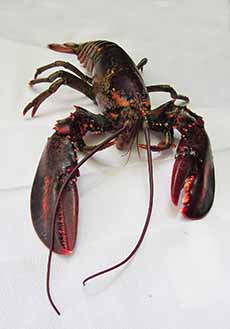 [1] Happy Lobster Day to Homarus americanus. American lobsters are incredibly long-lived and can survive up to 100 years in the wild (photo © Lisa Redfern | Pixabay).
|
|
|
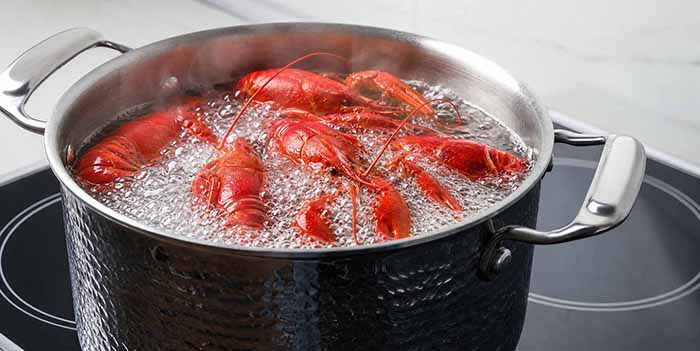
In addition to the American and European clawed lobsters, there are other lobsters worldwide. We’ve mentioned them briefly in the †footnote below. OTHER FOODS WITH A “CULINARY REVERSAL” FROM COMMON TO COVETED Seafood That Went From Common To Coveted Boiling a lobster alive isn’t intentionally cruel; it’s a race to stop a deadly chain reaction of microbes that want to turn its into poison the moment the crustacean dies. Lobsters harbor a variety of bacteria that live harmlessly in their flesh. As long as a lobster is alive, its immune system keeps the microbes in check. But once it dies, the bacteria multiply exponentially and begin to produce potent toxins. Even if the meat is subsequently cooked at high temperatures, those pre-formed toxins can survive the boiling process and cause severe foodborne illness. Beyond the risk of food poisoning, there is a structural threat to the meat. Lobsters possess a digestive organ called the hepatopancreas, known in culinary terms as the tomalley. Upon death, this organ releases powerful digestive enzymes that quickly break down the lobster’s muscle tissue in a process called autolysis. If a lobster is dead for even a short period before hitting the heat, these enzymes will turn the normally firm meat into an unappetizing mush. Keeping the lobster alive until the moment it enters the boiling water historically solved both the bacterial and enzymatic problems. However, the method of how this is achieved is actively shifting. Many modern chefs and several regulatory bodies have moved away from this traditional technique due to animal welfare concerns. In places like Switzerland and New Zealand, boiling conscious live lobsters is illegal. Instead, cooks use specialized electro-stunning devices or perform a precise knife strike to the lobster’s nerve centers just seconds before cooking. These techniques instantly dispatch the animal, bypassing the window where toxins and enzymes can ruin the flesh, while achieving the exact same food-safety goals as the traditional boiling method. Thanks to Nova Prism on Quora for this explanation. †In addition to Maine/Atlantic lobster, the true/clawed lobster (family Nephropidae, genus Homarus), the other major species used as food is the rock/spiny lobster (no big claws—family Palinuridae, genus Panulirus) from Australia, Caribbean, South Africa, and much of Asia. In New Zealand/Australia, the word “crayfish/cray” often means rock lobster (marine), not freshwater crawfish. CHECK OUT WHAT’S HAPPENING ON OUR HOME PAGE, THENIBBLE.COM. |
||