|
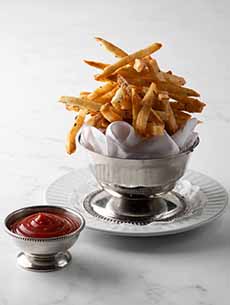
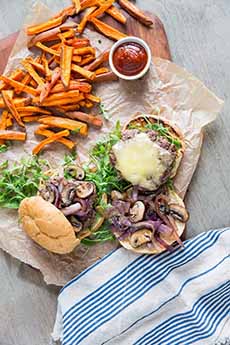
[1] The first most popular use for ketchup: French fries and other fried potatoes—tots, hash browns, etc. (photo © Striphouse | Las Vegas).

[2] In second place, the burger. A plain burger is just fine, but we’ve added some excitement with this sautéed mushroom-Gruyère cheeseburger and sweet potato fries (photo © Good Eggs).
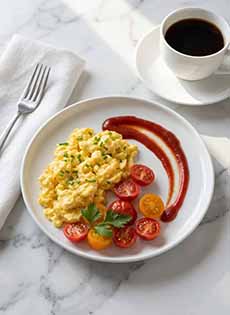
[3] Coming in third: eggs, scrambled or any other style, including omelets. See the rest of the “Top 10” below (photo: The Nibble).
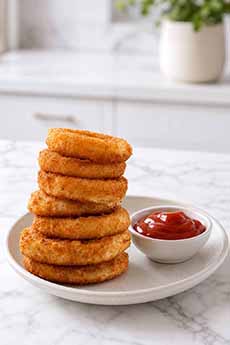
[4] While onion rings didn’t make it onto the list, we’re using our editorial powers to fold them into the French fries group (photo: The Nibble).
|
|
Happy National Ketchup Day! June 5th is an unofficial holiday. It’s hard to overstate the grip this sweet, tangy, umami-packed condiment has on the American palate.
It’s estimated that roughly 97% of U.S. households keep ketchup in the kitchen. When it comes to how they actually use it, the applications range from the universally accepted classics to a few highly debated anomalies.
We speak here of tomato ketchup. There are many condiments called ketchup that predate it tomato ketchup by millennia.
Below:
> The history of ketchup.
> America’s top ketchup brands.
> Noteworthy small-batch brands.
> Ways Americans use ketchup—including some you’ve never heard of.
Elsewhere on The Nibble:
> The history of ketchup.
> 50+ artisan ketchup brand reviews.
> The year’s 18 condiment holidays: dips, dressings, and sauces.
> G. Hughes Zero Sugar Ketchup
THE HISTORY OF KETCHUP
The word itself comes from the Hokkien Chinese word kê-tsiap, which referred to a brine of pickled fish or shellfish.
British traders encountered this fermented sauce in Southeast Asia in the late 17th century and brought it to Europe.
Interestingly, a similar fermented fish sauce was made by the Greeks from at least the 5th century B.C.E.: garon, a specific type of small fish or shrimp that was fermented into a sauce.
In contrast, the earliest records of kê-tsiap trace back “only” to roughly 300 B.C.E.
By the 1st century B.C.E., the Romans had adapted garon, Latinized to garum, and expanded the recipe to include other seafood. It became the favored condiment of the Roman Empire—the tomato ketchup of its time.
Ketchup Comes To Northern Europe
Over hundreds of years, kê-tsiap made its way to Europe via trade routes.
While earlier merchants had brought fish sauce condiments back from Asia, Captain Henry Lewis Edwardes (1788–1866) brought a recipe home after travels in India.
It somehow got to John Wheeley Lea and William Henry Perrins, two dispensing chemists (pharmacists) in Worcester, England (pronounced WOO-ster), in the county of Worcestershire.
The duo created the first fish sold commercially, in 1837, called, not surprisingly, Lea & Perrins Worcestershire Sauce. (The fish used was anchovy.)
Other Brits experimented with a variety of bases to mimic the fermented fish sauces from Asia. Some of the most common ketchups they made included:
Mushroom Ketchup: This was arguably the most popular variety in Britain from the 1600s onward, made by layering mushrooms with salt to draw out their juices, then boiling the liquid with spices like cloves, mace, and peppercorns. It remains a traditional British condiment today.
Walnut Ketchup: Made from green, unripe walnuts, this was a staple in 18th-century English pantries. Like mushroom ketchup, it was a thin, dark liquid with a deep, savory flavor.
Oyster and Mussel Ketchup: These were made by boiling down shellfish with wine and spices into a concentrated syrup or letting them sit in salt for long periods. One recipe from the 1700s called for 100 oysters mixed with white wine and lemon peels.
Anchovy Ketchup: Since the original ketchups from Southeast Asia were fermented fish sauces (known as koe-cheup or ge-thcup), British versions often used anchovies to provide that same salty, umami kick.
Fruit Ketchups: British cooks also produced ketchups using elderberries, plums, peaches, and grapes, though these were generally less common than the savory mushroom or walnut varieties.
Other Savory Bases: Historical cookbooks also featured recipes for ketchups made from celery, cucumbers, lemons, and other ingredients.
Spices were imported and expensive, so whatever looked like it expand the options was given a shot.
|
The Arrival Of Tomato Ketchup
The concept of tomato ketchup originated in the U.S. around the turn of the 19th century. The first known recipe for tomato ketchup was published in 1812 by James Mease, a Philadelphia physician and scientist, in James Mease’s Archives of Useful Knowledge, Volume 2. The recipe was titled “Love-Apple Catsup” (love apple is an early term for tomato).
His recipe was a culinary sauce/condiment, that also had some medical applications.
In fact, a “medicinal ketchup” craze took off in the 1830s, with various doctors and entrepreneurs selling their own versions of ketchup as a remedy.
Dr. John Cook Bennett, an Ohio physician, claimed that tomatoes had medicinal properties and marketed his formulation as a remedy for various ailments including diarrhea, indigestion, and jaundice. He even sold it in pill form as “Dr. Miles’ Compound Extract of Tomato.”
However, the market eventually became flooded with fake products making exaggerated claims, and by the 1850s, the medical ketchup was largely over, while tomato ketchup continued as a food product.
Tomato ketchup became popular in the early 19th century, especially in the U.S.—often homemade or made by small regional producers.
It was usually less sweet than modern ketchup, and while recipes varied, they typically included tomatoes, vinegar, salt, spices (black pepper, cayenne, clove, ginger, mace, nutmeg) and sometimes garlic or onion.
It wasn’t until later in the 19th century that ketchup evolved into the sweet condiment we love today. Heinz Tomato Ketchup first appeared on store shelves in 1876.
The next 25 years saw a great rise in the condiment’s popularity, although tomato ketchup still shared the spotlight with British mainstay varieties made from anchovies, mushrooms, and walnuts.
Compared with modern ketchup, earlier tomato ketchups were often thinner, more acidic, spicier, and less sweet—more like a table sauce than a burger condiment.
Historians often treat Heinz as the moment tomato ketchup became the modern American condiment. He made ketchup: consistent [sweet] recipe, shelf-stable and mass-market.
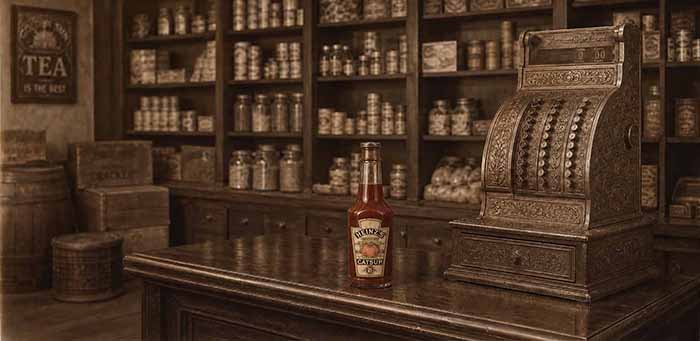
[5] While H.J. Heinz eventually chose the “ketchup” spelling to distinguish his product from thinner “catsups,” early labels from the 1870s like the one shown here show that he began with the more familiar name (photo: The Nibbble | A.I.).
Catsup Vs. Ketchup
The transition from catsup to ketchup was a slow linguistic evolution that was eventually settled by commercial branding and marketing, most notably by Henry J. Heinz.
Both words derive from the same source: the Hokkien Chinese word for fermented fish sauce, kê-tsiap. As the sauce traveled through trade routes, it was transliterated into English in various ways:
Catchup, one of the earliest English spellings, appeared in 1699.
Ketchup appeared shortly after, around 1711.
Catsup became the more popular spelling in the U.S. during the 18th and early 19th centuries, while Britain leaned toward ketchup.
In the mid-to-late 1800s, “catsup” was still the standard American spelling. However, two major factors caused “ketchup” to win:
Heinz branding. Shortly after Henry J. Heinz began selling his product in 1876, he intentionally changed the spelling to “ketchup” to distinguish it from the many other competitors selling “catsup.” At the time, “catsup” products could be watery, inconsistent, or even dangerous home-brewed sauces. Heinz wanted his product to sound unique, reliable, and premium.
Heinz market dominance. Because Heinz quickly became the most successful and trusted sauce manufacturer in the world, his spelling became the de facto standard. Other companies eventually switched their labeling to “ketchup” to match consumer expectations.
Today, there is no technical difference between the two. They refer to the exact same condiment.
Catsup is still occasionally seen in certain regional brands or older American literature, but it is increasingly rare.
Interestingly, Del Monte did not switch their spelling from catsup to ketchup until 1988, more than a century after Heinz.
Tomato Ketchup Today
For much of the 20th century, ketchup was America’s #1 condiment by sales. It was surpassed by salsa in 1991, and more recently by ranch dressing! But it’s still on the podium.
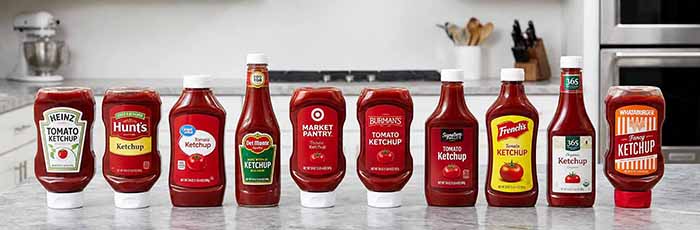
[6] The top 10 ketchup brands, shown by ranking from left to right (photo: The Nibble).
AMERICA’S TOP KETCHUP BRANDS
After the first two, the list is an estimate, because public sales rankings are sparse, and a lot of share sits in store brands/private label.
The ingredients are typically tomato concentrate, vinegar, sweetener, salt, and spices. If you’re concerned about corn syrup, check the label to see if it’s high fructose corn syrup, corn syrup, or possibly cane sugar (the best of the three alternatives). Regular Hunt’s is made with HFCS, but they also make a “100% Natural” version with cane sugar.
In order of sales:
Heinz
Hunt’s
Great Value (Walmart)
Del Monte
Market Pantry (Target)
Burman’s (Aldi)
Signature Select (Safeway)
French’s
365 (Whole Foods Market)
Whataburger Fancy Ketchup (Whataburger)
SMALL-BATCH KETCHUP BRANDS
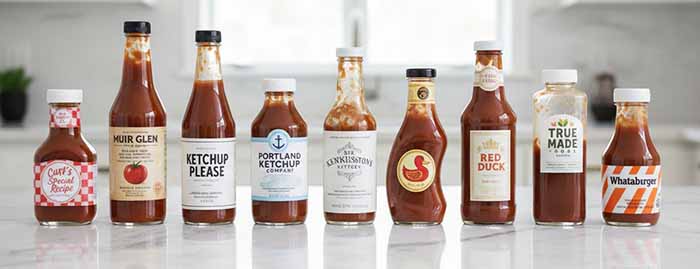
[7] Some leading small-batch ketchup brands. Note to self: Have a ketchup tasting (photo: The Nibble).
Small-batch brands focus on traditional kettle-cooking methods, natural sweeteners, interesting spicing, and a better quality tomato or tomato paste, which enables a massive reduction in processed sugars to let the true tomato flavor shine.
In alphabetical order:
Curt’s Special Recipe: This small-batch brand is known for its distinctive chunky texture and garlic-heavy notes. In blind taste tests, it often stands out for having a more “homemade” feel compared to most other brands.
Ketchup Please: Marketed as “ketchup without compromise,” this brand appeals to health-conscious consumers: all-natural, no added sugar, and significantly lower sodium (plus lower in carbs without added sugar).
Muir Glen Organic: While widely available, Muir Glen is often categorized with premium/artisan brands because of its focus on organic, field-grown tomatoes. Its flavor profile is more tomato-forward, tasting like actual garden tomatoes rather than a sweet sauce.
Portland Ketchup Company: This brand balances sweetness with interesting spice blends, emphasizing a fresh-tasting tomato flavor that avoids being overly acidic.
Primal Kitchen: A specialist in keto-friendly and paleo-approved condiments, their ketchup is unsweetened and relies on on organic California tomatoes, onion, and garlic for flavor.
Red Duck Organic Ketchup: This brand focuses on complex flavor profiles using ingredients like coconut sugar and apple cider vinegar. Their texture is noted for being luxuriously thick, almost like a hybrid between tomato paste and ketchup.
Sir Kensington’s: Though it has grown in popularity, Sir Kensington’s maintains an artisanal approach by using whole tomatoes and honey or cane sugar. It is known for a slightly chunkier texture and a sophisticated spice profile that includes notes of clove, coriander, and lime.
True Made Foods: This brand is unique for blending tomatoes with other vegetables like butternut squash, carrots, and spinach to naturally sweeten the sauce. It has 50% less sugar than leading brands.
Whataburger Spicy Ketchup: From a fast-food chain in Texas, this ketchup became so popular it is now bottled for retail. It uses red jalapeños for a heat that builds to complement the tomato base.
Also check out:
First Field Original Tomato Ketchup: This brand uses pristine, vine-ripened tomatoes sourced directly from local growers. It’s kettle-cooked in small batches with apple cider vinegar and organic spices, and the sweetener is molasses, cutting the sugar and salt content by half compared to mass-market brands. We also noted roasted red pepper purée, an ingredient we haven’t seen before in ketchup.
Beast Feast Maine Classic Ketchup: High-quality tomato paste and and organic apple cider vinegar are sweetened with organic blue agave.
[7] How do you enjoy ketchup? Take your pick (photo: The Nibble).
HOW AMERICA USES KETCHUP
The Big Three
French fries and other fried potatoes: hash browns, Tater Tots, etc.
Hamburgers and all burger variations (chicken, veggie, etc.).
Hot dogs: While there are mustard purists, data shows that a large percentage of Americans are on Team Ketchup (some people use both on the same frank).
The Comfort Food Condiments
Chicken nuggets, tenders, and other fried chicken: While honey mustard and BBQ sauce offer stiff competition, ketchup remains a dipping favorite for fried chicken pieces.
Eggs and breakfast sandwiches: Millions of Americans wouldn’t dream of eating these without ketchup.
Grilled cheese and other sandwiches: While tomato soup is the gold standard for dipping dip grilled cheese, ketchup is an easy stand-in. Some people also prefer it to mustard or mayonnaise as a sandwich spread.
Meatloaf glaze and condiment: Ketchup is the primary ingredient in the traditional sweet glaze baked onto American meatloaf, often mixed with a bit of brown sugar, mustard, or Worcestershire sauce. It’s also a condiment for an unglazed, unsauced meatloaf.
The Base For Other Condiments
Americans frequently use ketchup as a base matrix for other condiments.
Mix it with mayonnaise for fry sauce, Russian dressing, or Thousand Island dressing, not to mention “special sauce.”
Mix it with horseradish and you have cocktail sauce for shrimp, oysters, and other shellfish.
Mix it with vinegar, brown sugar, and liquid smoke and you have barbecue sauce.
The Bizarre, At Least To Us
Ketchup on donuts: The “ketchup-nut” began as an internet dare—a glazed donut dipped in ketchup—and has crossed over into genuine preference for some people.
Ketchup on fruit: A surprising number of people swear by dipping watermelon slices or green mango into ketchup.
Ketchup on pasta: Whether subbing in for tomato sauce or a garnish for mac and cheese.
Ketchup on rice: Born out of “broke college student” necessity, this combination has a massive following. You can port the concept to any grain, but white rice is certainly the cheapest.
Popcorn topping: A vocal minority of movie-watchers drizzle ketchup directly over their hot popcorn. It turns the whole bowl or bag into a sticky, finger-staining mess, but they love it.
The Vintage & Retro Horrors
Great Depression “Tomato Soup”: In an era of impoverishment, one went to a diner or cafeteria, ordered a cup of hot water, and stirred in the ketchup that sat on the counter or table (you can see Dustin Hoffman’s character do this in “Midnight Cowboy”). Today, add some non-dairy creamer and you’ve hacked a creamy tomato bisque. (Enjoy it with some ketchup on rice.)
The Ketchup Jell-O Salad: American cookbooks from the 1950s and 1960s have recipes for “Tomato Ketchup Aspen,” a savory molded gelatin salad. Unflavored gelatin was dissolved in water, mixed with a massive amount of ketchup, celery, and sometimes cream cheese or seafood, and set in a ring mold.
Now we have a burning desire for a burger, fries, and onion rings. And a well-deserved beer to go with them.
CHECK OUT WHAT’S HAPPENING ON OUR HOME PAGE, THENIBBLE.COM.
|