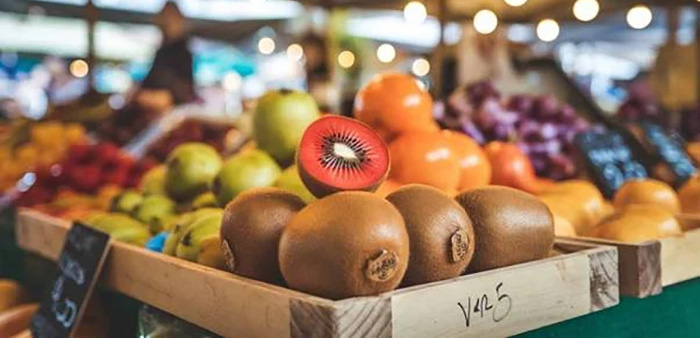
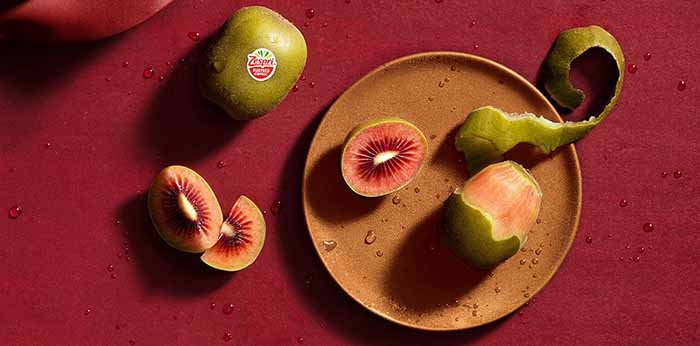
There’s A New Kiwi In Town, Briefly: Ruby Red Kiwifruit
|
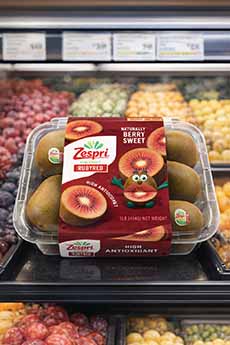
There are signs of spring in the fruit department. Among the classics—blood oranges—among others*. And now, something new to add to your shopping cart: Zespri† RubyRed™ Kiwifruit, a berry-sweet seasonal fruit only find in stores for a limited time this spring. Its vibrant red flesh perks up any dish; its sweet flavor tastes like a cross between a kiwi and red berries Kiwifruits are nutrient-dense, chock full of antioxidant vitamin C along with anthocyanins, the phytochemical pigments that give fruits and other plants a blue, purple, or red color. Visit Zespri.com to find a store near you and explore more recipes before the season ends. Here’s detailed information about the red kiwifruit. Below: > The difference between “kiwi” and “kiwifruit.” > What is a cultivar? > Spring fruits and vegetables. > The year’s 80+ fruit holidays. > National Kiwi Fruit Day is observed annually on December 21st. Naturally sweet and simple to prepare, kiwi is beloved by adults and kids alike, at every meal of the day: Kiwifruit contains a balanced mix of sugars (fructose and glucose) and organic acids (citric and quinic acid). Chilling brings up the refreshing “zip” of the acidity and helps to maintain its characteristic sweet-tart balance. |
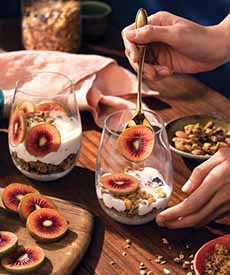
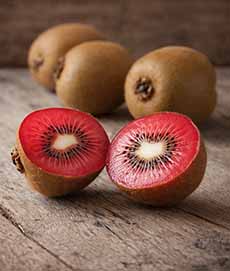 [1] Luscious, sweet, and red kiwifruit (photos #1, #5, and #8 © Real Food Revealed).
|
|
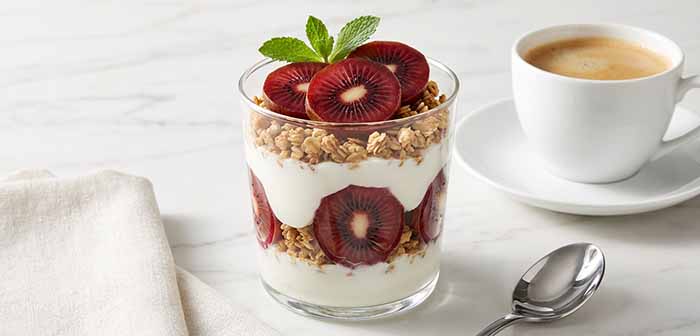
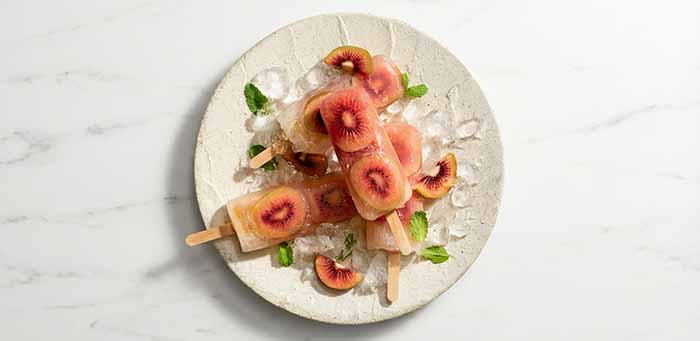
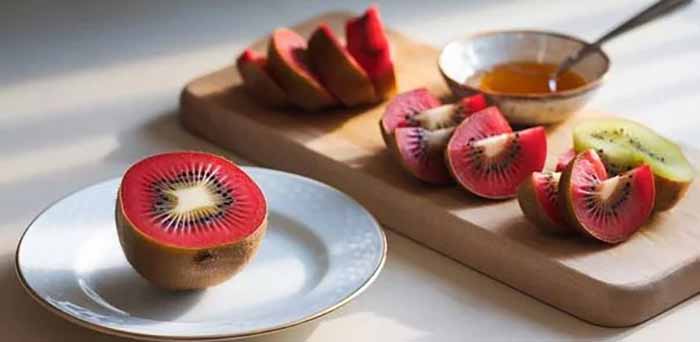 [5] A colorful snack with a drizzle of honey (photo © Real Food Revealed). HOW TO RIPEN KIWI Kiwifruit is usually ready to eat when you buy it. It should feel slightly soft to the touch, like a ripe peach or avocado. Once ripe, it should be stored in the refrigerator. If the fruit is a bit firm when you buy it, it will usually ripen at in three to five days at room temperature. Let it soften: The firmer the fruit, the more tart it will taste. Ingredients For 4 Servings 1. DICE one kiwi and thinly slice the other one. You don’t need to peel them. 2. LAYER 1/4 cup yogurt, kiwi and granola in the bottom of 4 tall glasses. Continue layering with remaining ingredients. Blended with fruit juice and frozen with fresh slices of kiwi, these pops are simple, colorful treats. Ingredients For 4 Pops 1. DICE three kiwis into small cubes. Thinly slice the remaining kiwi and set aside for decoration. 2. ADD the kiwi cubes, sweetener, and liquid in a blender and process until smooth. Taste and adjust the sweetener as desired before freezing. 3. PLACE the sliced kiwi into ice pop molds and pour the juice mixture over top, leaving about 1/4 inch at the top for expansion. 4. FREEZE for 4-6 hours or longer. Run the molds under warm water for a few seconds to more easily remove the pops. Variations The difference between the terms “kiwifruit” and “kiwi” are often used interchangeably in the U.S., but they have very specific meanings in New Zealand and other parts of the world. The name “kiwifruit” was coined in 1959 by New Zealand exporters, specifically to differentiate the fruit from the bird and the people, to create a brand association with the country, and partly to distance the fruit from its Chinese origins during the Cold War era. Another reason: It avoided high U.S. tariffs on “berries” and “gooseberries.” But in the United States and Canada, “kiwi” became the standard shorthand for the fruit. †Zespri RubyRed™ is one specific, trademarked cultivar within the broader group of 6 key species of kiwifruit. Zespri developed their cultivar in New Zealand with The New Zealand Institute for Plant and Food Research Limited and is marketed under the Zespri brand, with Zespri’s grading/quality programs and controlled supply. Other red kiwifruit cultivars grown/marketed by different companies and countries include Donghong, Hongyang, and Red Passion, among others. As with all agricultural products, the appearance, eating quality, and consistency can vary by cultivar and supplier. There are also “natural” cultivars that begin as an unusual, spontaneous genetic mutation on a wild or cultivated plant. These are called “bud sports,” and breeders/growers can choose to clone them and keep the variety going. Examples include the Braeburn apple, Cara Cara orange, clementine, Golden Delicious apple, Granny Smith apple, Hass avocado, Meyer lemon, navel orange, nectarine, pink grapefruit, Pinot Blanc and Pinot Gris grapes. When these mutations occur, they only exist on that one specific branch or tree. Because these mutations are often sterile or won’t grow from seed, growers must use grafting—clipping a piece of that specific branch and fusing it to a rootstock—to replicate the fruit (or vegetable, houseplant, ornamental flower, grass, etc.—bud sports occur across the entire plant kingdom). Popular vegetable mutations include broccoli, cauliflower, orange carrots, and russet potatoes. Kiwifruit, genus/species Actinidia deliciosa, commonly known as the fuzzy kiwifruit, is a deciduous woody vine in the Actinidiaceae family. It’s a member of the order Ericales, which includes blueberries, Brazil nuts, cranberries, persimmon, and tea, among others. To be officially recognized as a cultivar, a plant must be distinct (easily distinguished from others), uniform (all plants in the group look similar), and stable (retains its traits when propagated). CHECK OUT WHAT’S HAPPENING ON OUR HOME PAGE, THENIBBLE.COM. |
||