Holm Made Toffee With Hazelnuts & Flavors Galore: Great Gifts
|
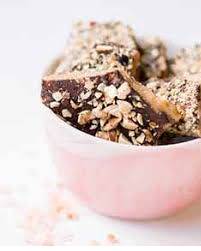
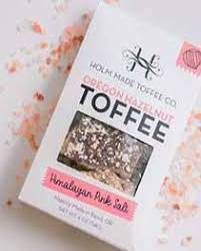
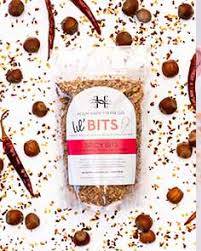
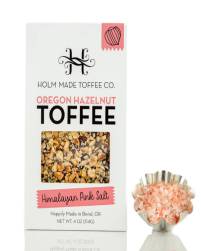
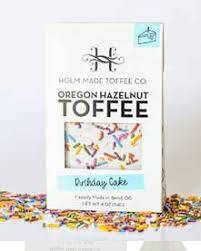
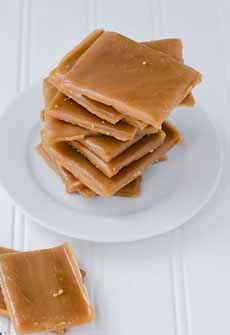
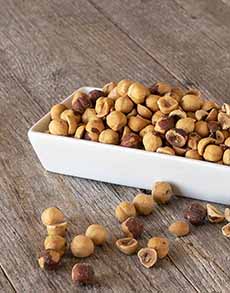
Our Top Pick Of The Week is Holm Made Toffee, a 30-year-old family enterprise that began as many artisan food companies do: by making toffee gifts for friends and family. As with most of these small businesses, the thundering enthusiasm from the recipients led them, ultimately, to a small commercial enterprise. As more people tasted Holm Made Toffee, demand grew and now, Randi Holm has created a family business positioned to be a legacy for her children and grandchildren. Before proceeding with the much-deserved praise for Holm Made Toffee, we must disclose that we characterize their confections as buttercrunch, not toffee. You’ll discover why below. With all respect to Holm Made and many other American “toffee” producers, it’s perhaps the biggest food misnomer in the U.S. THE NIBBLE does its best not to perpetuate the inaccuracy. The toffees focus on hazelnuts, a local crop in Oregon, where Holm is based. A whopping 99% of the U.S. hazelnut crop is produced in the Willamette Valley of Oregon. (There’s more about hazelnuts below.) The delicious flavors include: If this is too much choice for you, just order the six-pack of most popular flavors. We tasted six different flavors, and have just this to say: Each flavor is so special, that we’d skip the Original in favor of tasting as many flavors as we can. Cardamom? Espresso? Lavender? Spicy? Anything else? You can’t go wrong. In addition to pieces of toffee and gift boxes of toffee, there are Toffee Bits: little pieces you can use to garnish ice cream; rim cocktails, coffee, hot chocolate, even milk; roll to coat ice cream sandwiches, and so much more. For gifts, or to treat yourself, head to HolmMadeToffee.com. Your taste buds will thank you. > The year’s 69 chocolate holidays. Below: > Hazelnuts or filberts, and their history. > The history of buttercrunch. > The difference between toffee and buttercrunch. > The differences between brittle, buttercrunch, caramel, and toffee. When we were growing up, nut assortments and chocolate-covered nuts were called filberts. Why? It’s believed that the name was based in Catholicism. The feast day for France’s St. Philbert is August 20th, the same time that France’s hazelnut crop is ready to be harvested. Hence, a celebration of both. On the other hand, some historians believe that “filbert” derives from the German vollbart which means “full beard.” The husked shell of the hazelnut resembles a beard. Hazelnuts are also called cobnuts. Here’s more about it. Americans’ greatest consumption of hazelnuts is probably in the chocolate hazelnut spread, Nutella, and its imitators. The hazelnut originated in Asia Minor (Anatolia), a peninsula that comprises the major part of modern Turkey. Chinese manuscripts dating back 5,000 years discuss the nut. The Greeks and the Romans spread it all over Europe, where it has been grown from ancient times to the present. Many of today’s cultivated varieties were developed in the 19th century, following a great interest for hybrids [source]. Turkey remains the main producing country for hazelnuts worldwide, followed by Italy, Spain and the U.S. More hazelnut trivia: Botanically, most nuts are the seeds of a fruit, while true nuts—such as chestnuts, acorns and hazelnuts——are fruits in and of themselves [source]. Most food historians believe that the toffee we know today, made with caramelized sugar and butter, emerged by the early 19th century. It may have happened in England, one of the northern European dairying countries that plentiful supplies of butter. The Oxford English Dictionary first mentions the word “toffee” in 1825; and historians note that words can be in use for decades before they became widespread enough to be included in a dictionary. Since words were in use for some time before they were acknowledged in a dictionary, that’s what points to the early 1800s for the appearance of toffee. The origin of the word toffee is not certain. Some believe it to be a form of the word “tafia,” a West Indies rum distilled from molasses. Possibly, the toffee, which is still made with molasses by some producers in the England, could have been made from the molasses syrup skimmed off the liquor during distillation. (Modern toffee is made with caramelized sugar and butter.) But follow the trail after that, and the descriptions get confusing, as you’ll see in the next section, “The Difference.” Buttercrunch is distinctly American innovation built on English toffee traditions. As opposed to English toffee, buttercrunch as we know it was born way on the other side of the pond, in Tacoma, Washington. In 1923 by Harry Brown and J.C. Haley of the Brown & Haley candy company were experimenting with candy recipes when they created their almond buttercrunch confection. What made it innovative was the combination of: |
|
|
|
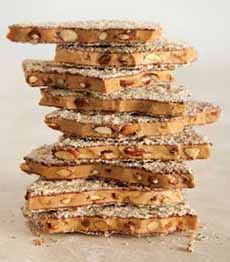
This was a departure from traditional, simpler English toffee recipe, which was essentially butter, sugar, and water* and didn’t include nuts or chocolate coating. “Roca” is Spanish for rock. It was inspired by the candy’s crunchy texture and the fact that almonds were often imported from Spain at the time. Almond Roca became widely popular, and buttercrunch became a popular homemade candy in American kitchens, especially during the holidays. Almond Roca got an extra boost during World War II, when it was shipped to American soldiers overseas, due to its long shelf life and durable packaging in airtight tins. This earned it the nickname, “The Candy That Travels.” As far as we’re concerned, it can travel every day from the tin to our lips. Almond Roca is now sold in more than 50 countries, and the buttercrunch style it popularized has been widely imitated by other commercial enterprises, artisan chocolatiers, and home cooks alike. While Almond Roca was the major brand name, the generic “buttercrunch” emerged to emphasizes both the rich butter content and the distinctive crunchy texture. It became a way to distinguish this new American style from plain English toffee. We don’t know who created the term buttercrunch, but it must have emerged either around the same time as a generic descriptor—possibly by competitors imitating the product, or even by Brown & Haley themselves in their marketing or product descriptions. Regional variations emerged, but the basic formula—butter toffee, chopped almonds, and chocolate on top—remained consistent. Almond Roca remains the most famous commercial brand, while artisan chocolatiers make their own versions with different nuts and different types of chocolate coating. And home bakers still make their own versions, creating new combinations that you can see in a Google search. There are two National Buttercrunch Days: National Buttercrunch Day on January 20th and National Almond Buttercrunch Day on June 29th. THE DIFFERENCE BETWEEN TOFFEE & BUTTERCRUNCH We hate to be repetitive, but this is an important distinction. Most Americans erroneously refer to buttercrunch as toffee. Buttercrunch is a specific type of toffee—toffee with nuts and chocolate. The innovation was to dress up English toffee with almonds and chocolate coating. The generous amounts of chopped almonds (both mixed into the toffee and coating it) along with the chocolate cloak created something distinctively different from traditional British toffee. If it has nuts and chocolate, it’s buttercrunch. As noted above, English toffee has neither. And that’s why Holm Made Toffee, reviewed above, is actually buttercrunch. And sometimes, as with Holm Made Toffee, the toffee is flavored with espresso, lavender, spices, etc. You won’t find that in the U.K. Or perhaps because “toffee” and the association with Britain sounds more elegant. Alas, there is no legal definition (here’s what exists from the USDA). But now, you’re an educated consumer: You know the difference. But does it really make a difference whether it’s mistakenly called toffee? Yes. Who wants to be mistaken? Aren’t people entitled to call things what they want? No. Feel free to point out to the manufacturer that if, in fact, there were hard toffee on the apple, you wouldn’t be able to bite into it. It’s much harder than the hardened sugar syrup coating on candy apples. As you’ll see below: If it’s soft, it’s caramel. These candies are related, but differ in hardness and other features. Caramels are the softest of this group of candies, butterscotch is harder and toffee is the hardest. This is based on both ingredients and at how high a temperature the ingredients are boiled. Here’s a comparison: *The first well-known brand was Almond Roca, launched in 1923 by Brown & Hale of Tacoma, Washington. Roca means “rock” in Spanish. In those days, most almonds came from Spain, and the name suited the crunchy (“rock-like”)center. The name may have been coined by William Loft, who began a confectionery in 1860 and sold almond-coated toffee (alas, the business closed in the 1990s). †Some American producers may in fact make English-style toffee; but most of what we’ve seen called English toffee, isn’t. ‡The full name of this popular newsstand candy bar is Heath Milk Chocolate English Toffee Bar. It’s made of toffee, almonds and milk chocolate. It was first made by the Heath brothers in Robison, Illinois in 1928 (the brand is now owned by the Hershey Corporation). English toffee and American buttercrunch can diverge with the type of sugar type. English toffee is made with brown or white sugar, or with molasses or treacle. Buttercrunch is made with white granulated sugar (table sugar). Brown sugar creates a deeper, more caramelized flavor and a slightly softer, chewier texture. Molasses and treacle add deeper flavor notes and a significantly deeper, darker color. |
||
|
CHECK OUT WHAT’S HAPPENING ON OUR HOME PAGE, THENIBBLE.COM. |
||