FOOD 101: Bao, Filled Steamed Buns From China
|
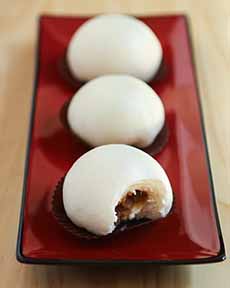
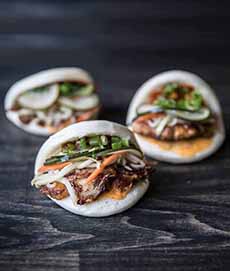
August 22nd is National Bao Day, a relatively newly-established holiday reflecting the increased availability of bao in the U.S. Baozi, called bao for short (and pronounced like bow-wow), is a traditional Chinese steamed filled bun (photo #1). Bao are served at restaurants as appetizers, made at home, and sold by street vendors. You’ll find them on dim sum menus. While Americans may think of them as dumplings, bao are not made with a pasta/noodle dough but with a soft yeasty white bread made from wheat dough. Steamed in bamboo baskets and served warm, they are a real comfort food. > There are links to recipes below. > The year’s Chinese food holidays. Meats or vegetables are the most common fillings, and you’ll also find sweet bao, filled with custard, chocolate, red beans or other sweet. And there are different presentation styles, too. Chinese immigration brought bao to other Pacific Rim countries, each putting their own touch onto fillings and shapes (source). While bao can be eaten at any meal, and are a go-to breakfast food, in the U.S. bao have gotten the “American breakfast treatment.” Wow Bao in Chicago sells bacon, egg and cheddar bao; scrambled eggs bao with mushrooms and spinach; and spicy sausage and egg bao. We’re waiting for the PB&J bao for lunch. Check out the many different types of bao. But be warned: They will make you hungry. According to legend, baozi was invented by the Chinese military strategist and chancellor of the state of Shu Han, Zhuge Liang, during a military campaign in the third century C.E. In actuality, bao were derived from mantou, steamed buns without a filling, that originated in the north of China. Mantou are thought to have originated in the Qin State of the Zhou Dynasty during the reign of King Zhaoxiang (307 B.C.E.-250 B.C.E.). Along with other wheat-based foods like noodles, mantou and bao became popular during the Han Dynasty (206 B.C.E.-206 C.E.) Originally both styles—plain and filled—were called mantou. But centuries later, by the Northern Song dynasty (960-1127 C.E.), the term bao or baozi was used to differentiate the buns with filling (source). But bao didn’t stay in China. It is believed that the Mongols brought bao to Central and East Asia, about the beginning of the Yuan Dynasty in the 13th century. Thanks to them, filled dumplings emerged in the cuisines of Persia, Turkey and Uzbekistan, among other cuisines. With the arrival of more Chinese immigrants to the U.S. in the 1970s and 1980s, Chinese cuisine expanded beyond the Americanized Cantonese foods that were previously available. Ask for bao the next time you visit a Chinese restaurant. It will most likely be BBQ pork, but you may find chicken bao, seafood bao, and those delicious dessert bao filled with sweet custard (recipe below). If you want to try bao without investing a lot of time, use store-bought biscuit dough. They won’t taste exactly the same, but will give you an idea of what from-scratch will be like. CHECK OUT WHAT’S HAPPENING ON OUR HOME PAGE, THENIBBLE.COM. |
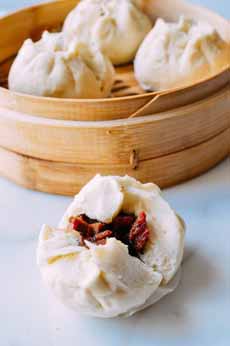 [1] Try your hand at making bao. Here’s the recipe for these steamed BBQ pork buns, called char siu bao (photo © The Woks Of Life).
|
|
|
|
||