|
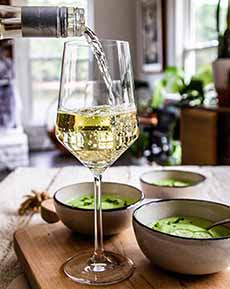
[1] A California Vermentino from Rodney Strong Vineyards served with chilled cucumber soup (photo © California Wine Institute).

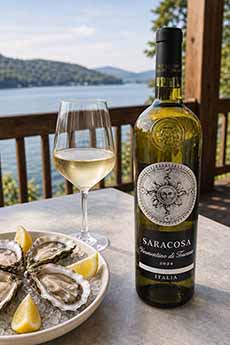
[2] A Tuscan Vermentino with oysters or any shellfish (photo © The Nibble).
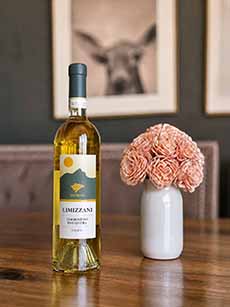
[3] Surrau “Limizzani” Vermentino di Gallura DOCG is a classic, with vibrant citrus, sea salt minerality†, and white flower aromas. From the top growing area in the top Vermentino-producing region, Sardinia, it typically costs around $17 to $20 per bottle (photo © Vintage 38).
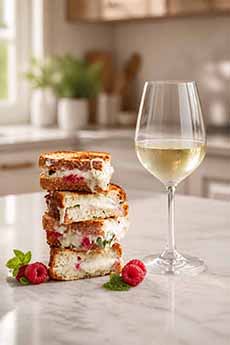
[4] Vermentino is a good “sandwich wine” for cheese, veggie, poultry, tuna, and other lighter fillings. It’s shown here with our mozzarella-raspberry-basil grilled cheese recipe. The saltiness† of the wine balances the mozzarella, while the herbal notes sing with the fresh basil (photo © The Nibble).
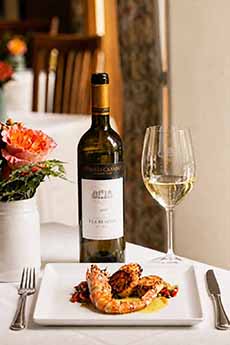
[5] One of America’s finest Vermentinos is made at Barboursville Vineyards in Virginia, just north of Charlottesville. The shellfish pairing is spot-on (photo © Barboursville Vineyards).
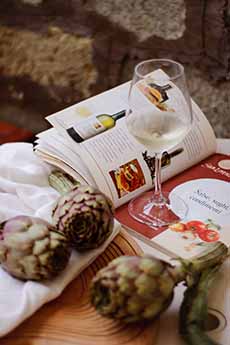
[6] Artichokes are famously difficult to pair with wine, as are asparagus. Vermentino is one that works (photo © Nati | Pexels).
[7] Miraval, a highly-regarded rosé from Southern France that’s co-owned by actor Brad Pitt, includes Vermentino in its blend. In France, the grape is called Rolle (photo © Miraval).
[8] Asparagus, which like artichokes is difficult to pair with wine, also enjoys being matched with Vermentino. In this recipe, pesto and goat cheese, two other Vermentino-friendly flavors, round out the dish. Here’s the recipe (photo © California Wine Institute).
|
|
August 4th is National White Wine Day, and we’ve got one that’s possibly new to you: Vermentino.
Vermentino is an Italian white grape that creates light-bodied, aromatic, citrusy wines known for their thirst-quenching acidity.
The grapes are primarily grown in Mediterranean coastal regions, and are famously “salty†” due to the sea breezes that waft over the vineyards.
Vermentino is so little-known in the U.S. that we didn’t even include it on our list of 22 white wines to try.
According to California’s 2020 Grape Acreage Report, there are only 123 acres of Vermentino planted in California, compared to a whopping 90,684 acres for Chardonnay, the most popular white wine grape.
Even in its homeland of Italy, Vermentino was long considered a simple, high-yield table wine consumed locally by fishermen.
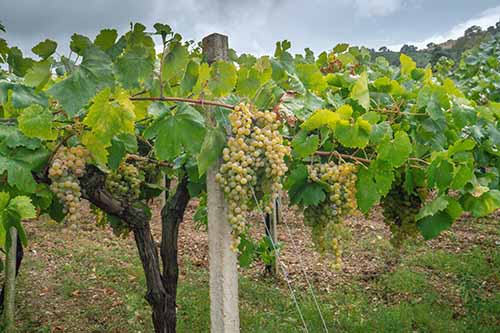
[9] A Vermentino vineyard from Siddùra, an award winner from the finest region in Sardinia: Gallura DOCG (photo © Wine And Travel Italy).
A New Life For Vermentino
Starting in the 1980s, winemakers began experimenting with temperature-controlled fermentation and lees aging (leaving the wine on the yeast cells, or lees††).
This transformed Vermentino from a simple porch wine** into a sophisticated white that can compete with Sauvignon Blanc or Albariño.
And because consumers are always looking for new-to-them, affordable wines, Vermentino has recently become an “it” wine.
Bright, crisp, and full of personality, with flavors of lime, green apple and a hint of white peach, it’s approachable, food-friendly and perfect for everything from casual weeknight dinners to more festive fare.
If you’re a fan of Albariño, Sauvignon Blanc, Soave, or Australian Semillon, give Vermentino a try.
Below:
> What is Vermentino?
> Primary growing areas.
> California vs. European Vermentino.
> Aging potential.
> Food pairings with Vermentino.
> The history of Vermentino.
Elsewhere on The Nibble:
> What is Albarino?
> A brief history of wine.
> The year’s 22+ white wine holidays.
> 22 white wines you should know.
> The year’s 25 red wine holidays.
1. WHAT IS VERMENTINO?
Most Vermentino is made to be drunk young and fresh, emphasizing its notes of citrus, green apple, white flowers, herbas, acidity, and sometimes that famous, lightly saline finish.
Since quite a few vineyards are on the coast, the sea breezes confer a distinctive saline/mineral character—especially wines from Sardinia and Liguria.
This doesn’t mean the wine tastes salty. See the †footnote below for what salty/saline means in winespeak.
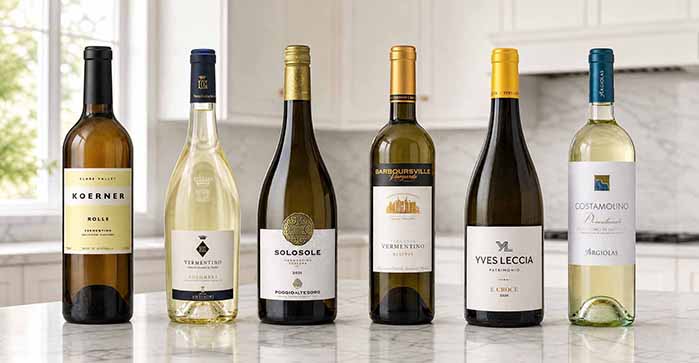
[10] Vermentino is made around the world. Here, Koerner Rolle (Australia), Marchesi Antinori Vermentino Bolgheri (Tuscany); Poggio al Tesoro, “Solosole” (Tuscany); Barboursville Vineyards Vermentino Reserve (Virginia USA); Yves Leccia, “E Croce” Patrimonio Blanc (Corsica, France); Argiolias, Costamolinio, (Sardinia). Read the reviews at Imbibe Magazine (photo via Imbibe).
2. Primary Growing Areas
While the principal producing country Italy, here are its compatriots in Vermentino, from largest to smallest production:
Italy. Important regions include Sardinia, especially Vermentino di Gallura from Liguria, where the wine may be called Pigato, Tuscany (particularly along the coastal Maremma and in Bolgheri), and Piedmont, where it’s often called Favorita because it was the favorite table grape of the local nobility in the 18th and 19th centuries. It was prized for its large, flavorful grapes for eating, before it was widely used for winemaking.
France. It’s grown in southern France (Provence, Languedoc, Roussillon) and Corsica. It’s commonly called Rolle in France.
Spain. Grown on a smaller scale, including Mediterranean-facing areas, it may be bottled under local or alternative names.
United States. A smaller but growing producer, particularly in California, where warm coastal and Mediterranean-like sites suit the grape.
Australia. Also a small but increasing producer, especially in warmer, drier wine regions.
3. Californian Vs. European Vermentino
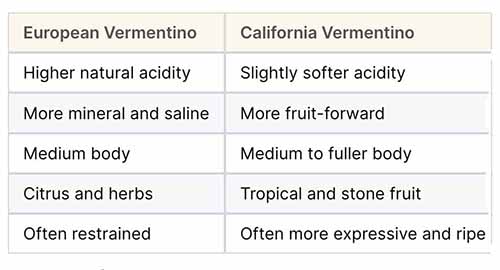
European and California Vermentino are made from the same grape, but they often express themselves quite differently because of climate, soils, and winemaking philosophy.
California Vermentino is typically dry, with refreshing acidity and flavors like grapefruit, green apple, lime, nectarine or white peach, along with subtle hints of herb and minerals. California’s warmer sunshine produces riper fruit. FIX THIS apricot, melon, Meyer lemon, pear, and white peach; warmer areas can show mango or pineapple. The herbal notes are usually softer than Europeans, and the wine often has a rounder mouthfeel.
Surprisingly, the two of the top-four-rated American Vermetinos are not from California. Check out Barboursville Vineyards Vermentino Reserve (Virginia), RYME Cellars “Hers” and “His” Vermentino (California, Sonoma County), Raffaldini Vineyards Vermentino (North Carolina), and Tablas Creek Vineyard Vermentino (California, Paso Robles).
The classic profile of European Vermentino (Italy & Southern France) emphasizes freshness and place. Based on the particular terroir, the wines will have notes of citrus (lemon, lime, grapefruit), fresh herbs (sage, thyme, fennel), green apple, white peach, and almond on the finish.
Some Europeans to seek out: Château Barbanau, L’Instant Blanc (Provence, France), Contini Tyrsos, Vermentino di Sardegna DOC (Sardinia), U San Muletto “Irrésistible Blanc” (Corsica, France), Vigne Surrau 2015 Branu, Vermentino di Gallura DOCG (Sardinia, Italy). Plus, from Down Under, Berton Vineyards, Metal Label Vermentino (Riverina, New South Wales, Australia).
[11] A quick comparison of flavor profiles based on the terroirs of Europe and California (Abacus chart).
4. Aging Potential
Everyday, unoaked Vermentino should be drink within 1–3 years of the vintage. Better producers make more concentrated wines that are often enjoyable for 3–5 years.
Premium, structured wines—especially some Vermentino di Gallura, late-harvested, lees-aged, or partially oak-aged bottlings—may develop well for 5–8 years, and occasionally longer.
With age, the wine generally loses some of its bright citrus and floral freshness. It may become softer and more rounded, with notes of honey, dried herbs, nuts, or preserved fruit.
But eventually, as with all wines, oxidation and declining acidity make it taste flat or dull. The exact window depends on the producer, vintage, alcohol and acidity, winemaking, closure, and storage conditions.
As with all wines, store the bottles in cool, dark place at a fairly constant temperature. Heat is much more damaging than simply keeping the bottle an extra year.
|
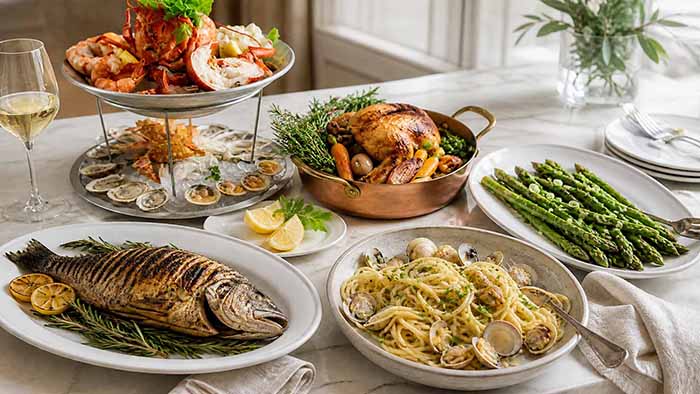
[12] A buffet for Vermentino. Top: plateau de fruits de mer, herb-roasted chicken. Bottom row: roasted branzino, linguine alla vongole (clam sauce), asparagus vinaigrette (photo © The Nibble).
4. FOOD PAIRINGS WITH VERMENTINO
Bright, zesty flavors make Vermentino a great choice for everything from casual weeknight dinners to fancier dinners to parties.
While the wine is light and refreshing for summer, its balance of fruit, acidity and subtle herbal notes makes it an ideal wine for exploring new pairings year-round.
Seafood & Poultry
Grilled or roasted fish. Branzino/sea bass and halibut are popular, along with other white fish in light preparations.
Raw fish. From oysters on the half shell and plateau de fruits de mer to sushi, sashimi, salmon or tuna tartares, and tiradito.
Shellfish. Crab, lobster, scallops, shrimp.
Fried calamari. Sautéed squid also works, or pasta with squid in an olive oil-based sauce.
Chicken. Herb-roasted chicken, chicken salad, chicken tacos.
Other Mains
Grain bowls.
Pasta. Use lighter sauces such as pesto alla Genovese or olive oil-based sauces (aglio e olio [garlic and oil], herb-infused oil, anchovy sauteed in olive oil with fresh lemon zest and juice), nut-infused oils (toasted pine nuts or crushed walnuts sautéed in olive oil), white wine and clam sauce.
Cheeses
Fresh cheeses. Burrata, goat cheese (chèvre), mozzarella, ricotta.
Semihard cheeses. Feta, ricotta salata, pecorino sardo.
Cheese board accompaniments. Castelvetrano olives marinated in olive oil, lemon peel, and fennel seeds; dried apricots or dehydrated watermelon; focaccia with rosemary; honey; lemon curd; Marcona almonds.
Vegetables
Asparagus. Steamed, sautéed, or vinaigrette.
Artichokes. Steamed or fried.
Arugula salad. Add other bitter greens: endive, radicchio, watercress.
Fennel. Serve it cooked or raw in a salad.
Green beans. Garnish them with lemon zest, or serve them raw in a salad with lemon vinaigrette.
Spring mix salad. Add grapefruit, mandarin, or orange segments and a citrus vinaigrette.
Zucchini. Fried zucchini blossoms stuffed with goat cheese or ricotta are a classic pairing; roasted or sautéed zucchini works, too.
Check out this recipe, created to pair with Vermentino:
Carrot Salad with Green Grapes, Coriander and Ricotta Salata.
Dessert
Pairing Vermentino with dessert is tricky because the wine is bone-dry. Served with something sugary, the wine will taste sour and thin. Here are some desserts that do work.
Almond biscotti or cantucci. In Italy, it’s common to finish a meal with a dry white and some nut-based cookies.
Lemon or citron tart.. The tartness of the lemon curd aligns with the wine’s acidity.
Olive oil cake. A moist, savory olive oil cake—ideally with a bit of basil, rosemary, or orange zest—is the best choice in the cake category.
Pignoli cookies or pine nut brittle. The resinous, piney flavor of pine nuts matches the Mediterranean “scrubland” (maquis) aromas of the wine.
Ricotta with honey and thyme. A bowl of whipped fresh ricotta drizzled with honey and a sprinkle of fresh thyme is a sophisticated way to finish a Vermentino-themed meal. The honey provides just enough sweetness to keep the wine from tasting sharp.
5. THE HISTORY OF VERMENTINO
Vermentino is a grape of uncertain origins. For a long time, it was believed that Vermentino originated in Aragon* in northeastern Spain, and traveled through Corsica and Sardinia to Italy.
However, following recent DNA testing, most ampelographers (grape historians) now believe it is likely indigenous to Italy, specifically the coastal regions of the Tyrrhenian Sea, the body of water that spans western coast of Italy eastward to and the islands of Corsica, Sardinia, and Sicily.
To add to the confusion, this genetic testing, in the late 20th century, proved that Vermentino and three other grapes are the same grape variety: Vermentino (Tuscany and Sardinia, Italy), Favorita (Piedmont, Italy), Pigato (Liguria, Italy), and Rolle (Provence and Languedoc, France—nobody knows why it’s called Rolle, an old Provençal word related to “round” and perhaps referring to the shape of the grapes).
These different regions developed their own names for it, and it wasn’t until DNA testing became available that the industry realized these four grapes were one and the same.
In The Beginning
Unlike grapes such as Chardonnay or Riesling, there isn’t a well-documented origin story for Vermentino. While it’s possible that Vermentino is older, we can document that it has been cultivated in Europe for at least 600–700 years.
Historians and grape geneticists have pieced together this timeline:
13th–14th centuries. The earliest reliable records place Vermentino in the western Mediterranean, particularly in Corsica and northwestern Italy. As with most uses from the past, it was likely already being cultivated before it appeared in written records.
14th–15th centuries. The grape spread throughout Liguria, Sardinia, and Tuscany, aided by maritime trade under the Republic of Genoa and later the Crown of Aragon. It likely arrived there in the Late Middle Ages or during the Aragonese rule (1323 to 1479).
16th century. Vermentino became well established in Sardinia, where it eventually became one of the island’s signature white grapes.
17th–18th centuries. Cultivation expanded into southern France (where the grape became known as Rolle) and inland into the Piedmont area of Italy (where it is called Favorita).
20th century. Vermentino was largely regarded as a local, everyday wine until quality-focused producers began elevating its reputation in the 1970s and 1980s.
21st century. Vermentino gained international recognition and is now planted in California, Australia, South Africa, and other wine regions.
_________________
*Aragon is an autonomous community, Spain’s highest-level political and administrative division, comparable to a U.S. state or Canadian province.
**Porch wine is a casual term for light, crisp, and refreshing wines, chilled for relaxed, warm-weather sipping (e.g. on the porch). These easy-drinking wines are highly affordable, with bright fruit flavors.
†A “salty” or “saline” wine doesn’t suggesting it tastes like seawater. Rather, it’s a refined sensory experience that functions more like a seasoning than a primary flavor. It’s almost always a slight hint or a subtle sensation rather than the literal flavor of table salt. It’s often compared to the smell of a sea breeze. Similar to how a pinch of salt on a sliced tomato makes the tomato taste more like flavorful, the salinity in Vermentino heightens the perception of its citrus and herbal notes.
††Lees are the sedimentary deposits of dead yeast cells and grape particles left behind after fermentation. Winemakers often let wine age on their lees to enhance complexity, soften tannins, and add rich, creamy textures and toasted flavors like brioche or almond to the finished wine.
CHECK OUT WHAT’S HAPPENING ON OUR HOME PAGE, THENIBBLE.COM.
|