The Income Tax Cocktail: A Recipe For April 15th
|
|
Since it is Tax Day, the most thematic choice is undoubtedly the Income Tax Cocktail. It’s a classic Pre-Prohibition drink that feels like a more sophisticated, slightly “taxing” twist on a Bronx Cocktail. The addition of both sweet and dry vermouth—along with a healthy dose of bitters—perfectly captures that bittersweet feeling of finishing your returns—not to mention the bitter sting of the payment. Below: > The Income Tax Cocktail recipe. > The history of the Income Tax cocktail. Elsewhere on The Nibble: > The year’s 100+ cocktail and spirit holidays. Ingredients Per Drink 2. GARNISH with an orange twist. | |
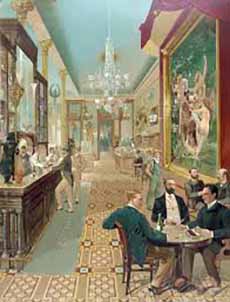
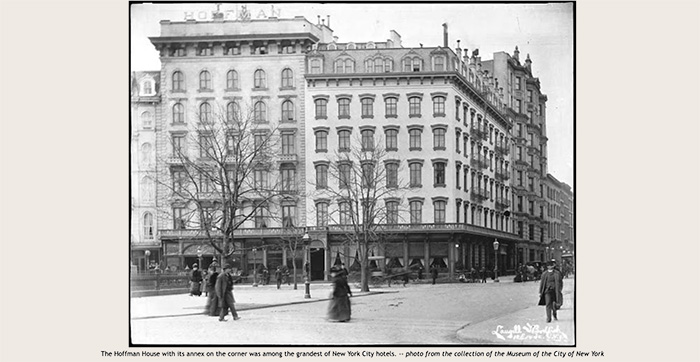
 [3] Ingredients for the Income Tax Cocktail (Abacus Photo). THE HISTORY OF THE INCOME TAX COCKTAIL The inventor of the Income Tax Cocktail is, as with many classic cocktails, lost to time. The drink first appeared in the early 20th century, along with federal income tax (1913). It may have been created at the Hoffman House hotel in New York City. Located on the then-fashionable Madison Square at Broadway between 24th and 25th Streets, the bar was known for inventing cocktails. While there is no record anywhere of who invented the Income Tax Cocktail, Hoffman House is a good guess. The Hoffman House bar was a known meeting place for political figures and financiers—the exact people who would have been most stung by the new income tax and in need of liquid comfoert. A big promoter of the new cocktail was from Charlie Morrison, a legendary bartender at the Hoffman House. The bar of the Hoffman House hotel enjoyed an international reputation as the city’s finest drinking establishment between 1864 and 1911. Here’s more about it.
Before 1861, the U.S. government was funded primarily by customs duties on imported goods and excise taxes on products like liquor and tobacco. To fund the enormous cost of the Civil War, President Abraham Lincoln signed the Revenue Act of 1861, America’s first federal income tax. It was a flat 3% tax on incomes over $800 (which would be roughly $16,000 to $21,000 today). This first income tax was temporary and was repealed in 1872 once the war debt was manageable. Some 30 years later, the government under Grover Cleveland tried to institute an income tax with the Wilson-Gorman Tariff Act of 1894. The attempt was immediately challenged and led to a Supreme Court ruling that it was unconstitutional because it wasn’t apportioned among the states based on their populations, as the Constitution required. And then came… Realizing that they needed to formally amend the Constitution to bypass this ruling, Congress proposed the 16th Amendment. It was ratified on February 3, 1913, explicitly giving Congress the power to collect taxes on income “from whatever source derived,” regardless of a state’s population. This was the Revenue Act of 1913. Congress lost no time in establishing the income tax system we recognize today, including a progressive tax structure where higher earners paid higher percentages. The very first Form 1040 was released for the 1913 tax year. It was a single page, and a family with an income of $4,000 (a high income*) paid only about $10 in tax, around $335 in today’s money. Before 1943, taxpayers would calculate and pay their total annual tax bill directly to the IRS in one lump sum on March 1st†. But the enormous cost of World War II required massive spending, and the government couldn’t wait until the filing day to get the cash. The Current Tax Payment Act of 1943 introduced the withholding system we use today. Taxes were automatically deducted from every person’s paycheck, turning the annual income tax from a lump sum payment into a per-paycheck deduction that maximized government cash flow. ________________ †The deadline has shifted over time, starting on March 1 in 1913, moving to March 15 in 1918, and finally settling on April 15 in 1955 to give taxpayers more time. If the 15th falls on a weekend or holiday, the deadline moves to the next business day. CHECK OUT WHAT’S HAPPENING ON OUR HOME PAGE, THENIBBLE.COM. |
||