Make A Mango Cobbler: A Recipe For Any Time Of The Year
|
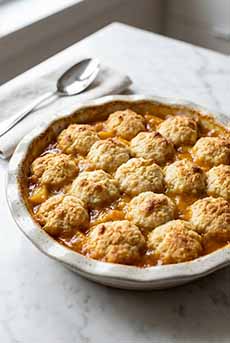
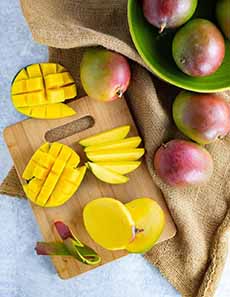
April 13th is National Peach Cobbler Day. Why would someone place a peach holiday in a month devoid of fresh peaches? We have the answer below . And we have a substitute recipe for today: You can find fresh mangoes year-round*, and they make a delicious cobbler. The year’s 4 mango holidays: > The recipe for mango cobbler. > Why National Peach Cobbler Day is held in April. Elsewhere on The Nibble: > Classic peach cobbler recipe. > The different types of pies and pastries: a photo glossary. Igredients 1. COMBINE the mangoes, sugar and cinnamon in a large saucepan. Cook and stir until the mixture comes to a boil. 2. COMBINE the cornstarch and water until smooth; stir into the pan. Cook and stir for 2 minutes or until thickened. 3. TRANSFER to a greased 11 x 7-inch baking dish. Dot the top with butter. 4. MAKE the topping. In a small bowl, combine the flour and sugar. Cut in the shortening until the mixture resembles coarse crumbs. Stir in the milk; mix well. 5. DROP by tablespoonfuls onto the hot fruit. Bake, uncovered, at 400°F for 20-25 minutes or until bubbly and golden brown. Serve warm. At first glance (and at second glance, too), it seems dumb—OK, strange—to hold a peach holiday in a month when no peaches are available in most parts of the country until the “stone fruit” months of June through August. When we drilled down to discover that the choice of a date in April was completely intentional, and has everything to do with industry marketing rather than the harvest cycle. |
|
|
|
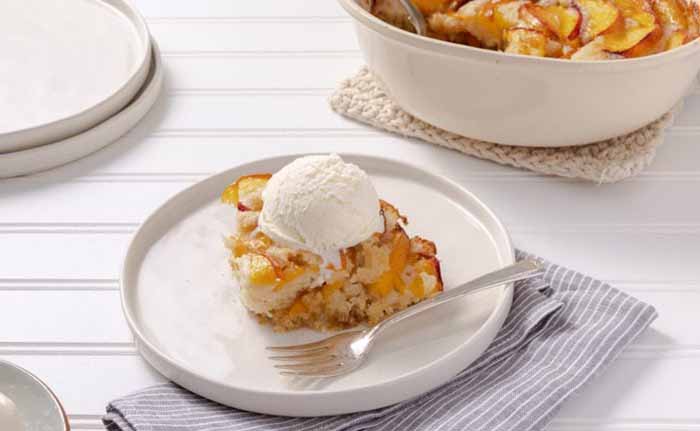
National Peach Cobbler Day was created by the Georgia Peach Council in the 1950s. Their goal was specifically to promote canned peaches. By placing the holiday in April, they encouraged people to buy and use inventory from the previous year’s harvest during a time when fresh fruit was unavailable. According to sources, “This strategy proved that a great cobbler doesn’t actually require fresh peaches; high-quality canned peaches, which are often packed at the peak of ripeness, can produce an excellent result year-round.” According to us, canned peaches are no substitute for fresh or even frozen peaches. However, this was the 1950s, when the canned crop of convenience foods had American housewives making everything with canned fruit, canned soup concentrates,
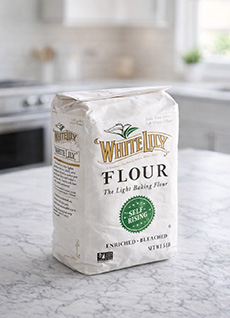
________________ †The primary reason to use self-rising flour instead of all-purpose flour is for convenience and consistency, particularly in recipes like biscuits, pancakes, and cobbler toppings. Self-rising flour is essentially all-purpose flour that has already been premixed with baking powder and salt (most brands use a ratio of about 1 ½ teaspoons of baking powder and ½ teaspoon of salt for every 1 cup of flour). This saves you two steps and ensures that the leavening agent is perfectly distributed throughout the flour, which helps prevent clumping/uneven rising in the dough. Secondly, in the U.S., most self-rising flours (especially Southern brands like White Lily or Martha White) are made from soft winter wheat, which has a lower protein content than standard all-purpose flour. Lower protein means less gluten formation. This results in a softer, fluffier, and more tender crumb. This is why self-rising flour is the “gold standard” for Southern-style biscuits or delicate cobbler drops (all-purpose flour can sometimes make those same recipes slightly tougher/breadier. CHECK OUT WHAT’S HAPPENING ON OUR HOME PAGE, THENIBBLE.COM.
|
||