Pickle Canoes (Stuffed Pickles) & Drinks For National Pickle Day
|
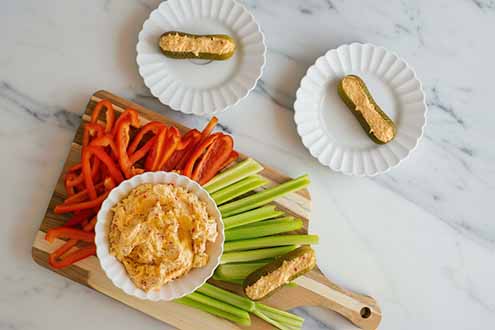
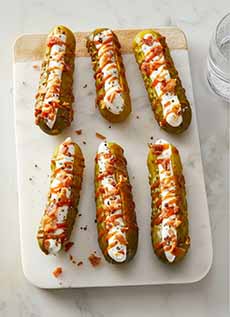
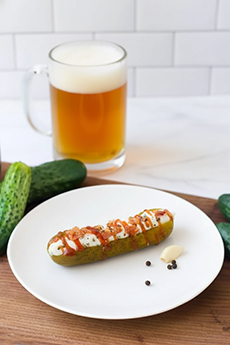
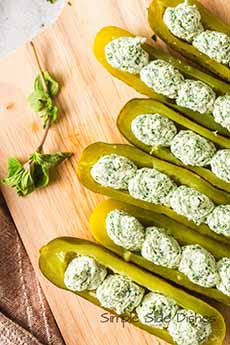
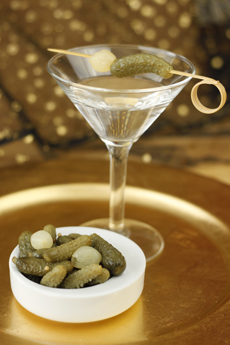
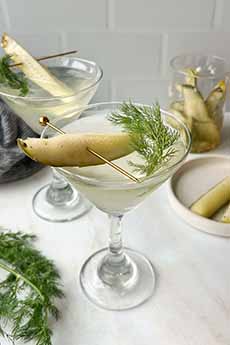
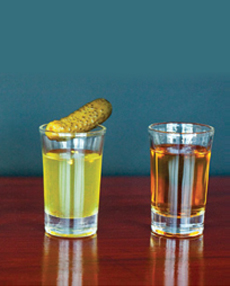
Here’s some fun for National Pickle Day, coming up on November 14th: Pickle Canoes, a treat for kinds and for beer drinkers — but also we’ve got pickle cocktails as well as wine and soft drink pairings. The fun follows below. > The history and science of pickling. Elsewhere on The Nibble: > All the pickle types, a photo glossary. > The year’s 9 pickle holidays. > How to make quick pickled vegetables and fruits in an hour. > Pickled grapes recipe—a great garnish. > More pickle fun: Make a pickle bouquet. Thanks to Taste Of Home for the recipe. It was made using ingredients that were already in the fridge. We elevated the recipe by using barrel-fermented dill pickles from the farmers market, made onion dip the old-fashioned way with a pint of sour cream and a packet of Lipton Onion Soup. Instead of the barbecue sauce, we used two other toppings: hot honey and ranch dressing. We got cute and put a drop of green food color in the ranch dressing, to provide a color contrast with the sour cream. Instead of onion dip, other dips go nicely and we’ve suggested alternatives below. 1. CUT two 1/4 slices into each pickle, creating a “V” shape. Scoop out the middle and pat the insides with paper towels before filling. 2. SPOON or pipe chive and onion dip into the middles of each. 3. DRIZZLE with barbecue sauce; sprinkle with bacon. Season with fresh-cracked pepper to taste. You need a filling that holds its shape and won’t slide out when someone takes a bite. Here are our three top picks, and runners-up. Beer Beer is the most natural pairing with dill pickles. Dill pickles are tricky with wine because of their intense acidity, salt, and flavor. But there are wines that can handle all three of these challenges: Pickle brine in cocktails adds salty, tangy flavor complexity, and also electrolytes, which some claim helps with hangovers. Our pickled grapes recipe makes an excellent cocktail garnish for any of these (and for any Martini that isn’t flavored with fruit, coffee, etc.). Pickling works through fermentation: either using salt brine to encourage beneficial bacteria growth, or through the acidity of vinegar. Both methods create environments where harmful bacteria can’t survive, preserving vegetables for months or even years. Pickling is one of humanity’s oldest food preservation methods, dating back more than 4,000 years. Some of the earliest evidence of pickling is from the Mesopotamians, around 2400 B.C.E.: preserving cucumbers brought from India. Pickling became widespread because it solved the critical problem of preserving food before refrigeration. |
|
|
|
The technique traveled along trade routes, with cucumbers from India becoming particularly popular for pickling throughout Europe and Asia. European colonists brought pickling to America, where it became essential for surviving winters. By the 1800s, commercial pickle production began in earnest. H.J. Heinz began selling pickles in 1876, and the pickle became an American staple. Immigrants, particularly from Eastern Europe, brought dill pickle traditions that became iconic in Jewish delicatessens. Pickles remain beloved worldwide, with Americans consuming about 9 pounds per person annually! CHECK OUT WHAT’S HAPPENING ON OUR HOME PAGE, THENIBBLE.COM. |
||