For National Sandwich Day Lampredotto, Italy’s Best Sandwich
|
|
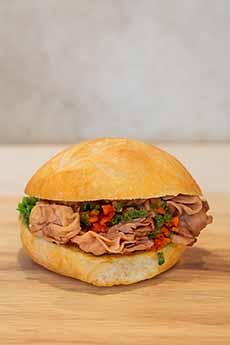
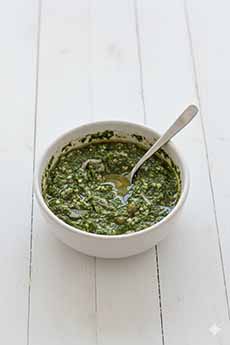
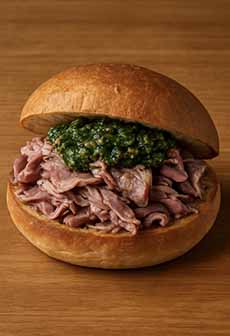
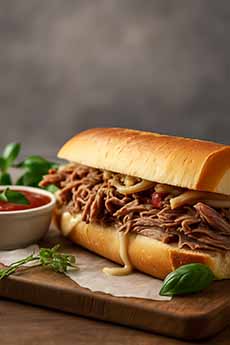
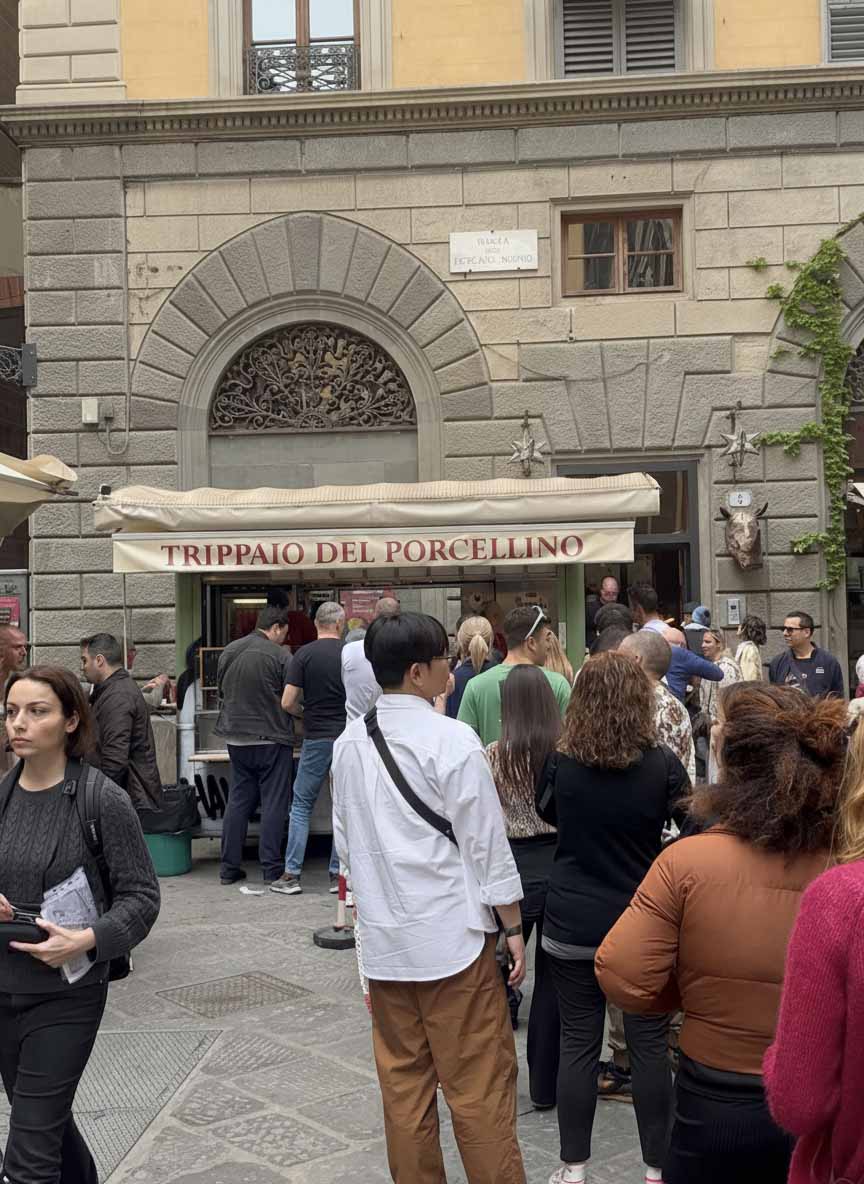
November 3rd was National Sandwich Day. Each year on that day, we suggest that everyone to try a sandwich they’ve never had before, and we follow our own advice. A while back in a chat forum, someone asked, “What is the best Italian sandwich?” Here is the answer from Roscoe Giuriati, a former executive chef who now lives and works in Umbria and Tuscany. “As a Roman, it hurts me to even say this, but the best sandwich in Italy is, without question or debate, the lampredotto in Florence,” he says. “This sandwich is legendary, and while which sandwich maker makes the best is up for debate, my favorite is at Il Porcellino, a 2 minute walk from Piazza Della Signoria.” So, what is lampredotto? Well… It’s the fourth stomach of the cow (the abomasum—image #5 below) that has been cooked three times: the first time to clean it, the second time to make it tender. The third time: On the day of service, it’s simmered in a flavorful broth (onions, celery, carrots, garlic, herbs, and tomatoes). When a customer orders a sandwich, the meat is removed from the broth and is rough chopped, placed into a hollowed out soft roll, topped with a house green sauce (salsa verde). The salsa verde—more like chimichurri than Mexican salsa verde—is made with olive oil, parsley, “secret” ingredients, and an optional dash of spicy oil. Then the whole thing is dunked back into the broth. The meat is incredibly tender and has textural differences that vary from the soft to the dense, with richness from the surrounding glandular tissue and fat. “I personally judge any person who isn’t willing to share a Lampredotto lunch with me,” says Roscoe, “and I see it as a character flaw if you don’t enjoy it.” Poor people used every part of the animal, including those parts that were discarded. If the idea of “stomach” isn’t pleasing to you, think of it as “beef belly.” Today, lampredotto, along with tripe, centopelle (omasum, the third stomach), and other cuts of the quinto quarto*, is enjoying a renaissance. Renowned chefs are rediscovering and treasure this fare of the lower classes. In Florence, there are street vendors across the city, and long lines of customers. By the way, the name “lampredotto” has nothing to do with a cow, but a primitive eel-like fish called lampreda, once abundant in Italian rivers (especially the Arno, in Tuscany). Lampreda was a royal delicacy, something that only the wealthiest Florentines could afford. A long time ago, someone decided that when cooked, the the lower part of the lampredotto (called the gala, the lower, darker, layered part), resembles the wide, fleshy, and somewhat puckered mouth of the lampreda—an eel-like, jawless fish. They coined the name lampredotto. The recipe ingredients and links follow. Elsewhere on The Nibble: > The different types of sandwiches: a photo glossary. > The history of the sandwich. > The year’s 25+ sandwich holidays. Since genuine lampredotto (abomasum) is extremely difficult, if not impossible, to find outside of Florence. Here are the best substitutes that can yield similar texture and flavor absorption, the meat slow-cooked until it’s very tender and absorbs the flavors of the broth. |
|
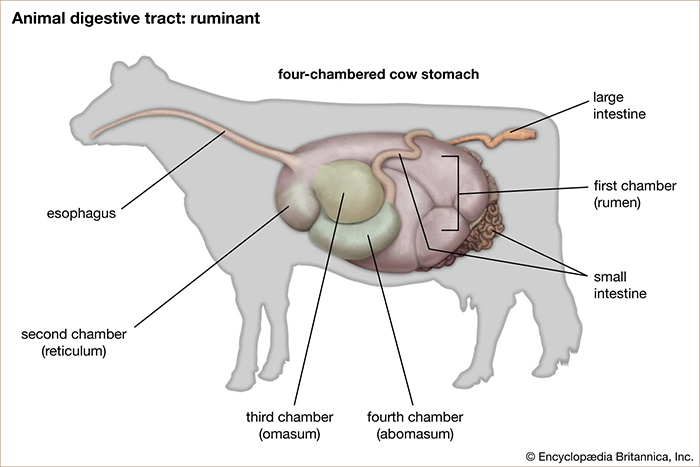 [6] The source of the meat. Here’s more about it (photo © Encyclopedia Brittanica). ________________ *The quinto quarto (fifth quarter) is a term used in Italian cuisine—particularly in Roman and Tuscan traditions—that refers to the edible parts of an animal that are not considered prime cuts. These typically include offal such as brain, intestine, tongue, tripe, and other internal organs. Historically, these cuts were often the only parts available to the poorer classes, who developed ingenious ways to prepare them into delicious and often hearty dishes. Today, quinto quarto dishes are often found in trattorias and specialized restaurants, celebrated as a vital part of traditional Italian culinary heritage. †Cows and all ruminants (bison, buffalo, deer, goats, and sheep are the edible‡ ruminants) have a four-compartment stomach: Stomach #1: Rumen, the largest of the four compartments, often referred to as blanket tripe or flat tripe due to its smooth, flat appearance. Stomach #2: Reticulum: This compartment has a honeycomb-like appearance and is known as honeycomb tripe. Stomach #3: Omasum: This part has many folds, resembling pages in a book, and is sometimes called “book tripe” or “leaf tripe. Stomach #4: Abomasum: The “true stomach,” where digestion similar to that in monogastric (single-stomach) animals occurs. ‡Non-edible ruminants include antelopes, camels, gazelles, giraffes, llamas/alpacas, and others. CHECK OUT WHAT’S HAPPENING ON OUR HOME PAGE, THENIBBLE.COM. |
||