|
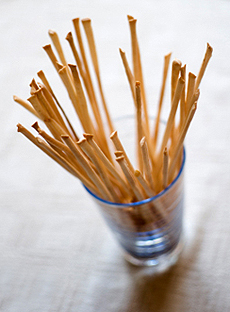
[1] Classic grissini (photo © iStock Photo).
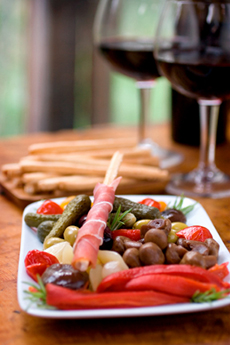
[2] The best snack or hors d’oevre with wine is an antipasto plate. Don’t forget the breadsticks (photo © Kelly Cline | iStock Photo).
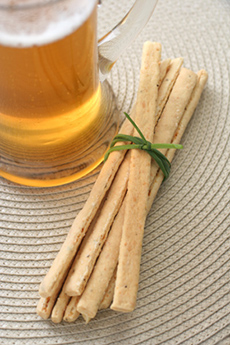
[3] Great crunch with a glass of wine or beer (photo Michael Steele | © The Nibble).
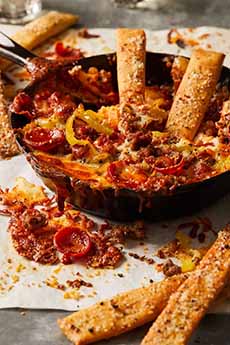
[4] Pepperoni pizza dip with breadsticks. Here’s the recipe (photos #4 and #5 © DeLallo).
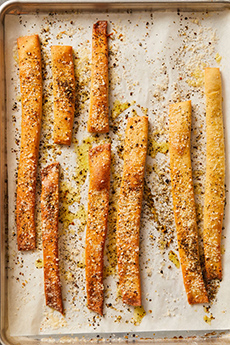
[5] Bake your own. Here’s the recipe.
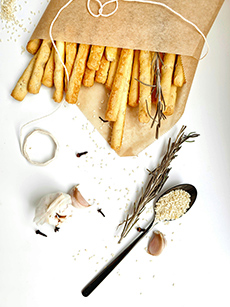
[6] When you bake your own, you can combine your favorite flavors. Here, garlic, rosemary, and sesame (photo © Olga Petnyunene | Unsplash).
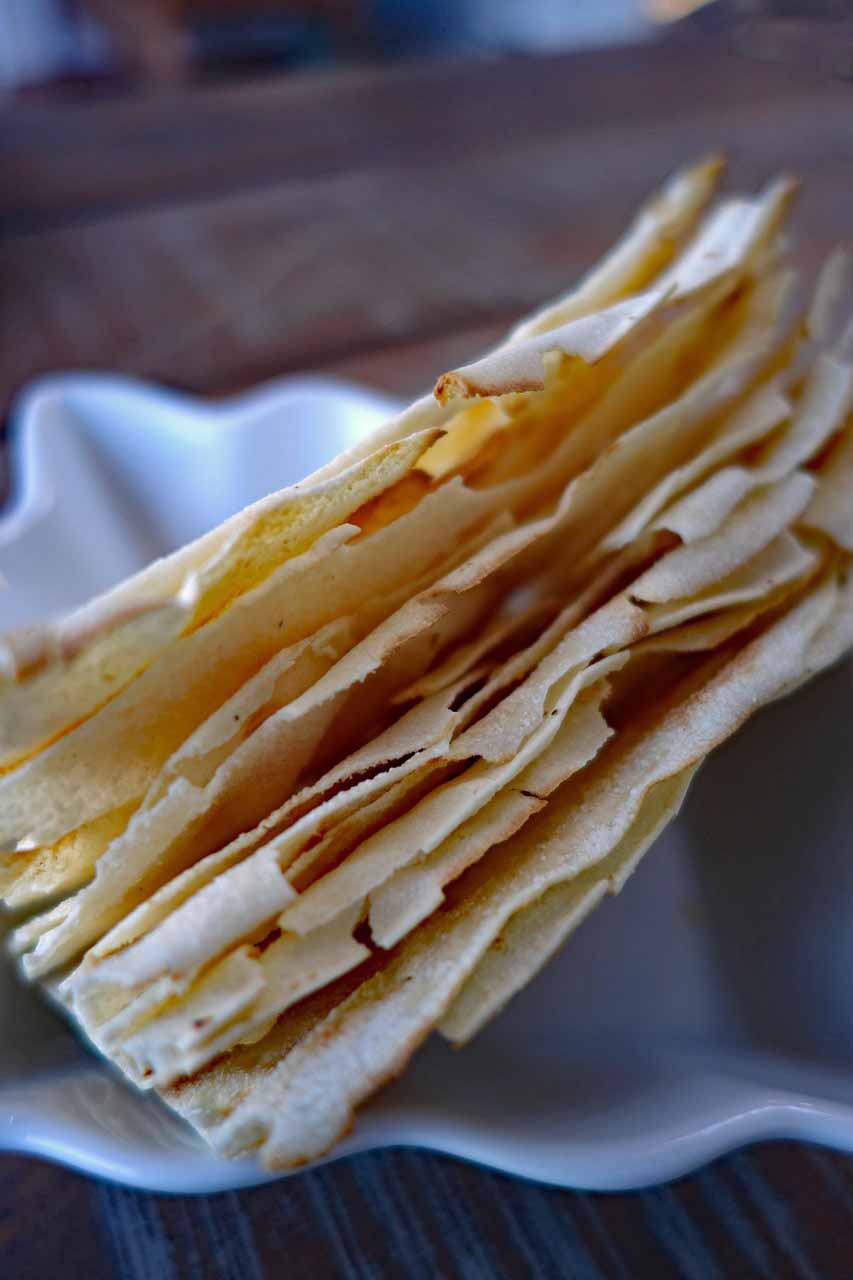
[7] Sardinia’s pane carasau may be the flakiest bread on earth (photo © Stephanie Albert | Unsplash).
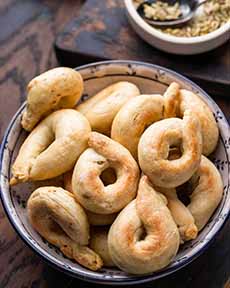
[8] Taralli, crunchy Italian crackers. Here’s a recipe (photo © Sip & Feast).

[9] Vittorio Amedeo II (1666-1732), Duke of Savoy, for whom breadsticks were invented (1728 painting by Martin van Meytens, hangs in the Palace of Venaria in Venaria Reale, outside the city of Turin | Wikipedia).
|
|
National Breadstick Day is the last Friday in October, celebrating that hard, crunchy, elongated piece of bread that we personally find irresistible (the correct spelling is the compound noun).
The archetypical breadsticks, grissini (photo #1), are plain, slender, and long, although there are numerous other shapes, lengths, and flavors of breadsticks to be found, including thick, knobby bread sticks the length of bakers’ arms (think of a French ficelle, but a dry bread stick, not a soft bread)
Most of them, however, are typically shaped like a pencil, round or flattened—although extra-long and extra-wide varieties do exist.
Some varieties can be soft—a modern variation— often seasoned with salt, garlic, herbs, or cheese, and served as an appetizer or accompaniment to meals.
Crunchy breadsticks can also be baked with cheese in the dough or studded with nuts, seeds, even bits of olive.
Take a breadstick journey with us. You may be inspired to bake your own. But first, for your perusal:
> The history of the breadstick is below.
> Also below, the year’s 58 Italian food holidays.
> The year’s 20+ bread holidays.
> The history of bread.
> The different types of bread: a photo glossary.
> Bake your own breadsticks: Here’s a recipe for Pizza Hut-type soft breadsticks.
WHAT IS A BREADSTICK?
Dry and crunchy as it may be, the breadstick is classified as bread, not a cracker.
Breadsticks are a type of lean bread/lean dough*, like baguette. They are usually made from a yeast-leavened dough, baked until crisp, and often have a more substantial, slightly chewy, or airy texture than a cracker, even when very thin. They are essentially a thin, crisp piece of bread.
Crackers are a type of biscuit. They are unleavened or only lightly leavened (sometimes with baking powder/soda, but less often with yeast) and baked flat. Their defining characteristic is that they are very thin, dry, and brittle.
Another way to think of the comparison: a breadstick is closer to a very skinny, crunchy loaf of bread, while a cracker is a very thin, savory cookie.
Traditional Breadstick Styles
Rubatà Grissini: From the Piedmontese dialect meaning “rolled,” the dough is worked by a rolling motion until it reaches the desired length. They have a more rustic, irregular look, often with spiral ridges along the shaft and less uniform thickness.
Rubatà grissini have a length from 40 to 80 cm, and easily recognizable for the characteristic nodosity†, due to the handwork. The rubatà is included in the list of traditional Italian agrifood products of the Ministry of Agriculture, Food and Forestry.
Stirato Grissini: Stirato means stretched or pulled; the piece of dough is pulled or stretched by hand. They are usually thinner, longer, and more regular in shape than rubatà. This method was also found to be more suitable for mechanical production beginning in the 19th century, leading to a more uniform, commercial product.
A more recent style than the rubatà, it is different because the dough is lengthened by stretching it from the edges, thus allowing mechanized production since the 18th century (source).
Soft and Chewy: These are more bread-like and often moister, similar to the popular restaurant style, and can be made with enriched dough.
Popular Flavors
Plain, salted, garlic, and Parmesan are probably the most widespread varieties but if you decide to bake your own, consider these:
Cheddar instead of Parmesan.
Roll in roasted garlic instead of flavoring the dough.
Roll in seeds: pumpkin and sesame are popular but anything goes (e.g. poppy, everything bagel).
Herbs and spices: Add minced rosemary or chive to the dough, or even Italian seasoning, pizza seasong, ranch seasoning, etc.). You can even add tiny inclusions to the dough, e.g. pepperoni, bacon.
Sweet: cinnamon sugar, honey.
Combine as you wish, e.g. herbed garlic butter (brush ready-to-bake sticks with melted butter mixed with minced garlic and parsley), jalapeño Cheddar, Parmesan garlic; pesto Parmesan, etc. (photo #6).
KIN TO BREADSTICKS
There are quite a few crunchy breads and crackers that are similar to breadsticks. Some of our favorites:
Bagel chips are sliced bagels that are baked or toasted until crunchy. They’re available plan or seasoned with garlic, onion, or everything.
Crostini, thin slices of toasted bread, typically from a baguette, are brushed with olive oil and baked until crispy. They’re often used as a base for toppings or served alongside soups and salads as a large crouton.
Lavash crackers are a type of flatbread. When the traditional Armenian flatbread is baked until crispy rather than kept soft, it becomes a crunchy cracker often topped with seeds.
Melba toast is very thin, crisp toast that’s been baked twice until crunchy. It’s light and delicate, often served with pâté, cheese, or soups. It was created in 1897 by the great Chef Auguste Escoffier for the great Australian soprano, Dame Nellie Melba. Here’s more about it.
Pane carasau is a traditional Sardinian flatbread that’s paper-thin and extremely crispy (photo #7). It’s also called “carta da musica” (sheet music) because it’s so thin that it makes a crackling sound when broken. It was historically made by shepherds as its dry, crispy nature allowed it to stay preserved for long long journeys into the mountains. Pane ‘e fresa is a variation where the pane carasau is brushed with olive oil and sprinkled with salt before the final baking, making it more flavorful. Pane guttiau (or guttau) is similar, brushed or drizzled with olive oil, sometimes with added salt, and often served warm—a dressed-up version of the plain pane carasau.
Pita chips are cut and baked pita bread pieces that become crispy, commonly served with hummus or dips. While pita bread itself is ancient, crispy pita chips as a commercial product were invented in 1996 by Stacy Madison and Mark Andrus in Boston, Massachusetts, using leftover pita from their sandwich stand. Stacy’s Pita Chips was acquired PepsiCo’s Frito-Lay division.
Taralli are Italian ring-shaped crackers are boiled then baked, giving them a distinctive hard, crunchy texture (photo #8). They come in various flavors like black pepper, fennel seeds, or olive oil, and are popular in Southern Italy, especially Puglia.
All of these share that satisfying crunch and are terrific alone as snacks or as accompaniments to dips, cheeses, and spreads.
THE HISTORY OF BREADSTICKS
The breadstick originated in Turin (Torino), in Piedmont, Italy in the late 17th century. In Italian the word is grissino, the plural is grissini.
The first written description we have in 1643, when a Florentine abbot described a long-shaped and “bone-thin” bread being made in Lanzo Torinese, a town outside of Turin (source).
However, the popular legend credits the invention to the Savoy Court baker, Antonio Brunero, around 1679. He was asked by the Court physician to make a bread “long, light and thin” to help the digestive problems of the young, ailing Duke Vittorio Amedeo di Savoia II (photo #9).
Together they developed small rolls half an inch wide and two spans long, with prolonged cooking. The result very little crumb (the soft interior of bread) and a crispy crust.
The young Duke recovered and the success of breadsticks was rapid, both for their greater digestibility and easier storage. The crispness and minimal crumb made it less prone to mold and rot (source).
They became a hit among Turin’s nobility and eventually spread throughout Italy.
Breadsticks reached the table of Napoleon, who loved what he called “les petits bâtons [sticks] de Turin.”At the beginning of the 19th century, he even created a transport between Torino and Paris, mainly to receive shipments.
Over the years, because of increased cost of production the loaf narrowed and elongated, becomimg lighter and lighter. The “small grissia” (grissini) provided less actual food but kept the cost to a penny.
Breadstick Predecessors
Breadsticks were an evolution from Italian ghersa or grissia, loaves of bread which in the 14th century cost a penny.
Ghersa is Piedmontese dialect for an elongated, cylindrical stick of bread.
Grissia, also known as grissia monferrina, is a rustic, hard-dough bread from the the Asti and Alessandria areas of Monferrato, rolled and shaped to look vaguely like two snails joined together. The dough’s texture is compact and it has a crunchy, golden crust.
The most ancient and traditional form of breadstick is undoubtedly the previously-mentioned rubatà [rolled].
The only other traditional and protected form of breadstick is the grissino stirato (stretched).
The article continues after the photo.
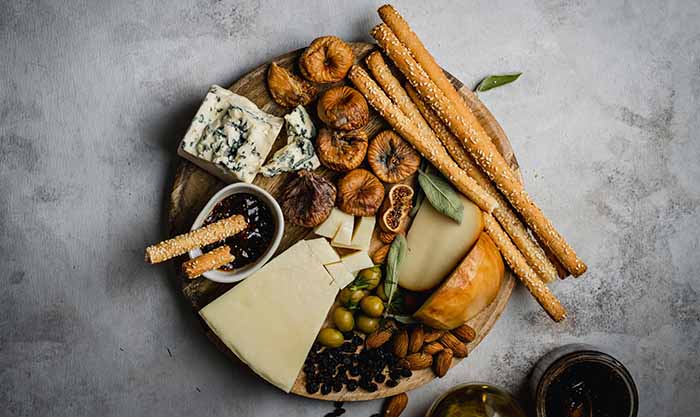
[10] Sesame breadsticks on a platter of cheeses, figs, olives, almonds, and currants (photo © Anna Pyshniuk | Pexels).
|
|
The Italian-American Contribution: Soft Breadsticks
In America, breadsticks took on a different form. Italian-American restaurants, particularly casual dining chains like Olive Garden (founded in 1982), popularized the soft, fluffy, butter-brushed breadstick that most Americans know today.
Olive Garden created the soft breadstick in 1982 when the restaurant first opened in Orlando, Florida. Blaine Sweatt, an Olive Garden cofounder and general manager, came up with the idea when the kitchen was overwhelmed with orders and couldn’t keep up.
He introduced breadsticks, soup, and salad as a way to keep customers satisfied while they waited for their entrées.
The chain restaurant breadsticks are quite different from their Italian ancestors—more like a soft dinner roll texture, often topped with garlic butter or herbs, and served warm. They’re designed to be really light and easy to pull apart, almost fluffy.
Americans loved them. Other chains put them on the menu, including Cici’s Pizza, Domino’s, Fazoli’s, Little Caesars, and Sbarro.
So American food culture has two very different breadstick traditions: the original Italian crispy grissini and the Italian-American soft breadstick.
THERE ARE 58 ITALIAN FOOD HOLIDAYS CELEBRATED IN THE U.S.
First, we present:
THE YEAR’S 20 ITALIAN FOOD HOLIDAYS (WITHOUT PASTA & PIZZAS)
February 5: World Nutella Day
February 13: National Italian Food Day
April 19: National Amaretto Day
May 9: National Moscato Day
May 23: National Italian Beef Day
April 29: National Shrimp Scampi Day
August: National Panini Month
August 13: National Prosecco Day
August 21: National Spumoni Day
September: National Italian Cheese Month
September, 1st Friday: National Chianti Day
September 7: National Salami Day
September 14: Eat a Hoagie Day
September 20: National String Cheese Day
October: Italian-American Heritage And Culture Month
October 24: National Bologna Day
October 24: World Pasta Day
October, last Friday: National Breadstick Day
November 1: National Calzone Day
November 8: National Cappuccino Day
THE YEAR’S 16 PIZZA HOLIDAYS
Whether you get takeout pizza or make your own, mark your calendars for:
January: National Pizza Week, beginning the second Sunday in January
February, 2nd Week: Great American Pizza Bake*
February 9th: National Pizza Day (a.k.a. National Pizza Pie Day), World Pizza Day
March 14: National Pi Day, third Friday
April 5th: National Deep Dish Pizza Day
May: National Pizza Party Day, third Friday
June 11th: Pizza Margherita Day
September 5th: National Cheese Pizza Day
September 20th: National Pepperoni Pizza Day
>October: National Pizza Month
October 9th: International Beer and Pizza Day
October 11th: National Sausage Pizza Day
October 22nd: National Tavern-Style Pizza Day
October 25th: World Pizza Makers’ Day
October 27th: National Parmigiano Reggiano Day, without which a dish of spaghetti and much other pasta, would be bereft.
November 1st: National Calzone Day†
November 12th: National Pizza With Everything Except Anchovies Day…
…although as anchovy lovers, we protest!
THE YEAR’S 19 PASTA HOLIDAYS
January 4th: National Spaghetti Day
February 7th: National Fettuccine Alfredo Day
February 13th: National Tortellini Day
March: National Noodle Month
March 20th: National Ravioli Day
April 6th: National Carbonara Day
July: Lasagna Awareness Month
July 7th: National Macaroni Day
July 14th: National Mac and Cheese Day
July 29th: National Lasagna Day
September 15: National Linguine Day
October: National Pasta Month
October 6: National Noodle Day
October 17th: National Pasta Day
October 25th: World Pasta Day
November 14: Cacio e Pepe Day
December 4: >National Noodle Ring Day
The 29th of every month: Gnocchi Day (“Ñoquis del 29” [loosely, “Gnocchi on the 29th”] in Argentina)
And how could we leave out:
January 22: National Sauce Day
March: National Sauce Month
________________
*Vittorio Amedeo II (1666–1732) was the Duke of Savoy from 1675 to 1730 who then became the first King of Sicily (1713–1720) and then King of Sardinia (1720–1730), establishing the foundation for the future Kingdom of Italy. as the head of the House of Savoy and ruler of the Savoyard states from 12 June 1675 until his abdication in 1730. He was the first of his house to acquire a royal crown, ruling first as King of Sicily (1713–1720) and then as King of Sardinia (1720–1730). Among his other titles were Duke of Savoy, Duke of Montferrat, Prince of Piedmont, Marquis of Saluzzo and Count of Aosta,[2] Maurienne and Nice [source].
†In baking, nodosity is the condition of having undesirable lumps, knots, or swellings in dough or baked goods, including breadsticks. Nodosity in dough can result in a final product with a dense, undesirable texture rather than a light and airy one.
CHECK OUT WHAT’S HAPPENING ON OUR HOME PAGE, THENIBBLE.COM.
|



