For National Chicken-Fried Steak Day, A Recipe, History, & More
|
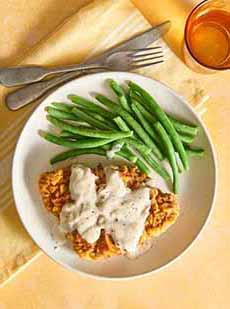
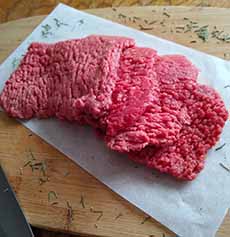
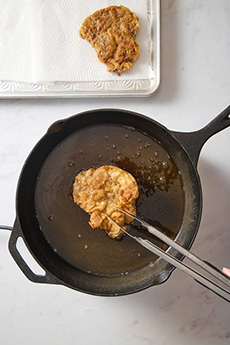
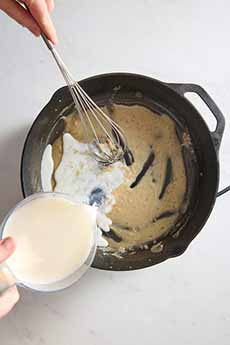
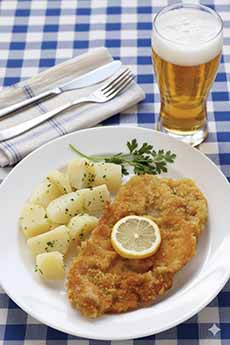
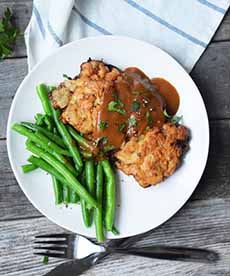
What’s for dinner? October 26th is National Chicken-Fried Steak, celebrating a beloved Southern and Southwestern comfort food comprising a beef cutlet that’s pan-fried in the manner of chicken. You take a tenderized piece of beef (usually a cheap, tough cut like cube steak or ), coat it in seasoned flour, dip it in egg or buttermilk, coat it in flour again, and then pan-fry it until it’s crispy and golden. The coating uses flour instead of bread crumbs to form a crispy crust that adheres beautifully to the meat, and the whole thing is topped off with a creamy country gravy. Best of all, this is a 30-minute meal, start to finish. The result is crispy on the outside, tender inside, and topped with a creamy, white, peppery gravy—country gravy (the different types of gravy). The recipe follows, but first: > The history of chicken-fried steak is below. > The year’s 47 Southern food holidays are also below. > The different cuts of beef: a photo glossary. > The year’s 25+ beef holidays. This is a classic eastern Texas recipe, covered with cream country gravy made from the pan drippings. Its precise origin is unknown. The history section below has more information. The meat is not a tender cut: cube steak or tenderized round steak, which is a manually or machine-tenderized piece of the round primal cut from the hind leg and rump of the cow. Serve it for dish breakfast with fried eggs, for lunch with a mixed green salad, or for dinner with your favorite potatoes and vegetables. Prep time is 15 minutes and cook time is 15 minutes. 1. PLACE 1 cup of flour in a shallow bowl. In a separate shallow bowl, whisk the eggs and 1/2 cup milk until blended. 2. SPRINKLE the steaks with 3/4 teaspoon each of salt and pepper. Dip in the flour to coat both sides; shake off the excess. Dip in the egg mixture, then again in flour. 3. FILL a large cast-iron or other heavy skillet with 1/4 inch oil and heat over medium heat. Add the steaks; cook until golden brown and a thermometer reads 160°, 4-6 minutes on each side. Remove from the pan; drain on paper towels. Keep warm. 4. REMOVE all but 2 tablespoons of oil from pan. Stir in the remaining 1/4 cup flour, 1/2 teaspoon salt and 1/4 teaspoon pepper until smooth; cook and stir over medium heat until golden brown, 3-4 minutes. Gradually whisk in water and remaining 1 cup milk. Bring to a boil, stirring constantly; cook and stir until thickened, 1-2 minutes. Serve with steaks. If your steak is a little pink inside, that’s OK, as long as the internal temperature of the steak is at least 160°. But since the steak should be only 1/4-inch thick, it should cook so quickly that the interior should have no pink by the time the coating has crisped up and turned golden. Leftover cooked steak can be frozen but not the gravy: The texture when thawed. The origins are a bit debated, but most food historians trace chicken-fried steak to German and Austrian immigrants who settled in Texas in the mid-1800s. They brought the tradition of Wiener schnitzel (pounded, breaded, and fried veal cutlet) and adapted it to use the beef that was plentiful in Texas. The technique merged with Southern fried chicken methods that were already popular in the region. Different theories claim that while it’s a version of Wiener Schnitzel (which it visually resembles, photo #5), it was a mistake created by a restaurant cook in Colorado or Kansas that worked its way down to Texas. The dish really took root in Texas, Oklahoma, and surrounding states, becoming a regional comfort food staple of truck stops, diners, and home cooking. It remains most popular in the South and Southwest. It’s sometimes called country-fried steak, which is the same preparation as chicken-fried steak, served with beef gravy instead of country gravy (photo #6). |
|
|||||
|
Southern cuisine emphasizes comfort, bold flavors, slow cooking methods, and making use of every part of the animal. It is a melting pot of African American, Native American, and various European immigrant cuisines.
†Meat, chicken or other protein should not be rinsed before cooking. This just spatter the rinse water around the sink, possibly spreading bacteria. Even if the steak or mallet is wrapped in plastic, you still need to wash the mallet with dish soap and water afterward, because the plastic wrap can sometimes tear without your realizing it. CHECK OUT WHAT’S HAPPENING ON OUR HOME PAGE, THENIBBLE.COM. |
||||||