|
September 25th celebrates a food that may not be familiar to many Americans, yet here it is: National Butterbrot Day, also known as National German Sandwich Day. We might call it bread and butter.
It’s a simple, open-faced German sandwich called a Butterbrot (“buttered bread”) and it’s a favorite German snack. At it’s simplest, it’s a single slice of high-quality German bread, often rye or whole grain, spread with quality butter.
Why devote a holiday to bread and butter? Because it’s a popular German snack, similar to devoting holidays to chips, muffins, whatever.
In Germany, it’s a touchstone.
But there’s much more to butterbrot than meets the eye in photo #1. We’ll share all, but first:
> The history of butterbrot is below.
> Also below (in †footnote), the story of the trencher (photos #8 and #9).
> The history of bread.
> The history of sandwiches.
> The different types of bread: a photo glossary.
> The year’s 20+ bread holidays.
> The year’s 27+ sandwich holidays.
TRADITIONAL BUTTERBROT TOPPINGS
At its simplest, butterbrot can be garnished with fresh herbs or sea salt, or with something more substantial.
While butter and bread are the foundation, the toppings can turn butterbrot into a more substantial snack, a light meal, or part of a larger spread (photo #3).
Popular toppings include:
Cheese: Sliced cheeses like Gouda, Emmental, or regional favorites.
Cold Cuts: Ham, salami, liverwurst (Leberwurst), or other sausages.
Eggs: Sliced hard-boiled eggs are a common and satisfying topping (photo #4).
Fish: Smoked salmon, herring, or other preserved fish.
Vegetables: Sliced cucumbers, pickles, radishes, tomatoes.
Spreads: Pâté, quark* (photo #7).
Herbs—fresh chives, dill, or parsley—often add a finishing touch.
THE HISTORY OF BUTTERBROT
The concept of putting toppings on bread is ancient and universal. Bread has been a fundamental foodstuff for millennia.
But butterbrot has become a cultural icon in Germany, beginning in medieval Europe.
Medieval Era: Slices of stale bread were used as trenchers† to hold food. These were thick, flat slices used as edible plates, serving both as tableware and a source of food, which was often given to the poor after the meal., which would then be eaten or given to the poor. While not butterbrot as we know it, this shows the long-standing practice of using bread as a base for other foods.
Availability Of Butter: Over time, with advancements in dairy farming, butter became more widely available and affordable. Spreading butter on bread to add flavor was a natural progression.
Industrial Revolution: In the 19th century, as people moved to cities for work, there was a need for quick, portable, and nutritious meals. Butterbrot was easy to prepare, didn’t require cooking, and could be easily.
Postwar Germany: In the lean times after World War I and especially after World War II, butterbrot became even more significant. It was an economical way to make a meal, stretching limited resources with simple, filling ingredients.
Butterbrot In Modern Germany
Over time, butterbrot became deeply ingrained in German culture. It became a symbol of home, comfort, and practicality.
It became a common breakfast food, a packed lunch for schoolchildren and workers, an easy snack, and a light dinner.
The dinner meal in Germany is often called Abendbrot (evening bread), highlighting the central role of butterbrot.
While the essence of a simple, satisfying open-faced sandwich remains, modern culinary trends have led to more elaborate and gourmet versions of butterbrot. For example:
Artisanal Bread: ciabatta, focaccia, multi-seed, sourdough, spelt, and other breads have joined the traditional rye and multigrain. The bread is sometimes toasted or grilled for added texture and flavor.
Compound Butter: Flavored or compound butters are used, from citrus butter (with zest) to herb-infused (e.g., chives, dill, parsley), smoked butter, truffle butter, even honey butter for a sweet-savory twist.
Toppings Expand
Along with more sophisticated bread and butter, there are elevated toppings, both savory and sweet, which are often layered for complexity.
Modern butterbrot is often presented as edible art, with toppings arranged in layers or patterns. Garnishes like microgreens, edible flowers, or a sprinkle of flaky or coarse colored sea salt elevate the visual appeal. They cross the line into French tartines.
Savory Toppings
Artisan Cured Meats: Pancetta, prosciutto, saucisson, speck.
Artisan Cheeses: Brie, Camembert, chèvre, Gouda, Roquefort.
Eggs: Poached, soft-boiled, even scrambled, sometimes topped with caviar or shaved truffle.
Fish: Smoked mackerel, salmon, trout, or sturgeon, often paired with crème fraîche and/or horseradish; gravax; sardines (photo #5).
Vegetables: Roasted or pickled vegetables like beets, asparagus, or radishes (photo #6).
Spreads: Hummus, mashed avocado, chicken liver mousse, rillettes, or tapenade replacing butter as the base layer.
Sweet Toppings
Chocolate: Dark chocolate shavings or spreads, paired with sea salt or chili flakes.
Fresh Fruits: Berries, figs, sliced apples or pears.
Nuts & Honey: Drizzles of honey paired almonds, pistachios, or walnuts.
How About A Butterbrot Party?
They go great with beer, cocktails, wine…or iced coffee or tea. Try these combinations or create your own:
Charcuterie: Truffle butter, prosciutto, arugula, and shaved Parmesan.
International/Asian: Miso butter, raw salmon, kimchi, and sesame seeds.
Vegetarian/Egg: Avocado, poached egg, chile flakes, and microgreens.
Vegetarian/Cheese: Goat cheese, fresh figs, honey and walnuts.
Vegetarian/Mediterranean: Feta, Kalamata olives, sundried tomatoes, shredded basil.
Pickled: Pickled herring, pickled beets, mustard sauce, fresh dill.
Smoked Fish: Dill butter, smoked salmon, capers, and lemon zest.
Vegan: Beet hummus, roasted vegetables, peppadew, and pomegranate seeds.
Sweet: Chocolate spread, sliced strawberries, and sea salt.
________________
*German quark (photo #7) is a fresh dairy product that is somewhat similar to yogurt, cream cheese, or cottage cheese, but it has its own unique texture and flavor. It is a staple in German cuisine and is used in both sweet and savory dishes.
†What Are Trenchers: Trenchers were a common feature of dining in medieval households, especially among the upper and middle classes Made from stale or coarse bread, they were used as plates during meals (photo #8). Food was served on platters, commonly one platter to two diners, who transferred the food from the platter to their trenchers. After the meal, these bread plates, now soaked with juices and food remnants, were often given to the poor or to servants.
Receiving trenchers was a valuable source of sustenance for the poor, as the bread would have absorbed the nutrients of the meal served on it. The distribution of trenchers to the those in need depended on the household and local customs. Back entrances: Poor individuals might have known to come to the kitchen door or back entrance of a manor, castle, or wealthy household to receive leftover food, including trenchers. This was a common practice in medieval charity. It was tied to the medieval concept of charity and the Christian duty to care for the less fortunate. Word of mouth and local custom would inform the poor about which households were likely to provide food. In some cases, the poor might line up or gather at the designated time to receive leftovers. The practice of giving trenchers to the poor was not purely altruistic. It was also a way for the wealthy to demonstrate their piety and fulfill their religious obligations.
Almsgiving: Similarly, some religious institutions distributed food, including trenchers, as part of their charitable obligations. This could happen at specific times or on certain days. Feast leftovers: After large feasts or banquets, surplus food, including trenchers, could be gathered and distributed to the poor in the surrounding area.
Later the trencher evolved into a small plate of metal or wood, typically circular and completely flat, without the lip or raised edge of a plate (photo #9). Trenchers of this type are still used, typically for serving food that does not involve liquid. Today’s best example is the cheeseboard. Here’s more about trenchers [some information via Chat GPT].
|
|
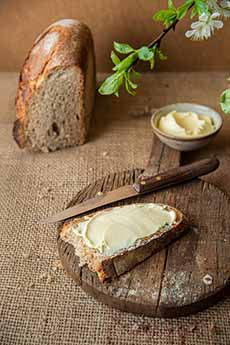
[1] Plain butterbrot (photo © Joanna Stolow | Unsplash).
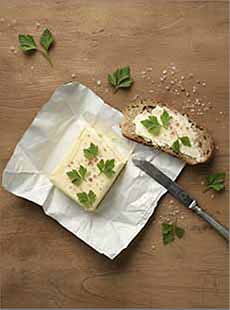
[2] With a simple garnish: pink Himalayan salt and fresh parsley (photos #2, #3, and #5 by Nano Banana).
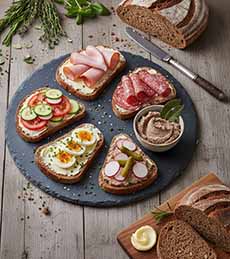
[3] Five fancier toppings.
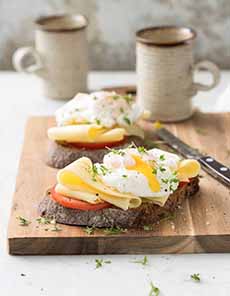
[4] A light lunch: egg, cheese, tomato on butterbrot (photo © Veldhuyzen Cheese).
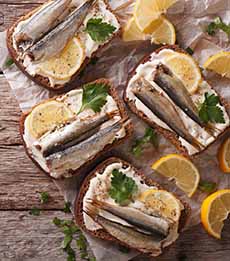
[5] Sardine butterbrot with quark* (photo © The French Farm).
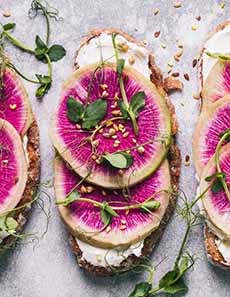
[6] Fancy veggie butterbrot with watermelon radish and pea tendrils (photo © Melissa’s Produce).
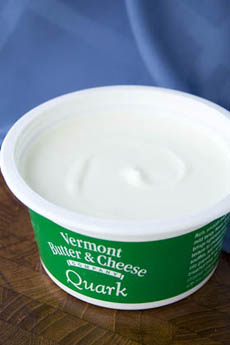
[7] A container of quark from Vermont Butter & Cheese (photo by Claire Freiermann © The Nibble).
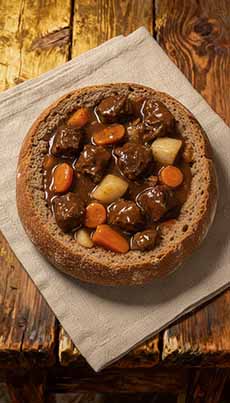
[8] A trencher: stale bread used as a plate (photo Nano Banana).
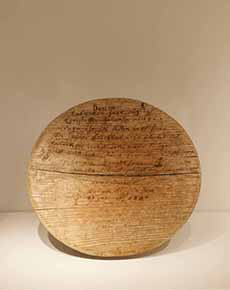
[9] The trencher evolved into a wooden plate. Today’s version is a cheeseboard: a flat wood plate or platter.
|



