Frozen Yogurt Sundae Bar & Other Ideas For National Frozen Yogurt Month
|
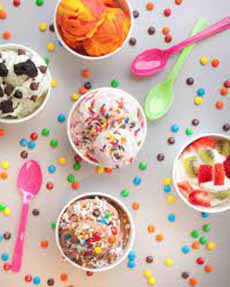
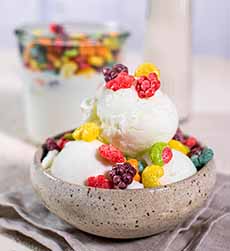
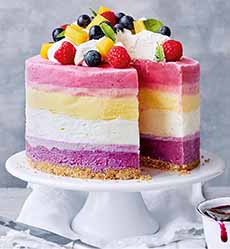
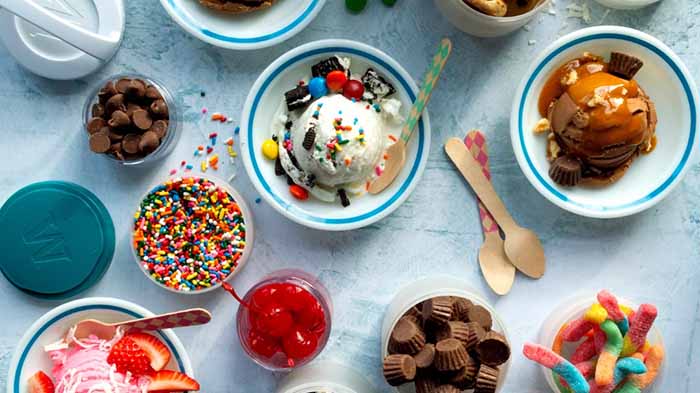
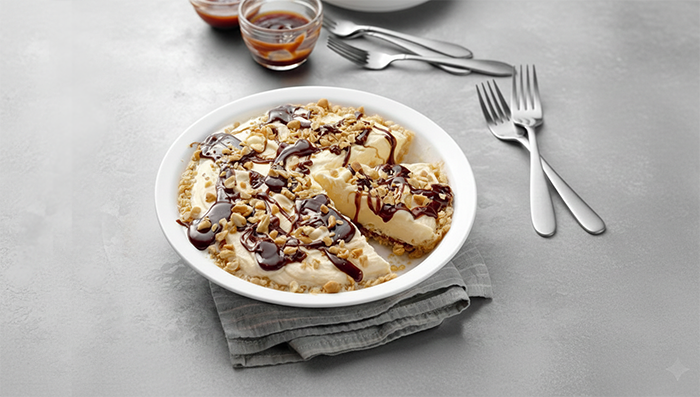
June is National Frozen Yogurt Month (February 6th is National Frozen Yogurt Day), and our arms don’t have to be twisted to celebrate. Here are some ideas to make your indulgence a bit more special. But first: > The history of frozen yogurt is below. > The different types of yogurt. > The different types of frozen desserts: a photo glossary. > Can you determine the number of live and active cultures in your yogurt? > The year’s 50+ ice cream and frozen dessert holidays. For family fun or a party, buy a few different flavors at the grocer’s or yogurt shop and set out bowls of toppings. Then set out bowls of fixings for a do-it-yourself sundae. Ideas for toppings: If you don’t want a sundae bar, here are simple ways to make a special frozen yogurt dessert. Yogurt Pie: Spoon frozen yogurt into a graham cracker pie crust and decorate with favorites from the toppings list. Freeze until ready to serve. Yogurt Cake: Slice a plain cake into two or three layers. Use frozen yogurt as the filling and frosting; decorate with toppings. Freeze until ready to serve. Sandwich frozen yogurt between two cookies—chocolate, chocolate chip, raisin, snickerdoodle; you can even use a different type of cookie on the top and the bottom. Trim the edges of the yogurt with a knife or spatula. Dip the edges into a dish of mini chips, nuts or other topping, wrap in wax paper and freeze until ready to serve. You can buy frozen yogurt pops in most supermarkets, or you can make your own in custom flavors from kiwi to lychee. Purée the fruit and blend with the frozen yogurt; you can stir in one or two of the toppings. Add to the ice pop molds and freeze. There are turnkey packages, as well as custom solutions, for the yogurt shop of your dreams. Frozen Yogurt Solutions is one of the industry’s leading and frozen yogurt consultants, a one-stop-shop for frozen yogurt equipment and supplies. Call 1.888.350.8083 or visit FrozenYogurtSolutions.com. |
|
|
|
While frozen yogurt seems ubiquitous today, it is only some 50+ years old. The first brand, Frogurt, was invented as soft-serve in the early 1970s (often cited as 1970) by the H. P. Hood Company of Lynnfield, Massachusetts. It was developed to meet a request from Bloomingdale’s department stores for a healthier, low-fat alternative to ice cream, to serve at their in-store Forty Carrots cafés. It established the foundation for the modern frozen yogurt industry. Although some stories cite an “accident” that created frozen yogurt, it is not true. It was calculated product development to create a health-conscious dessert. It esssentially created the frozen yogurt category (today worth $6.49 billion and growing a 6.02% annually). The name is a portmanteau of “frozen yogurt” that became so catchy that it’s still used today as a nickname for the frozen yogurt (although the trademark is held by H. P. Hood). No doubt inspired by Frogurt, Brigham’s, a Boston-based ice cream and sandwich shop chain, introduced the first packaged frozen yogurt around 1978. It was called Humphreez (both the beloved chain and the yogurt brand are long gone). In 1979s, Dannon Yogurt introduced a packaged frozen yogurt on a stick, Danny. The first Danny product was dark chocolate-dipped raspberry yogurt. Other flavors and a soft-serve product followed. Danny became the first perishable frozen product to be distributed nationwide. These early products were marketed as a healthy alternative to ice cream, but too many people didn’t care for the tartness, which deliberately emulated the then-standard flavor profile of cups of packaged yogurts. This led manufacturers to further sweeten the product and make it ice cream-like, such that few people could tell if they had been handed a dish of ice cream or frozen yogurt. The 1970s and 1980s saw the establishment of national yogurt chains like Everything Yogurt (1976, New York), I Can’t Believe It’s Yogurt (1977, Dallas), and TCBY (The Country’s Best Yogurt, Little Rock). Supermarket sales took off in the 1980s thanks to these reformulations and the growth of the soft-serve chains, which made consumers want the convenience of frozen yogurt at home. However, by this time the original tart frozen yogurt had evolved to suit America’s taste for sweetness, and much of the frozen yogurt could be mistaken for ice cream. (article continues below) As everything old is new again, Pinkberry established in California in 2005, and Red Mango, which followed in 2007, revived the tart soft-serve. A new generation of yogurt eaters has embraced the tartness. The 2000’s also saw the founding of Menchie’s, Orange Leaf, sweetFrog, and Yogurtland. 16 Handles, founded in 2008, is a self-serve yogurt shop that offers 16 different flavors at a time—regular, reduced fat, no sugar added, and vegan free. All are delicious, but 15 of the 16 are in the softserve ice cream style of sweetness. We prefer the 16th: original tart frozen yogurt. In 1993, TCBY established National Frozen Yogurt Month, June; National Frozen Yogurt Week, the first week of June; and National Frozen Yogurt Day, the first Sunday in June. So why did National Frozen Yogurt Day move to February 6th? At some point an alternative National Frozen Yogurt Day appeared on February 6th—not exactly balmy weather to walk down the street with a cone or dish of frozen treat. While it’s unclear exactly who established this February version, it became quite popular (so we’re speculating it was some venue in a warm part of the country). The International Frozen Yogurt Association (established in 2013) chose the February 6th date as the more popular of the two to be National Frozen Yogurt Day (or perhaps they figured out that June had enough with National Yogurt Month and Week). They also suggested renaming it International Frozen Yogurt Day. But in practice, most people and businesses in the U.S. still call National Frozen Yogurt Day. Look for phrases like “live and active cultures,” “contains live cultures,” or a list of the strains such as L. bulgaricus, S. thermophilus, Lactobacillus acidophilus, Bifidobacterium, and other bacteria. However, as noted, even if they are live in the final product, cold storage over time can kill them. Some products use a “Live & Active Cultures” type seal or statement, created in 1993 by The National Yogurt Association (NYA) and now managed by the International Dairy Foods Association (IDFA). It requires frozen yogurt to contain at least 10 million cultures per gram at the time of manufacture, but again, that doesn’t guarantee they’ll be alive unless at the end of the “best buy” date. If purchasing at a soft-serve frozen yogurt shop, ask if the frozen yogurt is made from cultured yogurt with live cultures, and if it heat-treated/pasteurized after culturing. You can also ask if they have an ingredient sheet or allergen/nutrition sheet that mentions live cultures, or look on the brand’s website. Don’t rely on the designation “probiotic.”. It is not a regulated term and is used loosely. The more reliable indicator is a live cultures statement and/or listing the strains. CHECK OUT WHAT’S HAPPENING ON OUR HOME PAGE, THENIBBLE.COM. |
||